Architecture

Iconic Museums: Five Architectural Marvels of Modernism, Brutalism, and High-Tech

Explore five iconic museums where modernist, brutalist, and high-tech architecture redefine culture, blending function, aesthetics, and civic imagination into unforgettable landmarks.

Por: Angela Leon Cervera
Iconic Museums
Museum of Tomorrow, Rio de Janeiro

Museums are no longer just treasure chests for art—they have become works of art themselves. Over the last century, architecture has transformed the museum from a container of history into a cultural protagonist, shaping how we experience knowledge, beauty, and community.


From the radical transparency of High-Tech design to the raw honesty of Brutalism and the poetic curves of modernism, these iconic museums show how architecture can embody ideology. Let’s explore five remarkable examples that continue to challenge tradition while inspiring future generations.
Iconic Museums
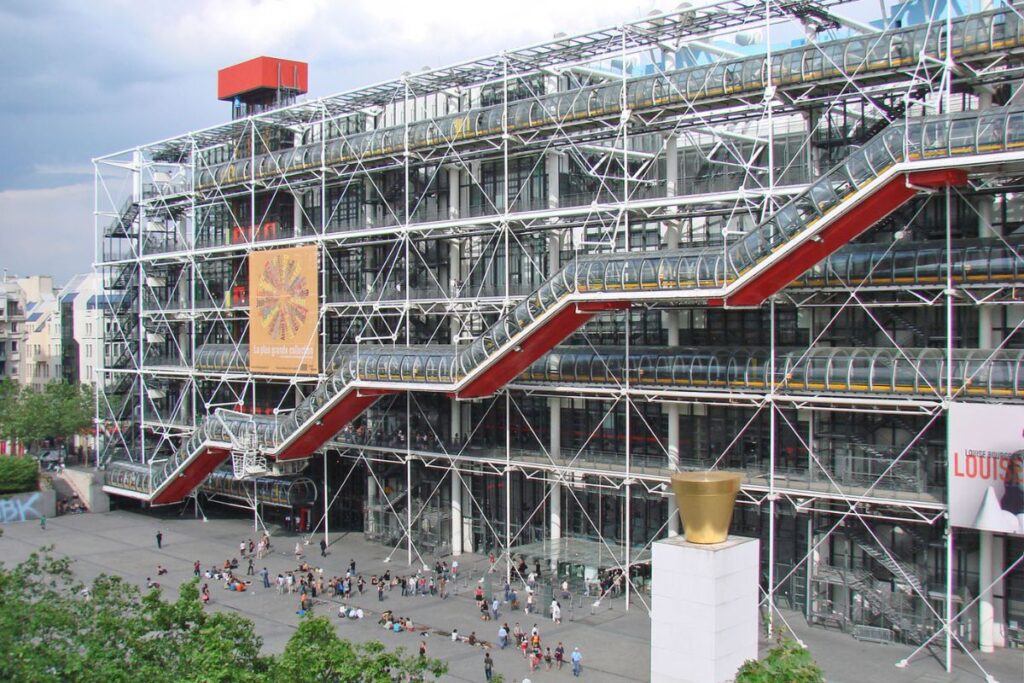
Centre Pompidou, Paris. Photo: Jena-Pierre Dalbéra

Centre Pompidou, Paris: Where Pipes Became Poetry

The Centre Pompidou is a High-Tech legend designed by Renzo Piano and Richard Rogers. Completed in 1977, its “inside-out” design exposed structural and mechanical systems on the exterior, coded in bold colors: blue for air, green for water, yellow for electricity, red for circulation. This daring move freed vast, flexible interiors while turning function into iconography. Once mocked as “Notre Dame of Pipes,” the Pompidou is now a civic heart of Paris, its plaza a living stage for performers, citizens, and cultural exchange.

Iconic Museums
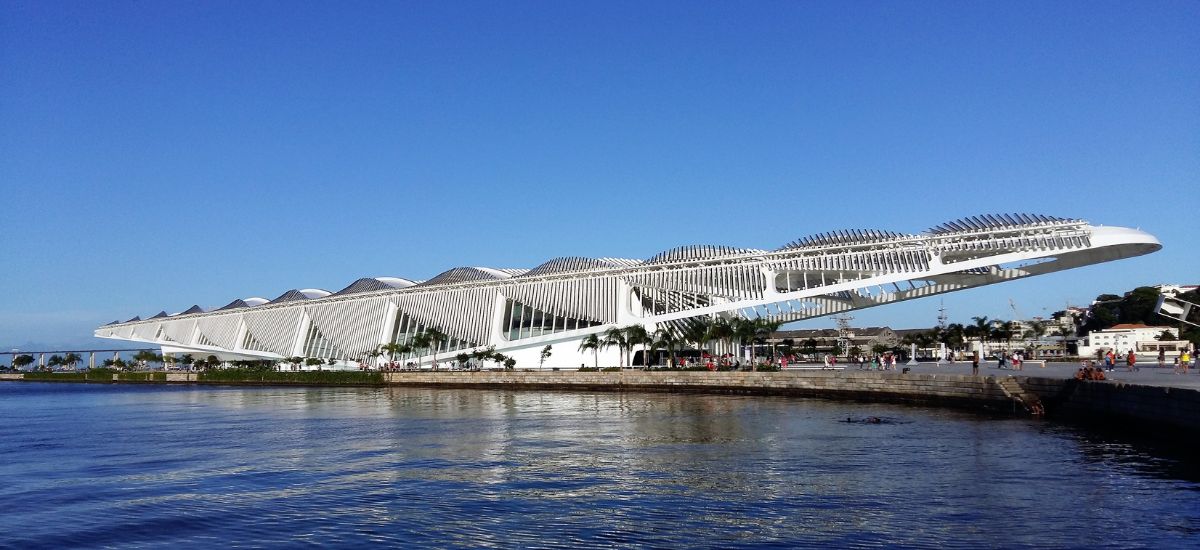
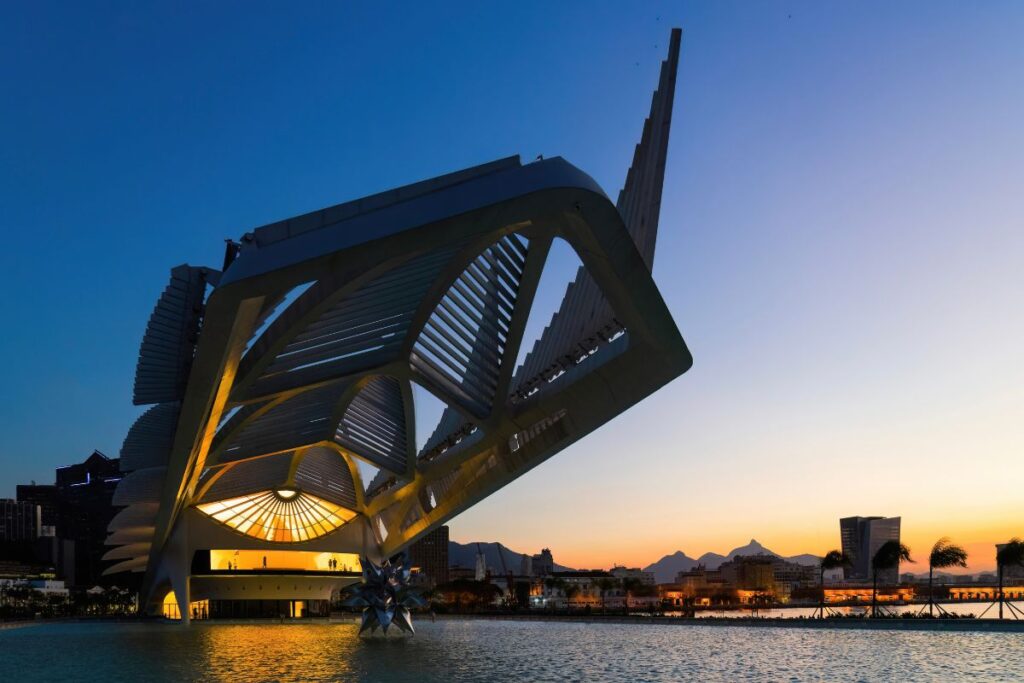
Museum of Tomorrow, Rio de Janeiro

Museum of Tomorrow, Rio de Janeiro: A Futuristic Eco-Manifesto

Santiago Calatrava’s Museum of Tomorrow, unveiled in 2015, feels part spaceship, part tropical flower. Rising on the Mauá Pier, its kinetic roof of solar-panel “wings” follows the sun, while water from Guanabara Bay circulates through cooling systems and reflective pools. This High-Tech marvel is more than spectacle—it is sustainability in motion. By embodying ecological principles, the museum aligns its architecture with its mission: to inspire a vision of a fairer, greener tomorrow. Technology here serves not ego, but planet.

Iconic Museums
MASP, São Paulo

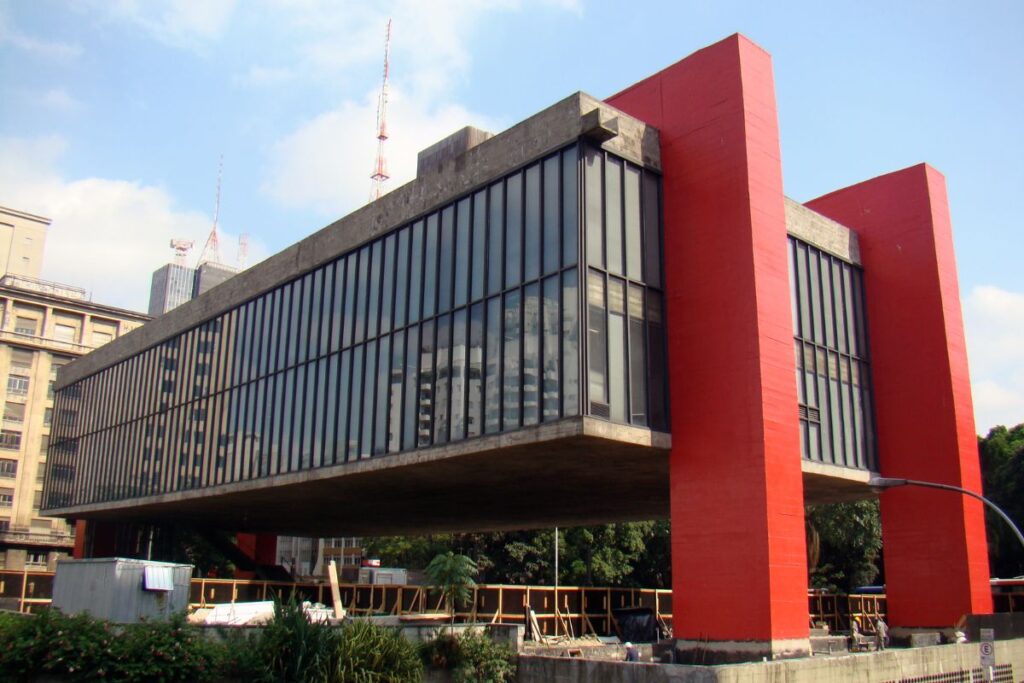
MASP, São Paulo: A Brutalist Gift to the People

The São Paulo Museum of Art (MASP), created by Lina Bo Bardi, is a bold reinterpretation of Brutalism. Completed in 1968, its concrete body floats eight meters above the ground, supported by massive beams, leaving a vast civic space—the “Vão Livre”—beneath. This open void has become a stage for gatherings, protests, and everyday life. Inside, artworks float on glass easels, free from traditional hierarchies. MASP shows that raw concrete can foster democracy, turning monumentality into generosity.

Iconic Museums
Hayward Gallery, London. Photo: George Rex

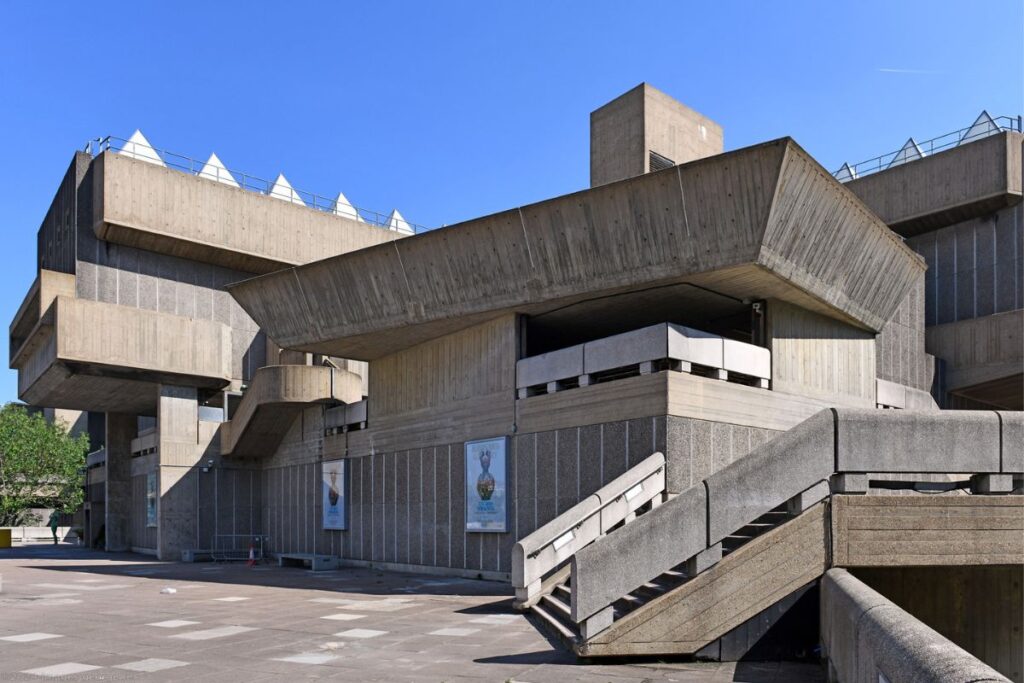
Hayward Gallery, London: Brutalism on the South Bank

Opened in 1968 and designed by Norman Engleback with the Greater London Council team, the Hayward Gallery is one of the UK’s purest brutalist landmarks. Its rough concrete surfaces, bold geometric terraces, and external staircases reflect the ethos of “béton brut”—honest, unapologetic materiality. Though often polarizing, the design embodies the experimental spirit of postwar Britain, prioritizing raw expression over polish. Today, the Hayward thrives as a center for contemporary art, proving that Brutalism can evolve from controversy to cultural cornerstone.

Iconic Museums
MAC Niterói, Brazil

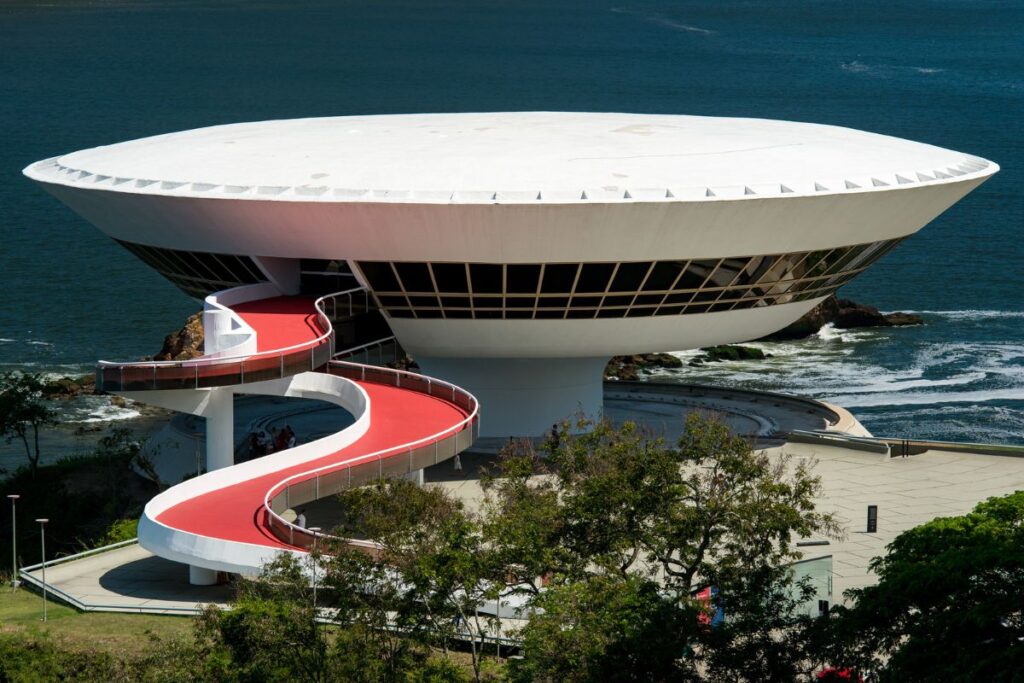
MAC Niterói, Brazil: Niemeyer’s Floating Sculpture

Oscar Niemeyer’s Museum of Contemporary Art (MAC), completed in 1996, seems to hover above Guanabara Bay like a UFO or a blooming flower. Its sweeping concrete curves and dramatic red ramp transform arrival into a ritual. For Niemeyer, curves reflected Brazil’s natural landscape and sensual spirit, creating a modernism rooted in poetry rather than rigidity. MAC is more than a museum—it is a sculpture in dialogue with sea, sky, and city, a love letter to the expressive power of architecture.

These five iconic museums reveal that architecture is more than shelter—it is manifesto. Each building translates ideology into space: celebrating technology, honoring material honesty, or sculpting poetry from concrete. They prove that museums are not passive containers but active voices in cultural life, shaping how we see art, cities, and ourselves.

FAQ

Receive the latest news

Subscribe To Our Magazine

Luster Magazine

Digital Magazine

Ingresa los siguientes datos y comienza a disfrutar de nuestra revista digital.