Art

Vienna’s Artful Cool Pavements: Rethinking Urban Heat

Discover how Vienna’s artistic cool pavements blend art, science, and urban design to combat urban heat islands and inspire resilient, climate-smart cities.

Por: Angela Leon Cervera
Cool Pavements
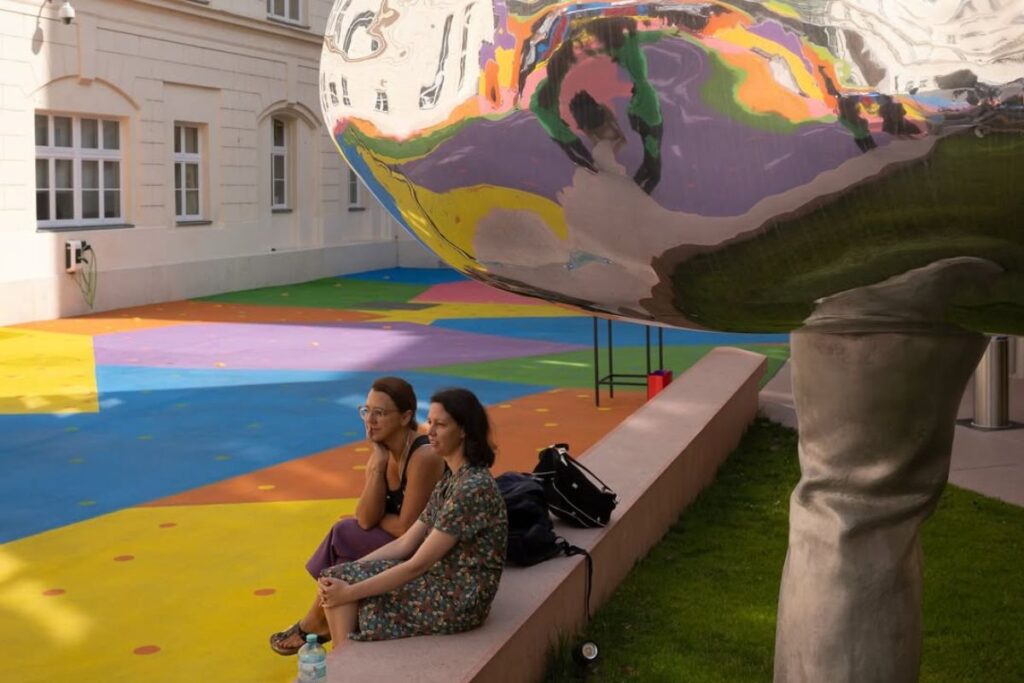
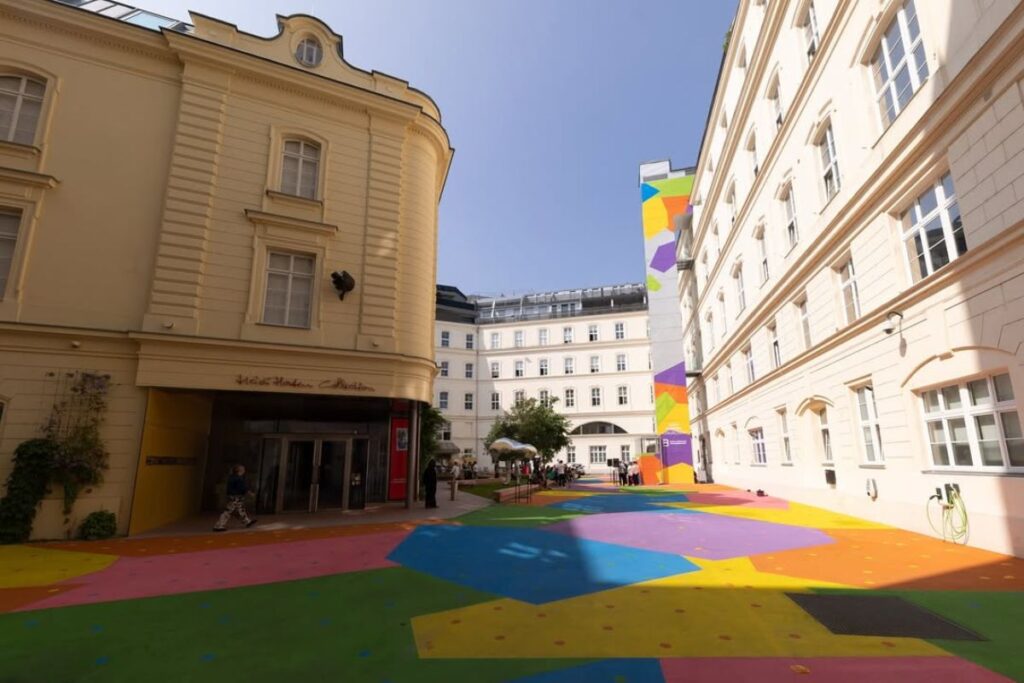
A painted chronicle of climate and color — Holla Hoop Collective’s cooling pavements at Vienna’s Hanuschhof, where each field embodies a year of CO₂ emissions between 1960 and 2000. Photo: @heidihorten.collection

Urban heat islands—those stifling temperature spikes that make cities hotter than their rural surroundings—are no longer a background issue; they’re one of the defining climate challenges of the 21st century. In Vienna, a colorful intervention turned a drab asphalt surface into an artwork that doesn’t just delight the eye—it literally cools the ground. This project highlights the emerging power of cool pavements as both a technical fix and a cultural catalyst.


What makes this Viennese case fascinating is its hybrid DNA: part art installation, part urban science experiment, part climate activism. By turning data into design, it captures both the imagination of passersby and the attention of climate planners worldwide.
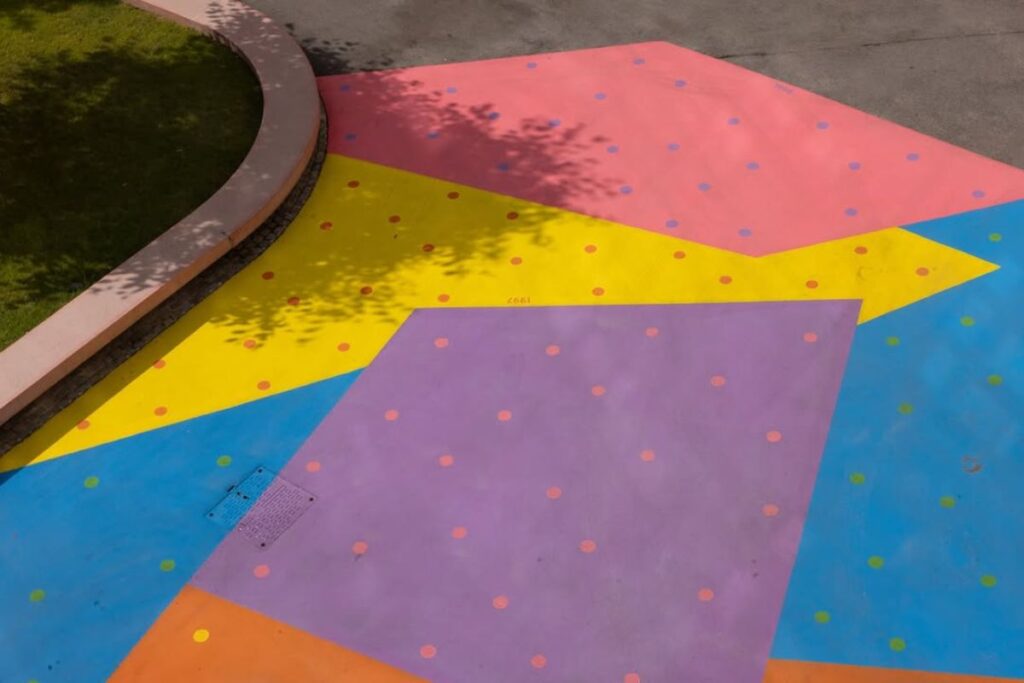
Cool Pavements
Holla Hoop Collective’s cooling canvas in Vienna. Photo: @heidihorten.collection

How Do Cool Pavements Actually Work?

Cool pavements function on one main principle: albedo. In plain terms, lighter colors reflect solar energy rather than absorb it. Traditional asphalt, nearly black, soaks up 80–95% of sunlight, radiating it back as heat. Cool pavements flip this equation with brighter pigments and specialized coatings.


Key approaches include:


  • Reflective coatings: Using acrylic resins or titanium dioxide pigments, these reduce surface temperatures by 6–11 °C.

  • Permeable pavements: Designed to retain rainwater, they cool surfaces through evaporation.

  • Next-gen innovations: Experiments with phase-change materials and even energy-harvesting pavements hint at a future where streets do double duty.


Los Angeles and Murcia (Spain) have already piloted reflective streets, with measurable drops in ground heat. Yet, without standardized labels or certifications, scaling up remains a challenge.

Cool Pavements
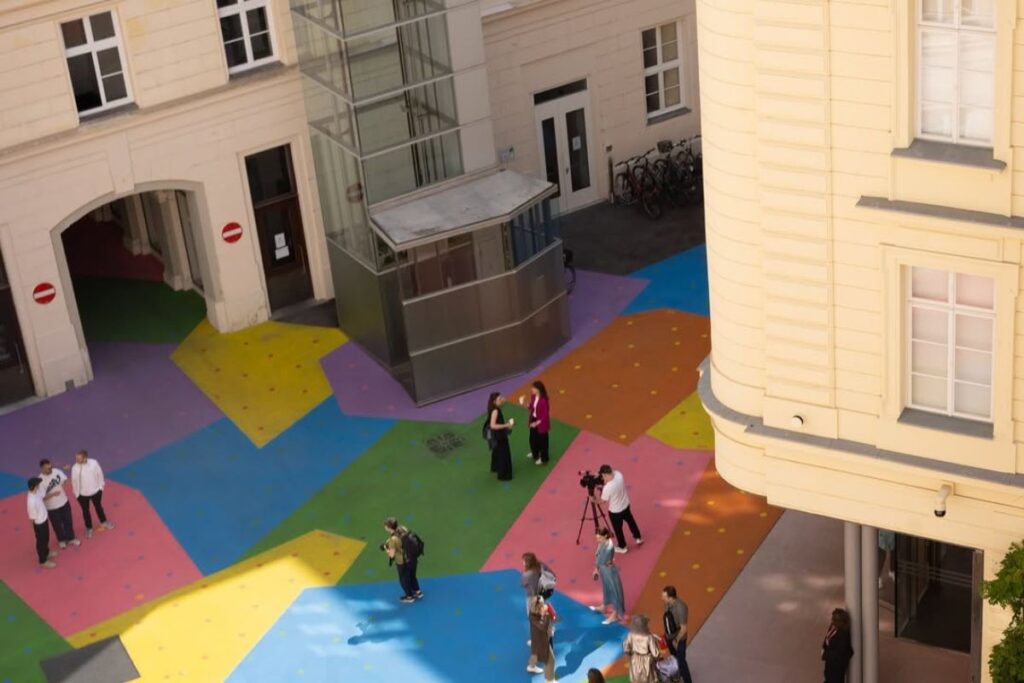
Color fields of CO₂ at Vienna’s Hanuschhof. Photo: @heidihorten.collection
Cool Pavements
Where color, art, and climate converge. Photo: @heidihorten.collection

What Did Vienna’s “Holla Hoop” Project Achieve?

In the summer heat, Austrian artist Jonas Griessler and his collective Holla Hoop painted a city courtyard in a palette of playful tones. The results were striking: infrared thermometers recorded a drop from 31 °C to 20 °C—an 11 °C reduction.


But the project didn’t stop at physics. Each painted segment carried symbolic meaning: years of climate history, dots for billions of tons of CO₂ emissions. Art became both a cooling agent and a visual narrative of global warming.


As environmental health expert Hans-Peter Hutter observed, this is “one piece of the mosaic” in adapting cities to rising heat. A mosaic indeed—where aesthetics and science tessellate into a solution that is functional, educational, and uplifting.

Are Cool Pavements Better Than Green Roofs?

It’s tempting to crown one strategy the ultimate fix. But context is everything.


  • Cool Pavements:

    • Lower surface temperatures immediately.

    • Cost less to install.

    • Require frequent maintenance, as coatings fade within 1–3 years.

  • Green Roofs:

    • Provide insulation in both summer and winter.

    • Support biodiversity and rainwater retention.

    • Demand higher upfront costs and ongoing horticultural care.

Research shows cool pavements excel on streets and open courtyards, while green roofs reshape building microclimates. Together, they form a complementary pair. Resilient cities will need both.


Can Cool Pavements Scale Globally?

That’s the million-dollar—or perhaps billion-dollar—question. For large-scale adoption, cities must grapple with:


  1. Durability – ensuring coatings withstand heavy traffic and pollution.

  2. Standardization – creating clear metrics for performance and certification.

  3. Lifecycle Costs – factoring in maintenance cycles and environmental impact.

  4. Interdisciplinary Collaboration – combining urban planning, climate science, and public art to drive awareness and political will.

Vienna’s success shows viability, but its broader gift is psychological: it reframes climate adaptation as something joyful, visible, and communal.

Cool Pavements
Visualizing climate through art and pavement. Photo: @heidihorten.collection

Vienna’s painted pavements prove that climate solutions don’t have to be grim or invisible. By merging art and science, the city cooled its streets, educated its citizens, and set a precedent for urban resilience. The message is clear: our cities can be both beautiful and sustainable—if we are willing to see asphalt as canvas and climate adaptation as collective creation.

FAQ

Receive the latest news

Subscribe To Our Magazine

Luster Magazine

Digital Magazine

Ingresa los siguientes datos y comienza a disfrutar de nuestra revista digital.