Art

Salvator Mundi: Da Vinci, Dispute, and a $450M Mystery

Explore the Salvator Mundi’s tangled path—from disputed Da Vinci to the world’s most expensive painting. A saga of mystery, restoration, and unmatched value.

Por: Angela Leon Cervera
Salvator Mundi
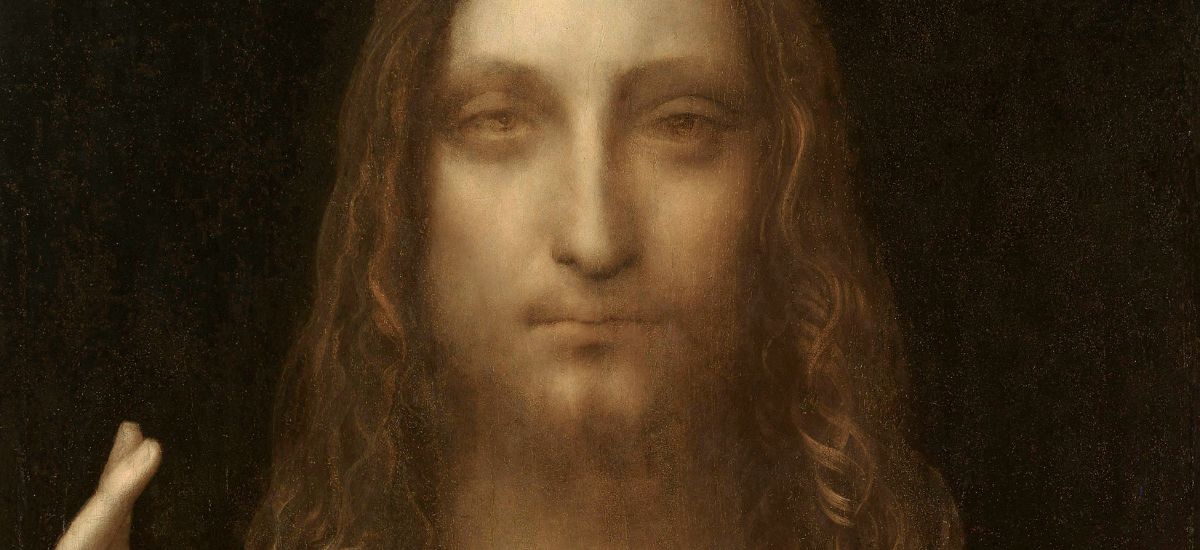
Salvator Mundi. Reproduction of the painting after restoration by Dianne Dwyer Modestini.

Of all the enigmas in the art world, few rival the case of Salvator Mundi, a painting once dismissed as an unremarkable copy, now the most expensive artwork ever sold at auction. Depicting Christ as the “Savior of the World,” it features a raised hand in blessing and a crystal orb—a haunting vision, attributed by some to Leonardo da Vinci himself.


But therein lies the controversy. Is it truly by Leonardo? Or has the art market been swept away by a potent cocktail of narrative, desire, and strategic illusion? Since its reappearance in 2005, Salvator Mundi has inspired debate, awe, and a record-breaking price tag that defies logic as much as it commands global attention.

Salvator Mundi
Salvator Mundi. Reproduction of the painting after restoration by Dianne Dwyer Modestini.

Why Is the Authorship of Salvator Mundi So Contested?

The road to attribution was anything but clear.


  • Fragmented Provenance: Believed to have been painted between 1499 and 1510, its ownership trail grows faint after 1530 and disappears entirely for centuries.

  • Restoration as Revelation—and Revision: Conservator Dianne Modestini’s intervention revealed pentimenti (underlying changes), suggesting a creative hand at work. Yet the extent of the repainting raises the question: how much of what we see is Leonardo, and how much is Modestini?

  • Expert Disagreement: While authorities like Martin Kemp and the National Gallery of London supported the attribution, others—such as Pietro Marani and certain members of the Louvre’s scientific team—voiced serious doubts, citing stylistic inconsistencies and questionable anatomical precision.

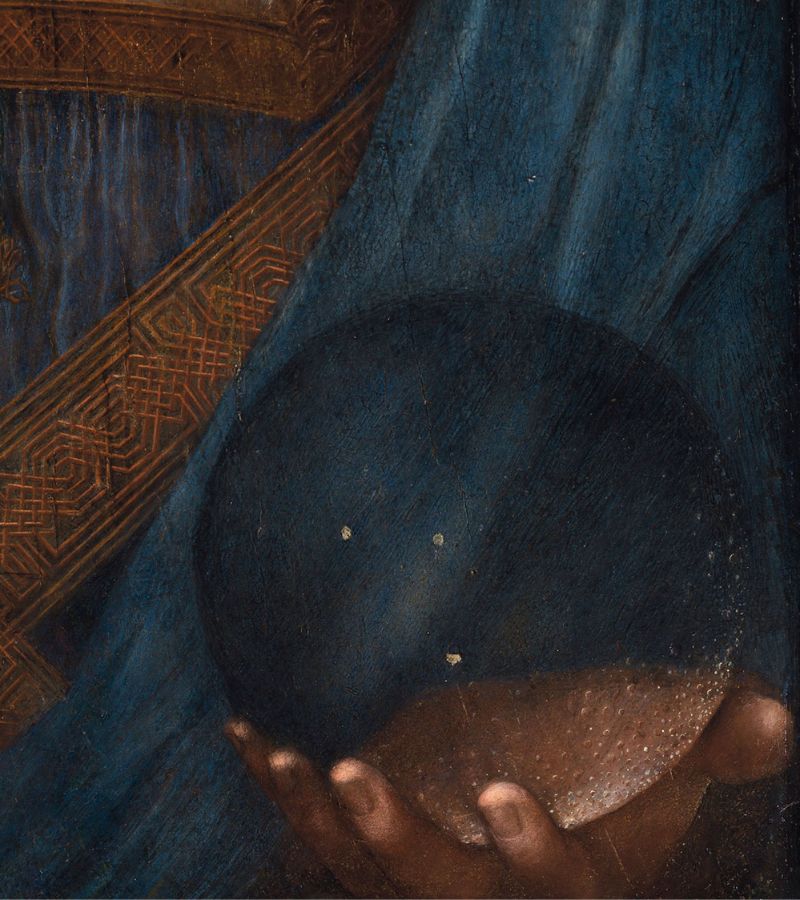
  • Scientific Ambiguities: The orb Christ holds doesn’t distort the background as a solid crystal should—a detail Leonardo, a master of optics, wouldn’t likely have overlooked.

These conflicts transformed Salvator Mundi into a modern icon of attribution politics. The painting lives in a twilight zone: part miracle, part marketing triumph.

Salvator Mundi
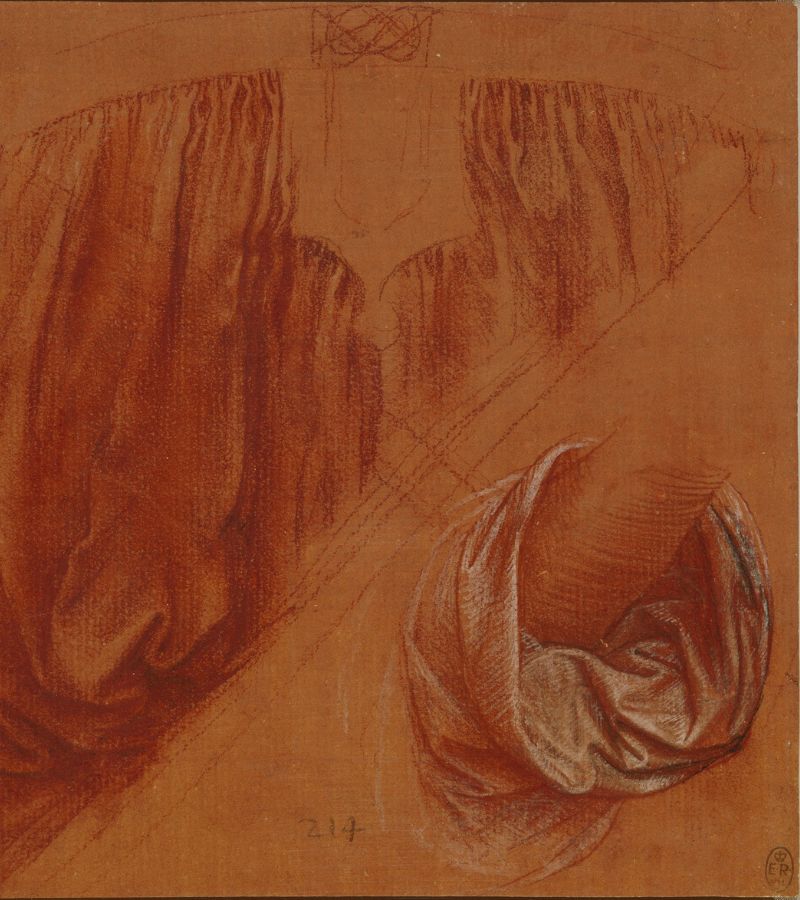
A study of drapery for Salvator Mundi, Royal Collection.
Salvator Mundi
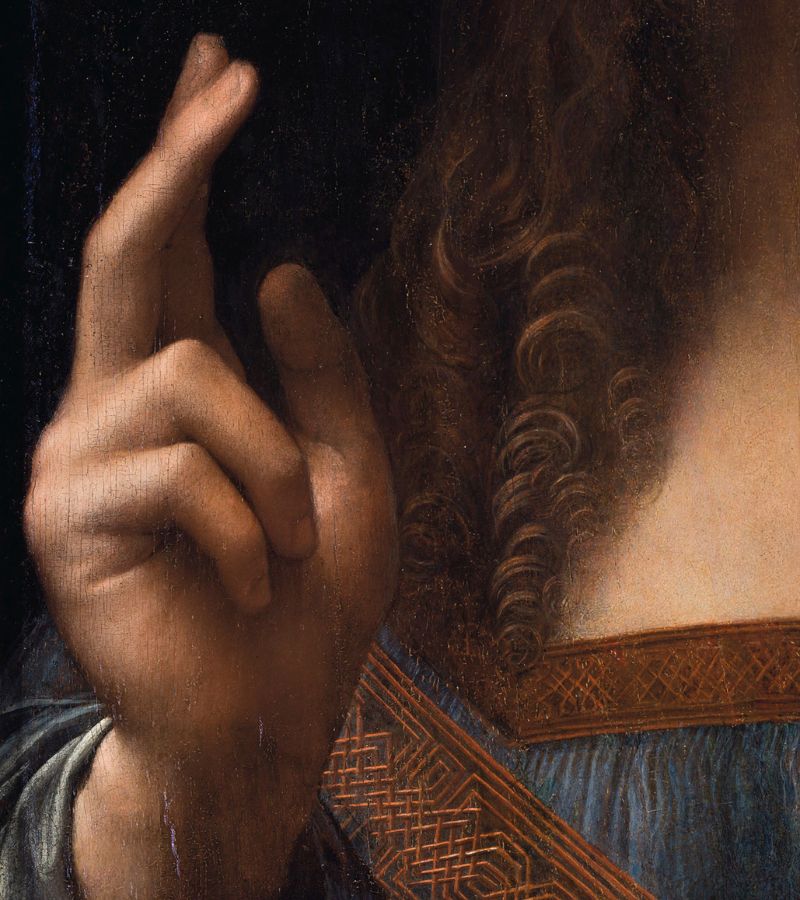
Detail of the left hand and the crystal orb.

What Drove Salvator Mundi’s Record-Breaking Price?

The November 2017 Christie’s auction turned Salvator Mundi into a $450.3 million phenomenon. But why?


  1. Scarcity of Leonardos: Fewer than 20 authenticated paintings by Leonardo exist. A new one entering the market is a once-in-a-lifetime event.

  2. Marketing Alchemy: Christie’s crafted a global campaign, dubbing the piece the “Male Mona Lisa.” Pre-auction showings, cinematic teasers, and a cloak of mystique primed buyers to see the work not just as art, but as legend.

  3. Geopolitical Prestige: The buyer, believed to be Saudi Crown Prince Mohammed bin Salman, likely viewed the acquisition as a strategic asset—a tool of cultural power ahead of Vision 2030 and the creation of a new Louvre in Riyadh.

  4. Narrative Power: From $45 at a 1958 auction to $450M, the story of its resurrection seduced the public. The mystery itself became part of the value.

Far from being devalued by uncertainty, the painting was elevated by it. In the world of ultra-high-net-worth collecting, enigma sells.

What Do We Know About Salvator Mundi Now?

  • Current Whereabouts: Since the sale, the painting has vanished from public view. Reports suggest it is stored in a Swiss vault, possibly awaiting its debut at a Saudi museum.

  • Louvre’s Silent Verdict: A confidential report by the Louvre, never officially released, is said to affirm its attribution to Leonardo—yet the museum declined to exhibit it in 2019, adding to the opacity.

  • Restoration’s Legacy: The heavy hand of restoration remains a focal point of critique. Is what we see Leonardo’s vision or a 21st-century reinvention?

  • Cultural Capital: Despite (or because of) its contested nature, Salvator Mundi is a symbol of soft power, a totem of global ambition, and a mirror of the art market’s capacity to generate value through story alone.

Salvator Mundi
Christ’s hands, the curls of his hair, and his garments are well preserved, close to their original state.

Salvator Mundi is not just a canvas; it is a parable. Of lost glory, of market spectacle, and of the ongoing negotiation between truth, beauty, and belief. Whether or not Leonardo painted every inch, the painting has etched itself into cultural history—proof that sometimes, the myth is the masterpiece.

FAQ

Receive the latest news

Subscribe To Our Magazine

Luster Magazine

Digital Magazine

Ingresa los siguientes datos y comienza a disfrutar de nuestra revista digital.