Wimbledon: Where Tradition Meets Modernity in the World of Tennis
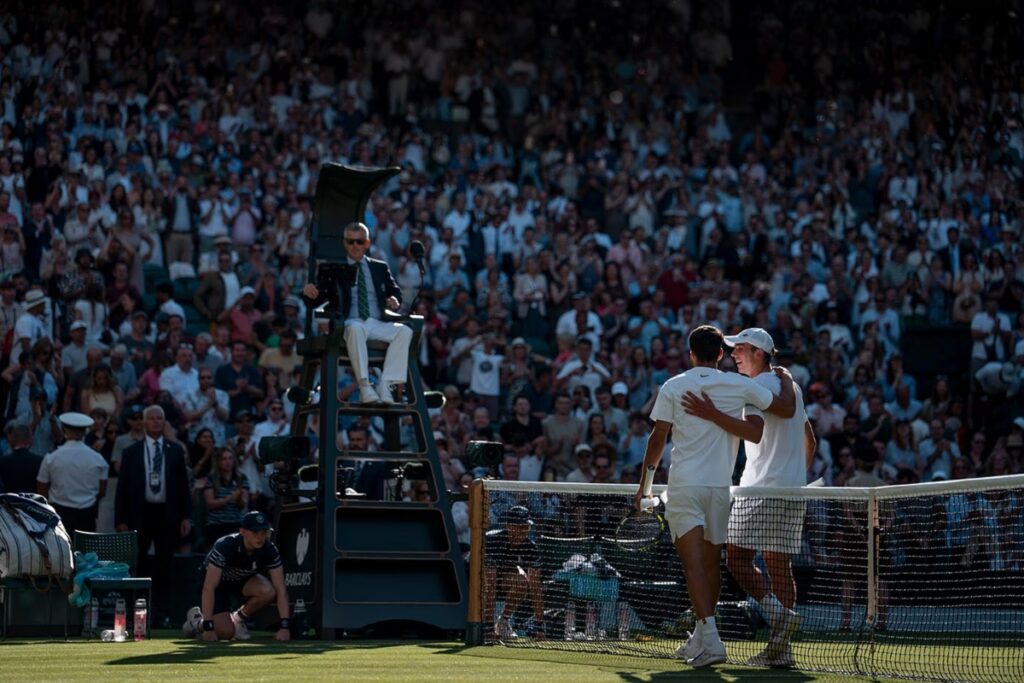
Founded in 1877, The All England Lawn Tennis and Croquet Club stands as one of the most prestigious sporting venues in the world.
Throughout history, Wimbledon has seen tennis legends grace its courts. Martina Navratilova holds the record for the most singles titles with 9 championships, while Roger Federer leads the men’s side with 8 wins, cementing their names in tennis history.
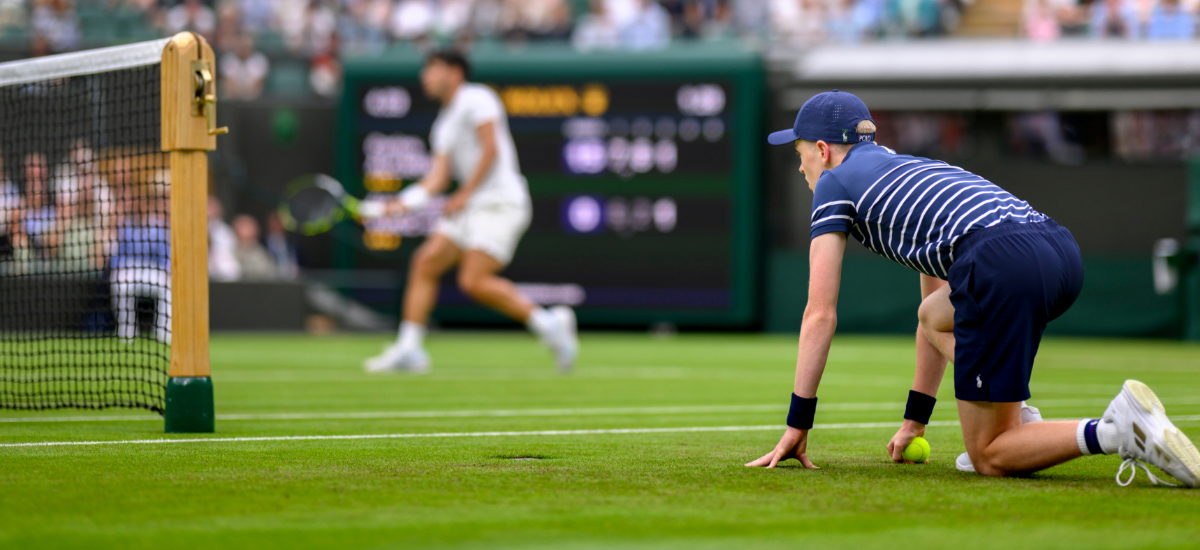
This year, Wimbledon embraces a bold technological evolution — for the first time ever, the tournament has eliminated line judges. Instead, an advanced electronic line-calling system ensures accuracy, redefining the balance between heritage and innovation without compromising the tournament’s classical charm.
Tradition That Transcends Time
The All-White Dress Code
One of Wimbledon’s most cherished traditions is its strict all-white dress code, a rule dating back to the 1800s. This sartorial expectation originated from Victorian-era beliefs that sweat stains were improper for public display.
Today, Wimbledon remains virtually the only Grand Slam in the world that rigorously enforces this dress code, preserving its visual identity of elegance, class, and discipline.
The Grass Court Legacy
Unlike most professional tournaments that now favor clay or hard surfaces, Wimbledon proudly preserves its grass courts, a signature feature since its inception.
Maintaining grass courts requires meticulous care, further enhancing the tournament’s exclusivity and status. This rare surface demands unique skill and agility, offering spectators a style of tennis that is both fast-paced and elegant.
Unique Schedules and Residential Harmony
Unlike any other Grand Slam, Wimbledon observes a strict curfew at 11 p.m. local time, respecting the peace of its surrounding residential neighborhood in London.
Additionally, matches are not played on the middle Sunday, providing players and staff a day of rest—a tradition only recently adjusted but still honored in spirit. The exception to this pause is the final Sunday, when the prestigious men’s final is held.
Ceremonial Elegance
Wimbledon is not only about sport but also about grace and tradition. After the finals, a sophisticated champions’ dance takes place, honoring the winners in a way no other tournament does.
Adding to this sense of royalty and formality, the trophies are presented by prominent members of the All England Club Committee, often accompanied by notable British figures, reinforcing the deep connection between the tournament and the British heritage.
Luxe Amenities That Elevate the Experience
Wimbledon’s commitment to excellence extends beyond the court. Guests enjoy luxe amenities such as exclusive hospitality suites, fine dining experiences, and impeccably designed lounges.
The marriage of cutting-edge technology—like the new electronic line-calling system—and traditional elegance enhances both the player and spectator experience. From the iconic strawberries and cream to private VIP lounges, these luxe amenities ensure that Wimbledon offers an experience unmatched in the world of tennis.
Attending Wimbledon is more than watching a match—it’s immersing yourself in a historic celebration of sport, tradition, and luxury. This rare balance of time-honored customs and modern innovation is what continues to make Wimbledon the crown jewel of tennis.
Key Information
- When was Wimbledon founded? In 1877.
- Who is the official timekeeper for Wimbledon? Rolex.
- What major technological change was introduced in Wimbledon in 2025? The replacement of line judges with a fully electronic line-calling system.
- Why do players wear only white at Wimbledon? It’s a historic tradition from the Victorian era to prevent visible sweat stains and maintain elegance.