Art

Peter Phillips Pop Art: The Unresolved Game

Explore Peter Phillips Pop Art legacy—from iconoclastic British roots to global influence—and see why his vision still electrifies culture.

Por: Angela Leon Cervera
Peter Phillips
The Viewing Room honoured the 80th birthday celebrations with the launch of ‘6xPOP’

Peter Phillips burst from industrial Birmingham armed with drafting skills, comic-book curiosity, and a restless eye for rebellion. His canvases—slick, fractured, and shamelessly commercial—shook post-war Britain awake, announcing Pop Art’s sharpest outsider. Peter Phillips Pop Art never asked to charm; it demanded we stare back.


That demand echoes louder today. Phillips died on 23 June 2025 in Noosa, Australia, closing a sixty-year sprint that fused pin-ups, pistons, and chance into prophetic visual puzzles. As we sift his legacy, one truth emerges: the game he set in motion refuses to end.
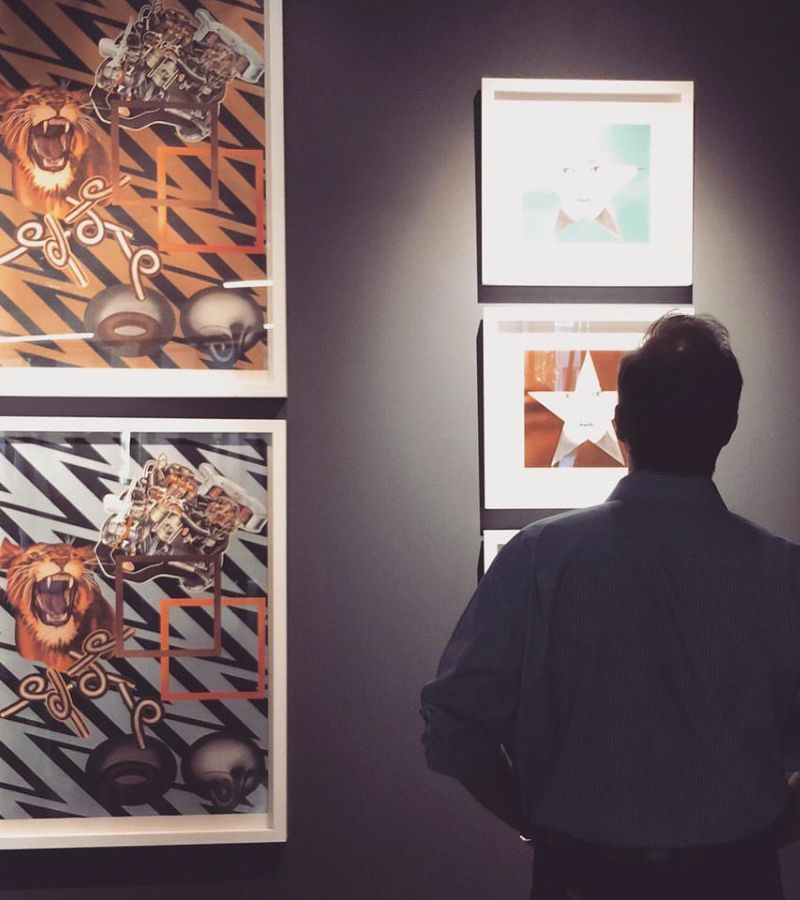
The Viewing Room honoured the 80th birthday celebrations with the launch of ‘6xPOP’

Who Was Peter Phillips, and How Did He Reinvent Pop Art?

  • Factory roots, surgical craft. Born 1939, Birmingham; trained in technical drawing before honing collage wizardry at the Royal College of Art alongside David Hockney and Allen Jones. 

  • Media spotlight. “Young Contemporaries” (1961) and Ken Russell’s Pop Goes the Easel (1962) cast him as Pop’s enfant terrible.

  • Visual lexicon. Slot machines, bingo cards, Marilyn, engines—assembled like medieval altarpieces, questioning what post-war Britain chose to worship.

  • Philosophy of chance. Every motif felt rolled like dice, hinting that consumer life was random, not rational.

The Viewing Room honoured the 80th birthday celebrations with the launch of ‘6xPOP’

How Did Peter Phillips Pop Art Influence Fellow Artists Across Decades?

1. Immediate circle, immediate jolt
Phillips’s cold, aerosol finish pushed peers—Jones, Boshier, Boty—to toughen their palettes and embrace mechanical polish.


2. Transatlantic ripple
A 1964 Harkness Fellowship dropped him in New York, where Warhol and Lichtenstein felt a British mirror. His Custom Paintings fed America’s car-culture fetish back to itself—harder, shinier, stranger.


3. Down-the-road echoes

  • Album art: War/Game fronts The Strokes’ Room on Fire (2003), injecting Pop provocation into indie rock covers.

  • Neo-expressionists: Spanish painter Ceesepe cites Phillips’s clash of sex and machinery as blueprint.

  • Contemporary design: fashion collaborations (Happy Socks) borrow his candy-bright menace to sell socks with teeth.

Artists learned a Phillips lesson: make pleasure seductive, then tilt the mirror until it cuts.

What Is the Enduring Legacy of Peter Phillips in Today’s Visual Culture?

Phillips anticipated our ad-heavy, algorithmic feed. His “hands-off” airbrush surfaces previewed Photoshop smoothness; fragmented frames feel like multitasking screens. Museums still chase him—Tate, MoMA, and Art Institute of Chicago guard his puzzles—while the new Peter Phillips Foundation funds artists who dare collide pop vulgarity with philosophical bite. 


Collectors now covet his late-career canvases—looser, neo-expressionist storms where bolts and pin-ups float in abstract dusk—proof he evolved until the end. Critics once called his art “repellent.” Today that very sting feels truthful, even necessary, amid infinite scrolling delight.

The Viewing Room honoured the 80th birthday celebrations with the launch of ‘6xPOP’

Peter Phillips never offered tidy answers. Instead, he staged a perpetual gamble where sex, steel, and symbolism spin beneath glossy lacquer. In a culture still obsessed with bright surfaces, his work whispers: look closer; the machine has a pulse—and a price. The game stays unresolved, but its inventor remains Pop’s sharpest conscience.

Pop, Pins & Puzzles

Receive the latest news

Subscribe To Our Magazine

Luster Magazine

Digital Magazine

Ingresa los siguientes datos y comienza a disfrutar de nuestra revista digital.