Culture

Apple’s Founding Contract and the Rise of Tech Relics

Apple’s 1976 founding contract sold for $2.51 million in 2026. A closer look at how tech documents became cultural heritage and high-value collectibles.

Por: Angela Leon Cervera
Apple founding contract
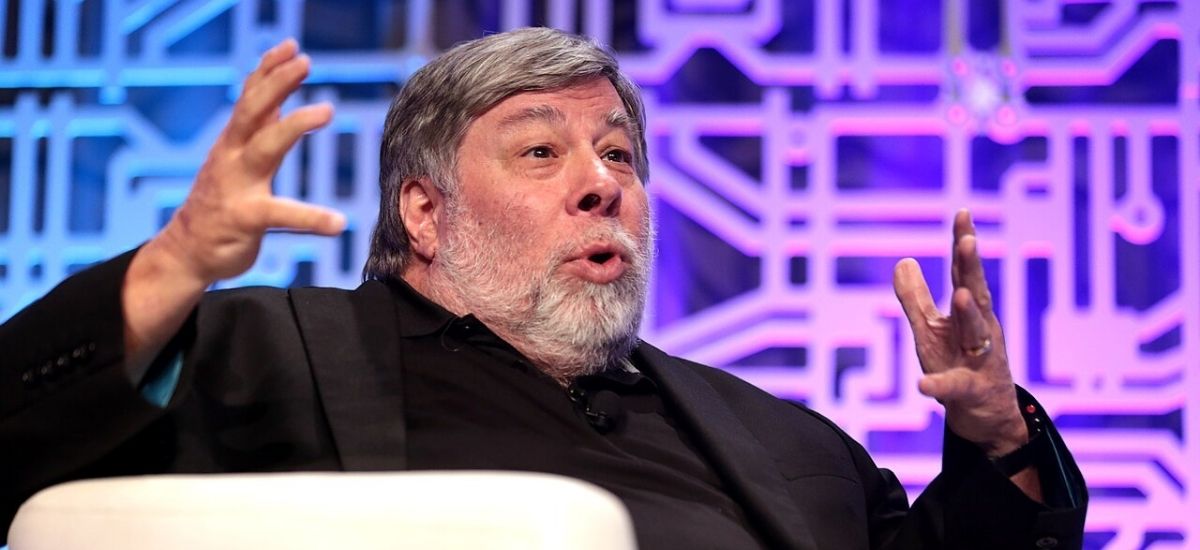
Steve Wozniak speaking with attendees at an event titled "An Evening of Innovation & Celebration" hosted by DestechAZ at the JW Marriott Scottsdale Camelback Inn Resort & Spa in Paradise Valley, Arizona. Photo: Gage Skidmore

On January 23, 2026, a three-page document quietly rewrote cultural history. At Christie’s in New York, the original Apple founding contract sold for $2.51 million.

Signed on April 1, 1976, this agreement marked the birth of Apple. Its sale confirmed a shift. Early technology documents now sit alongside America’s most revered historical papers.
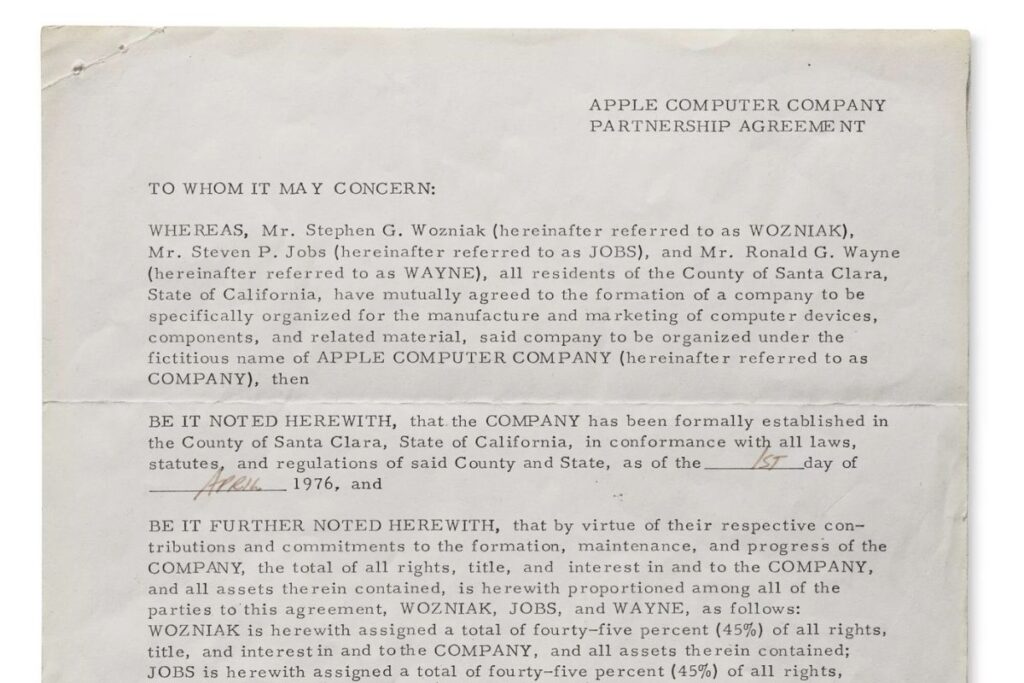
APPLE COMPUTER COMPANY PARTNERSHIP AGREEMENT, STEVE JOBS AND STEVE WOZNIAK, 1 APRIL 1976, Estimate: $2 million – 4 million. Courtesy of Christie's

Why did the Apple founding contract matter in 2026?

The sale took place during Christie’s “We the People: America at 250” auction. Apple’s contract appeared beside drafts of the U.S. Constitution and signed presidential documents.


This curatorial choice was deliberate. The Apple founding contract framed personal computing as a civic milestone, not just a business origin.


Collectors responded accordingly. The auction exceeded expectations and reinforced technology as part of national heritage.

Apple founding contract
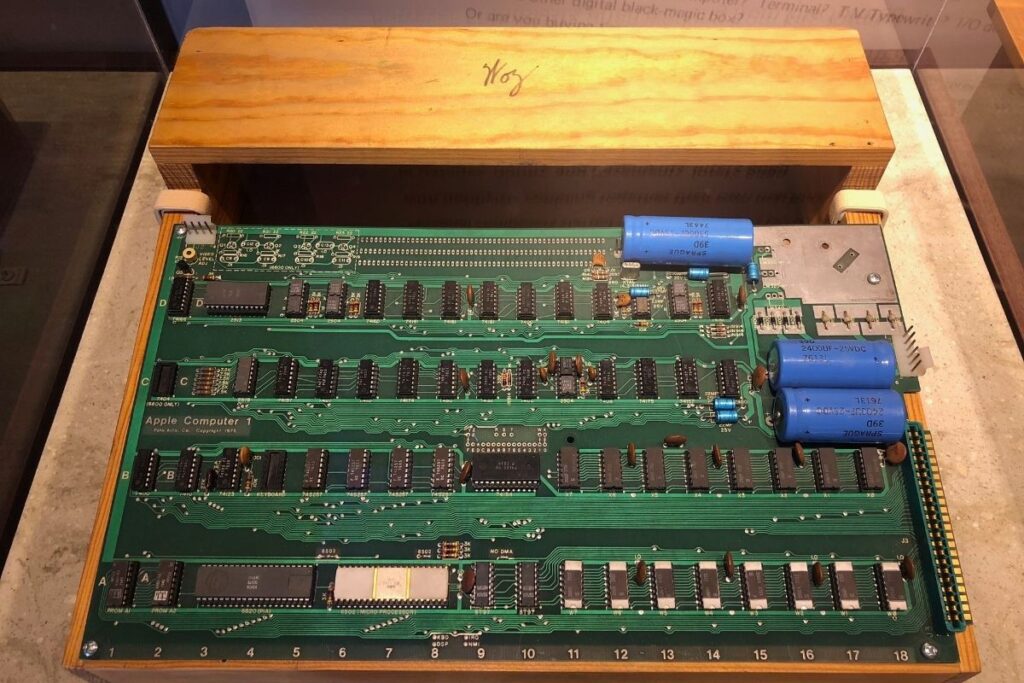
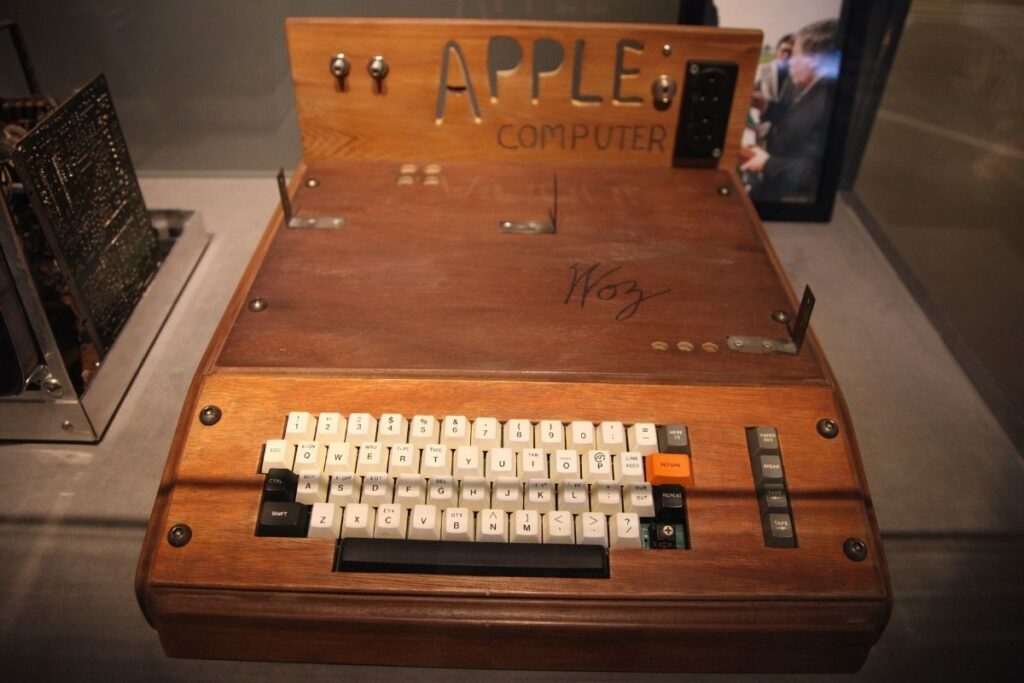
Apple-1 (1976). Computer History Museum
Apple founding contract
Apple-1 (1976). Computer History Museum

Who signed the contract and what did it establish?

The document formalized a partnership between:


  • Steve Jobs, age 21

  • Steve Wozniak, age 26

  • Ronald Wayne, age 41

Ownership was split 45 percent to Jobs, 45 percent to Wozniak, and 10 percent to Wayne. Wayne also designed Apple’s first logo, featuring Isaac Newton beneath an apple tree.


Twelve days later, Wayne withdrew. He accepted $800, later followed by $1,500, to avoid personal liability. His caution later became one of Silicon Valley’s most cited what-ifs.

How did this sale reflect the tech collectibles boom?

The Apple founding contract illustrates a broader trend.
Physical technology artifacts are gaining value in a digital world.


Key drivers include:


  • Scarcity of original documents

  • Cultural nostalgia for early computing

  • Growing interest from younger collectors

  • Use of blockchain to verify provenance

In 2026, Apple artifacts are considered blue-chip collectibles. They offer liquidity, narrative power, and long-term appreciation.

Steve Jobs. Photo: Tom Coates

The $2.51 million sale of Apple’s founding contract confirmed a new collecting reality. Technology history now commands institutional respect and financial confidence.


More than paper, the document represents the moment innovation became personal. In 2026, that origin story proved priceless.

FAQ | The Questions Collectors Are Asking Now

Receive the latest news

Subscribe To Our Magazine

Luster Magazine

Digital Magazine

Ingresa los siguientes datos y comienza a disfrutar de nuestra revista digital.