Discover

Experiential Luxury Is Reshaping NYC’s Fifth Avenue

NYC’s Fifth Avenue is entering a decisive transformation driven by luxury, architecture, and urban reinvention.

Por: Rubén Carrillo
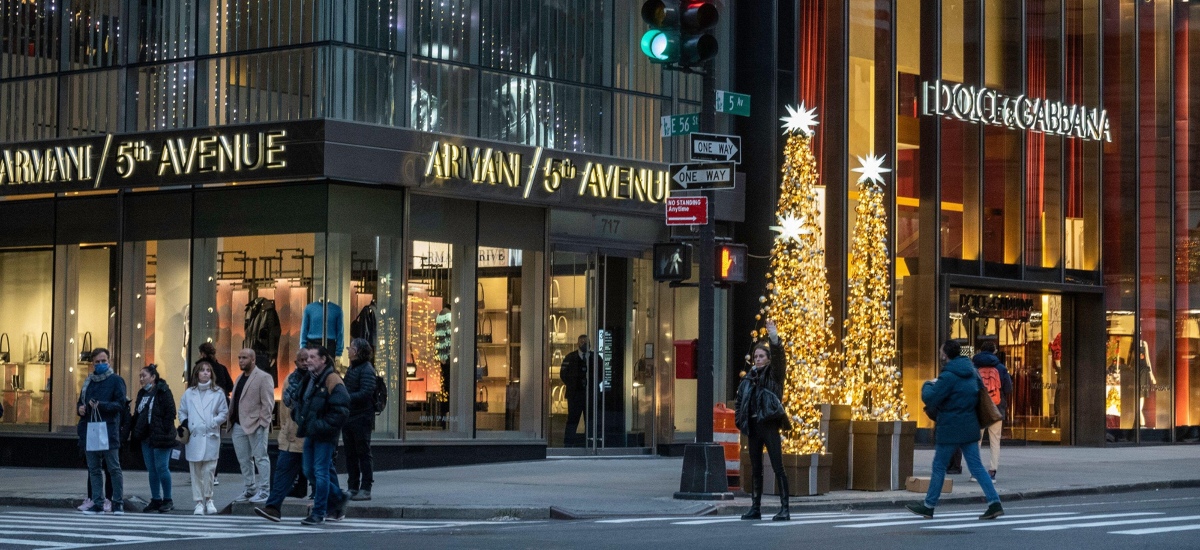
What was once defined purely by retail is now evolving into a multi-layered lifestyle destination. Global fashion houses are no longer satisfied with storefronts alone / Photo Fifth Avenue

What was once defined purely by retail is now evolving into a multi-layered lifestyle destination. Global fashion houses are no longer satisfied with storefronts alone.

They are investing in permanence, experience, and vertical presence.

At the center of this evolution stand Dior and Prada. Both brands are redefining how luxury interacts with the city.

Their strategies differ, yet their goals align. They seek to reshape NYC’s Fifth Avenue into a global benchmark for experiential luxury.

Dior’s Architectural Statement and Sensory Expansion

Dior recently unveiled an expansive new flagship on NYC’s Fifth Avenue.

The House of Dior rises as an architectural landmark rather than a conventional boutique. Designed by Peter Marino, the building blends Parisian refinement with Manhattan energy.

The façade features illuminated i-Mesh panels. These create a translucent effect that shifts with light and movement.

The structure feels both monumental and inviting. It reflects Dior’s intent to merge fashion, art, and urban life.

Inside, multiple floors host exclusive collections and curated artworks.

Each level unfolds like a gallery rather than a sales floor. The highlight is the first Dior Spa ever opened in the United States. This addition transforms shopping into a fully immersive ritual.

The flagship replaces a previous temporary location. That decision signals long-term commitment to NYC’s Fifth Avenue.

Dior is not testing the market. It is anchoring itself within the street’s future identity.
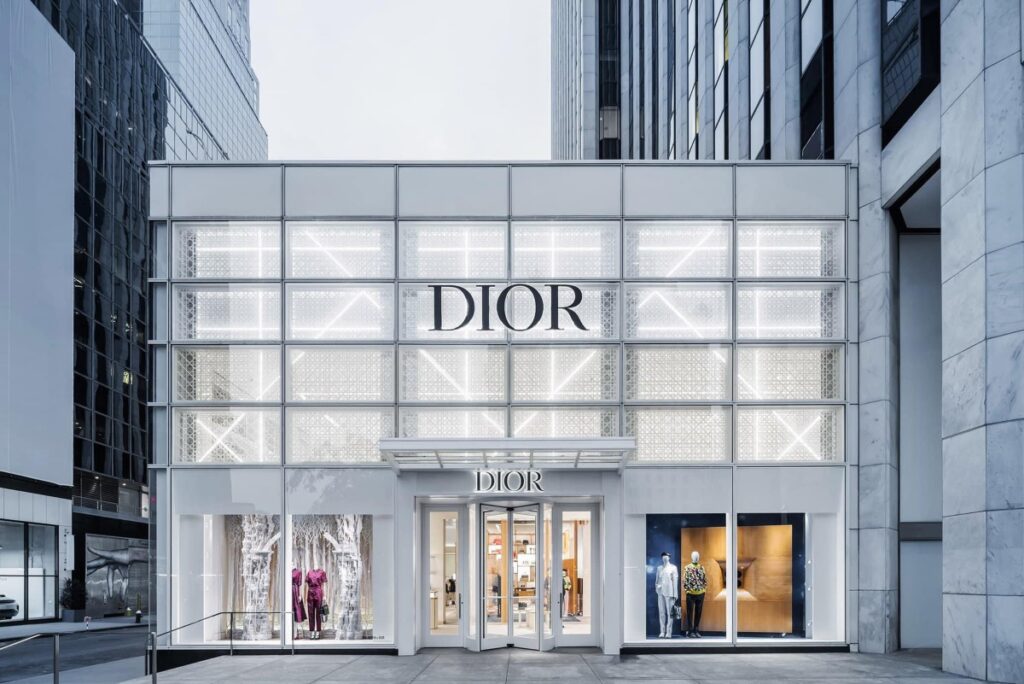
The House of Dior rises as an architectural landmark rather than a conventional boutique. Designed by Peter Marino, the building blends Parisian refinement with Manhattan energy. / Photo Dior
The House of Dior rises as an architectural landmark rather than a conventional boutique / Photo Dior

Prada’s Vertical Vision and Real Estate Ambition

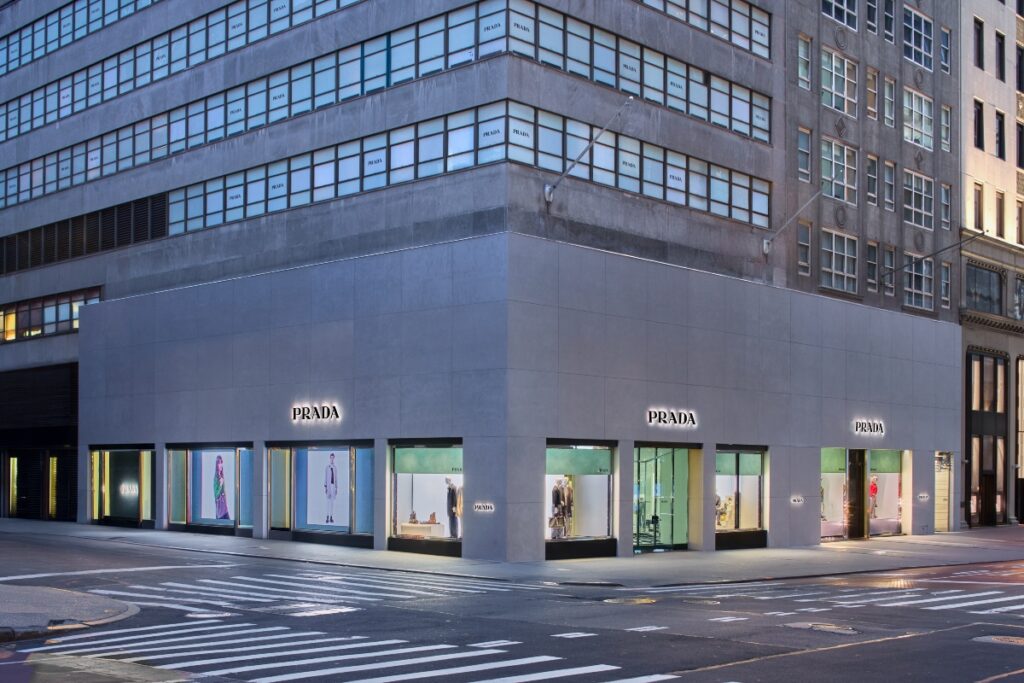
While Dior focuses on experience, Prada is securing territory. The Italian brand acquired its landmark building on Fifth Avenue outright. This move goes far beyond retail expansion.

Prada has partnered with Related Companies to develop a skyscraper.

The project will rise directly above its flagship store. It will include Prada offices and ultra-luxury residences.

The tower will also connect to the adjacent Aman hotel. This integration merges fashion, hospitality, and private living. Retail becomes the foundation of a vertical luxury ecosystem.

This strategy represents a multi-billion-dollar real estate commitment.

Prada is investing in decades, not seasons. The brand ensures a permanent presence within the city’s most iconic corridor.

The Urban Reinvention of a Historic Boulevard

The transformation of NYC’s Fifth Avenue extends beyond fashion houses.

City officials are reconsidering a long-standing urban redevelopment plan. The proposal would mark Manhattan’s most significant shift since major bike lane expansions.

The initiative aims to restrict private traffic between Central Park and 42nd Street. This stretch includes Bryant Park and reaches the edge of Times Square. The vision centers on pedestrian priority and cultural activation.

Plans include expanded green areas and outdoor terraces. New urban furniture would support events and artistic programming.

The transformation of NYC's Fifth Avenue extends beyond fashion houses / Photo: Prada

The avenue would function as a social corridor, not a traffic artery.

Supporters cite successful pedestrianization in Madrid, Paris, and London. These cities revitalized commerce by reducing vehicle congestion. NYC’s Fifth Avenue faces similar challenges today.

Approximately 46,000 vehicles pass through the 42nd Street section daily. Congestion has degraded both air quality and visitor experience. Preliminary studies suggest a 30 percent reduction in noise pollution.

Luxury brands support the initiative. Names like Rolex, Apple, Chanel, Gucci, and LVMH dominate the area. The presence of Rockefeller Center reinforces its global appeal.

Questions and Brief Answers

RELATED POSTS

Receive the latest news

Subscribe To Our Magazine

Luster Magazine

Digital Magazine

Ingresa los siguientes datos y comienza a disfrutar de nuestra revista digital.