Architecture

Guangzhou’s Futuristic Stadium Unveiled by Zaha Hadid Studio

Zaha Hadid Architects’ Guangzhou sports complex merges fluid design, culture, and sustainability in a landmark waterfront venue for the Greater Bay Area.

Por: Alejandro Carrillo
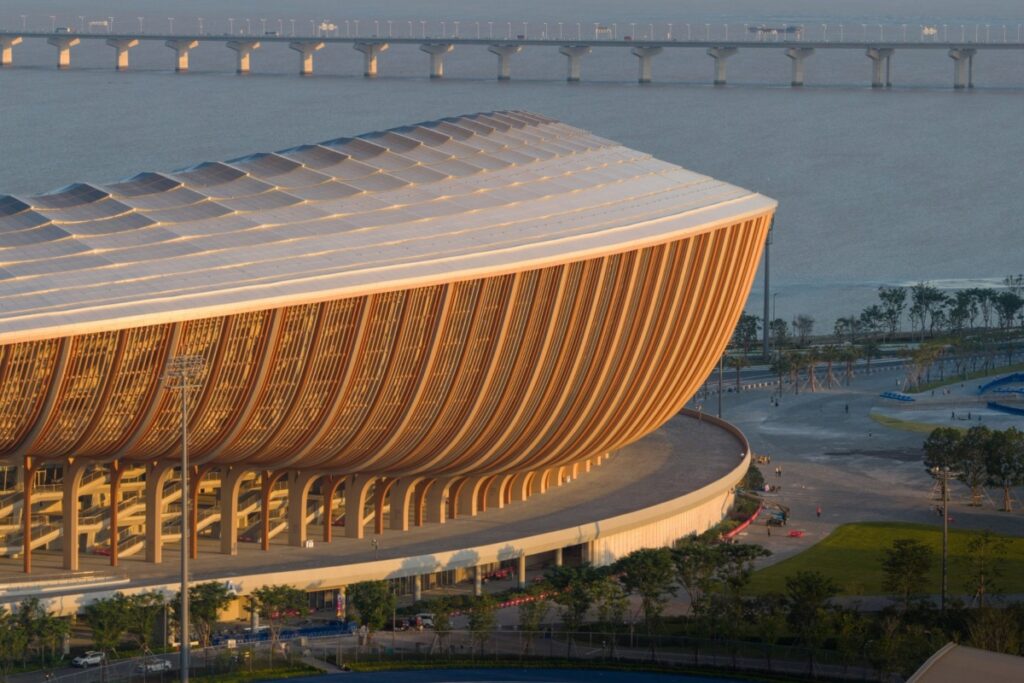
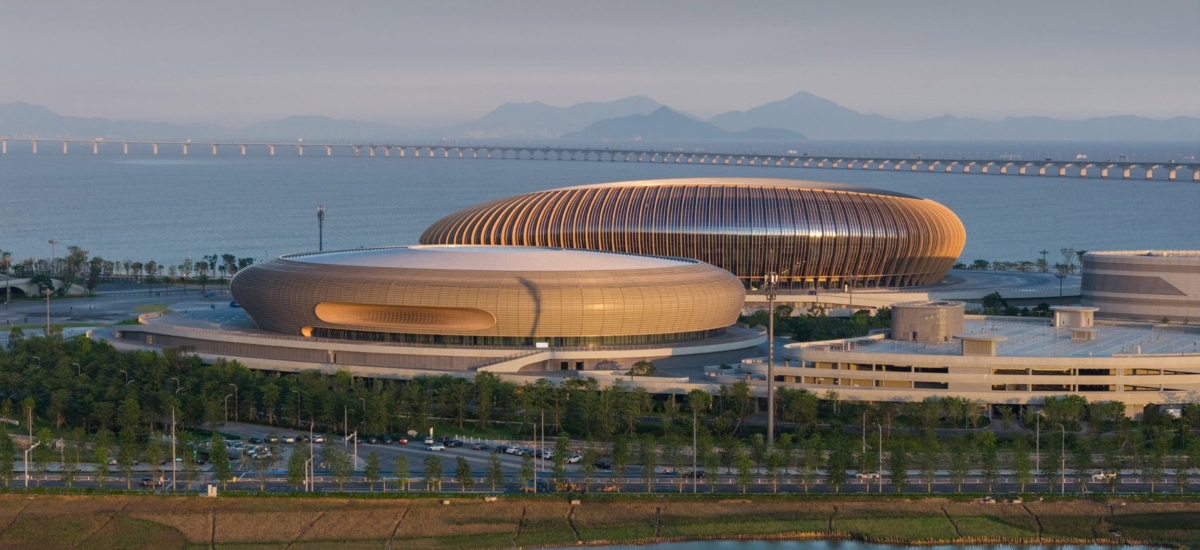
A 60,000-seat stadium, a 20,000-seat arena, a 4,000-seat aquatic centre, athlete housing, and training grounds. / Photo via CRLand

Zaha Hadid Architects has unveiled the groundbreaking Greater Bay Area Sports Centre in Guangzhou, China—a visionary waterfront complex blending cutting-edge design, athletic excellence, and cultural vibrancy.


Located in Nansha’s 70-hectare waterfront park, the landmark features a 60,000-seat stadium, a 20,000-seat arena, and a 4,000-seat aquatic centre.


Developed in collaboration with the Guangdong Architectural Design and Research Institute, the project reflects Zaha Hadid’s iconic fluid aesthetics while honoring local heritage and sustainability.


This world-class sports and entertainment destination redefines urban infrastructure in the Greater Bay Area, offering a dynamic hub for community engagement, international events, and eco-conscious architecture—a true fusion of innovation, sport, and culture in one of Asia’s fastest-growing regions.
A Stadium Inspired by Tradition

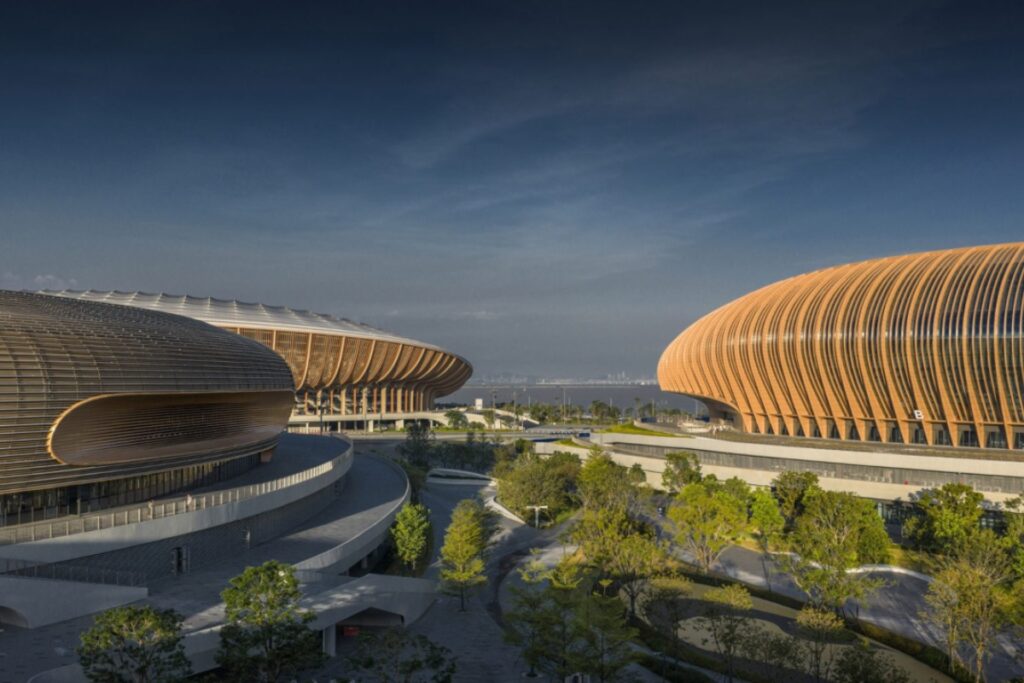
The Guangdong Architectural Design and Research Institute partnered on the design and execution. / Photo via CRLand

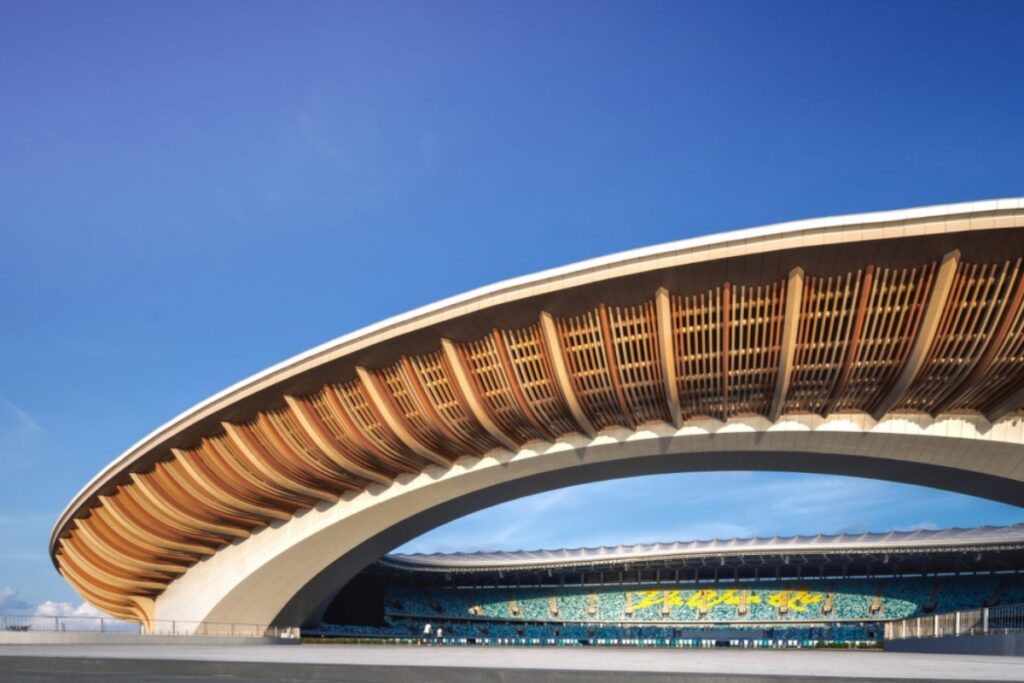
The curving forms of the stadium and surrounding facilities draw inspiration from the hulls of Song Dynasty sailing ships. This maritime reference connects the architecture to Guangzhou’s history as a port city, while vertical louvres and layered roofs echo the pleated silk structures of traditional Chinese fans. 

The curving forms were inspired by Song Dynasty sailing ships and traditional Chinese fans. / Photo via CRLand

The design is not only visually striking but also functional, allowing natural ventilation and shading to optimize comfort in the region’s humid subtropical climate.

Technical and Environmental Innovation

The 60,000-seat stadium features an adjustable seating bowl, adaptable for different sporting and cultural events. A dramatic arched opening in the façade channels cool sea air from the Pearl River estuary into the venue, reducing reliance on mechanical cooling systems. Surrounding wetlands were integrated into the master plan to provide flood prevention and manage rising sea levels, reinforcing the project’s commitment to sustainability.

By combining passive cooling strategies with advanced engineering, Zaha Hadid Architects demonstrates how architecture can balance performance with environmental responsibility.

A Multifunctional Sports and Cultural Hub

With the completion of the Greater Bay Area Sports Centre, Zaha Hadid reinforces her studio’s legacy of visionary design that fuses tradition, innovation, and sustainability. / Photo via CRLand

Beyond the stadium, the Greater Bay Area Sports Centre includes a 20,000-seat indoor arena for basketball and concerts, as well as a 4,000-seat aquatic centre with Olympic-standard pools and diving facilities. 

Athlete accommodations, outdoor training pitches, and school tracks further expand the centre’s role as a community hub. Designed to host both international competitions and local events, the complex positions Guangzhou as a global destination for sport and culture.

With the completion of the Greater Bay Area Sports Centre, Zaha Hadid reinforces her studio’s legacy of visionary design that fuses tradition, innovation, and sustainability. The waterfront complex is more than a sports facility—it is a cultural landmark that reflects Guangzhou’s maritime heritage while setting new standards for environmental integration.

This project exemplifies how Zaha Hadid Architects continues to shape the future of architecture, creating spaces that inspire athletes, audiences, and communities alike.

Key Information

RELATED POSTS

Receive the latest news

Subscribe To Our Magazine

Luster Magazine

Digital Magazine

Ingresa los siguientes datos y comienza a disfrutar de nuestra revista digital.