Architecture

Cerro Pelon Ranch: Tadao Ando’s Monument Crafted for Stillness

Against its untouched silence, Cerro Pelon Ranch rises as a serene architectural gesture shaped by Tadao Ando’s unmistakable hand.

Por: Rubén Carrillo
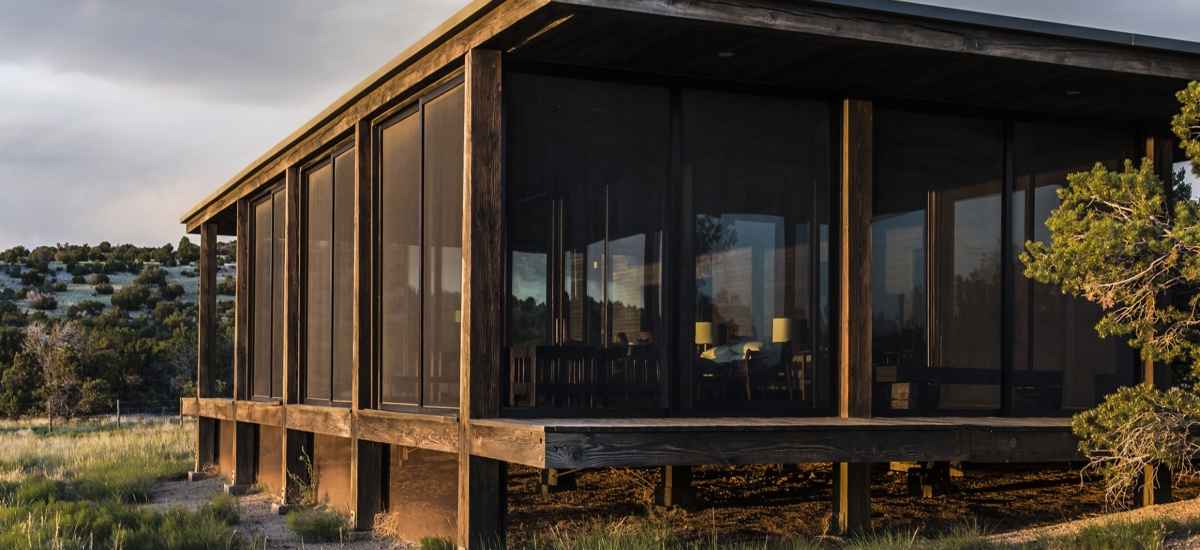
Completed in 2012 for Tom Ford, Rancho Cerro Pelon merges equestrian culture, meditative design, and elemental beauty across more than 24,000 acres of Santa Fe’s stark terrain. / Photo Tom Ford
Completed in 2012 for Tom Ford, Cerro Pelon Ranch merges equestrian culture, meditative design, and elemental beauty across more than 24,000 acres of Santa Fe’s stark terrain. / Photo Tom Ford

Completed in 2012 for Tom Ford, Cerro Pelon Ranch merges equestrian culture, meditative design, and elemental beauty across more than 24,000 acres of Santa Fe’s stark terrain.

This is not a residence. It is a monumental refuge crafted for stillness.

A poetic retreat where concrete meets horizon, and where architecture listens before it speaks.

A Vision Rooted in the Desert

Cerro Pelon Ranch unfolds across a landscape shaped by sun, wind, and geological memory. 

Ando embraced these raw forces rather than resisting them. Using his signature concrete planes, he framed emptiness with quiet precision.

The project, executed with local supervision by Marmol-Radziner & Associates, reflects Tadao Ando’s fascination with nature’s rhythm. Every structure echoes the desert’s cadence. Every proportion seeks a dialogue with the horizon.

The color palette replicates the surrounding terrain—sandy neutrals, volcanic grays, and the intense blues that dominate the New Mexico sky.

Here, minimalism is not an aesthetic choice. It is a philosophy expressed through light, shadow, and silence.
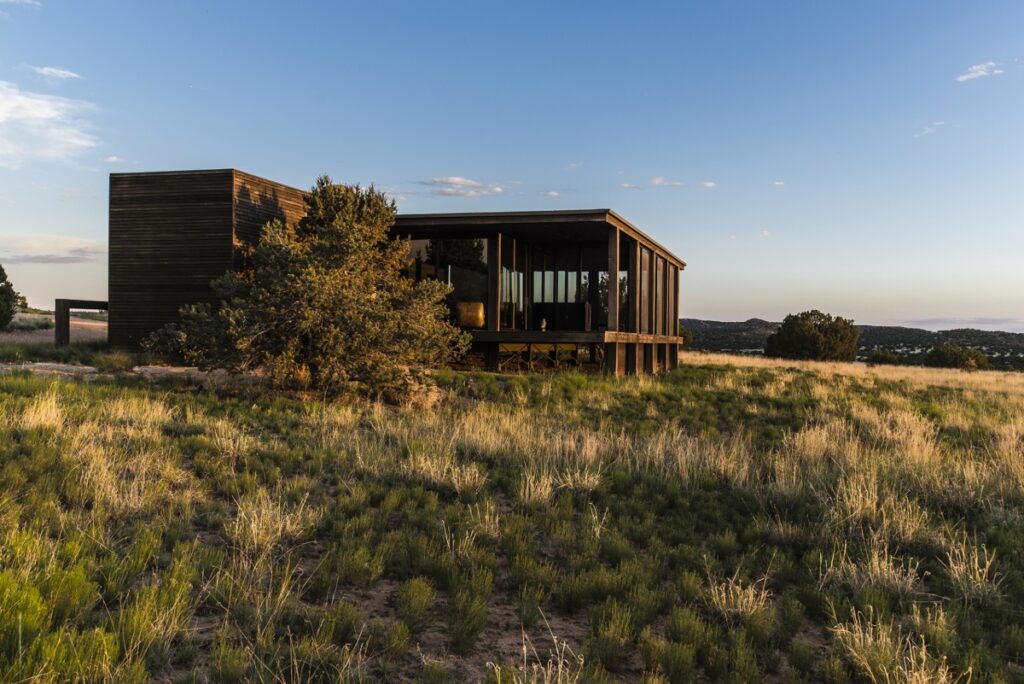
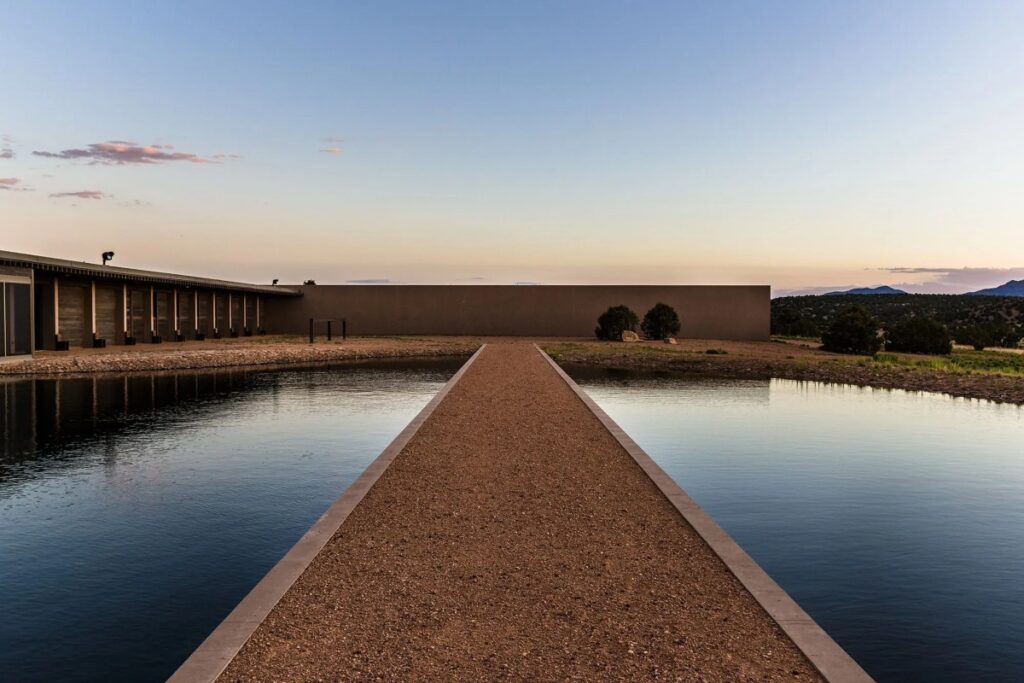
Rancho Cerro Pelon unfolds across a landscape shaped by sun, wind, and geological memory. / Photo Tom Ford
Cerro Pelon Ranch unfolds across a landscape shaped by sun, wind, and geological memory. / Photo Tom Ford

An Equestrian Haven with Architectural Poise

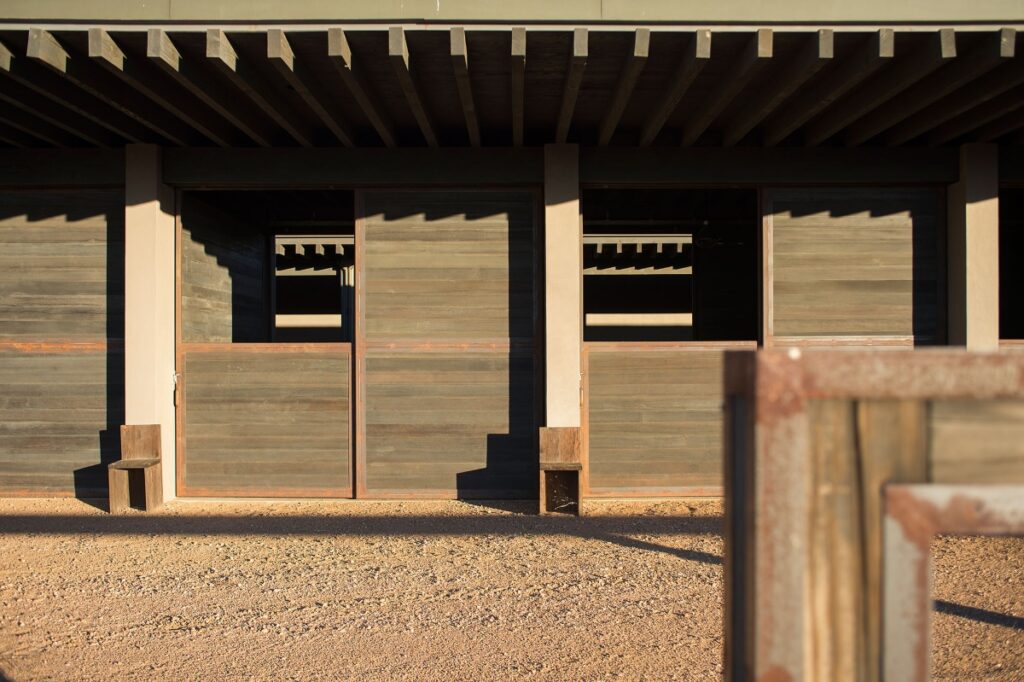
The property includes a complete equestrian complex conceived with the same purity of form.

Stables, training arenas, and presentation grounds coexist with the main house in a choreography of clarity.

The connection between human, horse, and landscape becomes almost ceremonial.

Ando’s geometric discipline amplifies the experience, anchoring each equestrian space with calm proportions and fluid circulation.

This interplay makes Cerro Pelo Ranch, one of the most distinctive equestrian estates ever realized, blending athletic functionality with meditative beauty.

The Main House: A Floating Line of Light

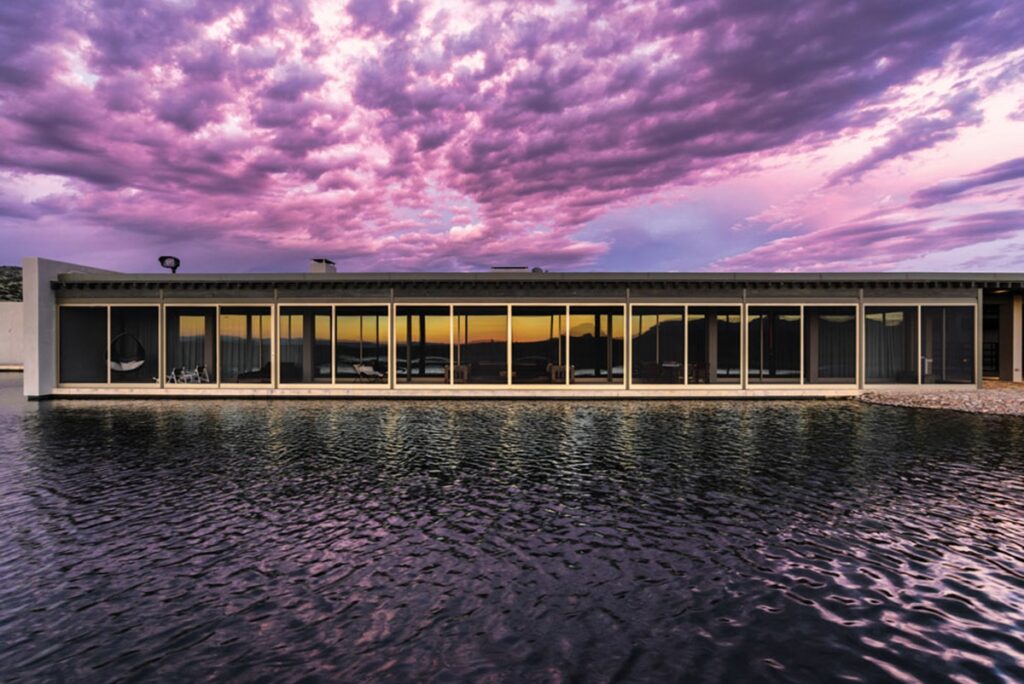
The residence stands as a long, linear volume wrapped in glass. Positioned with absolute intentionality, it appears to hover above a vast circular pool—a reflective plane that dissolves the boundary between architecture and nature.

The water creates a lens that catches the desert’s shifting colors. It recalls the emotional power of Barragán’s water gardens yet filtered through Ando’s restrained logic.

Inside, spaces extend with uninterrupted clarity. Rooms unfold softly, encouraging contemplation and removing all unnecessary distractions.

This is architecture as quiet rebellion: a sanctuary that chooses stillness over spectacle.

The water creates a lens that catches the desert’s shifting colors. It recalls the emotional power of Barragán’s water gardens yet filtered through Ando’s restrained logic. / Photo Tom Ford

A Dialogue of Form, Landscape, and Memory

Ando transforms barren land into a stage for light. Concrete surfaces guide natural illumination with controlled intensity, creating subtle dramas across the day.

Wind becomes part of the composition. Shadows carve ephemeral shapes that redefine the architecture with every hour.

Through this choreography, Cerro Pelon Ranch becomes an open-air observatory of time’s passage.

It treats nature not as a backdrop but as the main protagonist.

Wind becomes part of the composition. Shadows carve ephemeral shapes that redefine the architecture with every hour. / Photo Tom Ford

A Site with Cinematic Legacy

An unexpected presence shapes the northeastern edge of the estate: the famous Silverado movie town.

Originally built as a set for the 1985 film, the frontier-inspired streetscape remains intact.

Its weathered facades have appeared in productions such as Thor and Wild Wild West. In Ford’s property, this cinematic ghost town acts as a surreal cultural artifact.

Past and present merge. Minimalism meets mythology.

The Extended Compound: A Self-Sustaining World

Marmol-Radziner designed additional structures that expand the estate’s capabilities.

Guest houses, staff residences, and administrative buildings adopt a gentle palette and disciplined silhouettes.

A private airstrip and hangar complete the compound, enhancing autonomy while maintaining aesthetic cohesion.

Every element—no matter how functional—follows the same architectural restraint. Nothing disrupts the purity of Ando’s vision.

Marmol-Radziner designed additional structures that expand the estate’s capabilities / Photo Tom Ford
The property includes a complete equestrian complex conceived with the same purity of form / Photo Tom Ford

Tadao Ando and Tom Ford: Masters of Design

Born in Osaka in 1941, Ando cultivated his craft through self-directed study and global travel. By 1969, he had established his own studio and later taught at Yale, Columbia, Harvard, and Tokyo.

His work, anchored in reinforced concrete, transforms simple materials into emotional experiences.

He manipulates light with minimalist confidence, generating spiritual atmospheres in both sacred and domestic spaces.

The Pritzker Prize of 1995 recognized his ability to turn structure into philosophy. At Cerro Pelon Ranch, that philosophy reaches sublime clarity.

This immense property stretches across more than 8,000 hectares. Its architecture emerges from the land rather than dominating it.

The desert offers scale, and Ando provides serenity. Together, they craft a living temple dedicated to space, silence, and the elemental nature of time.

Fashion icon and filmmaker Tom Ford (born Thomas Carlyle Ford on August 27, 1961) was the original owner of Cerro Pelon Ranch, which he sold to an anonymous buyer in 2021.

Renowned as an American fashion designer, Ford launched his eponymous luxury brand in 2005, following his influential tenure as creative director at Gucci and Yves Saint Laurent.

Beyond fashion, Ford has made his mark in cinema, writing and directing the critically acclaimed films A Single Man (2009) and Nocturnal Animals (2016). Currently, he serves as the chairman of the Council of Fashion Designers of America, continuing to shape the industry’s future.

Key Information

RELATED POSTS

Receive the latest news

Subscribe To Our Magazine

Luster Magazine

Digital Magazine

Ingresa los siguientes datos y comienza a disfrutar de nuestra revista digital.