Art

Why Mark Rothko No. 31 Hit $62 Million

Mark Rothko No. 31 reached 62 million dollars at Christie’s, revealing how blue chip abstraction anchors a polarised luxury art market in 2025.

Por: Angela Leon Cervera
Mark Rothko No. 31
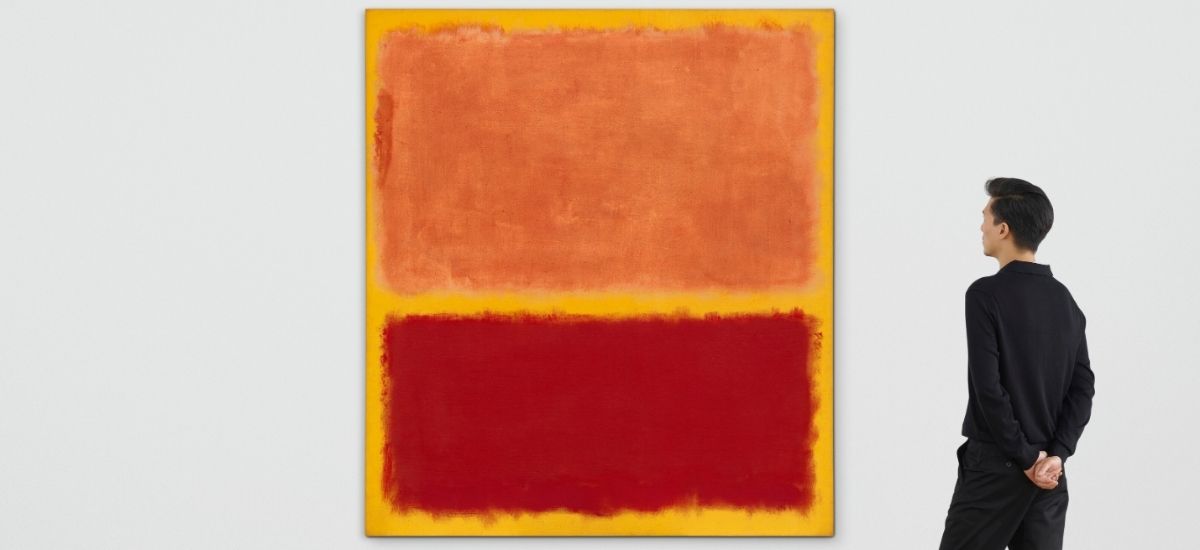
MARK ROTHKO (1903-1970) No. 31 (Yellow Stripe). Courtesy of Christie's

On 17 November 2025, Mark Rothko No. 31 (Yellow Stripe) sold at Christie’s New York for 62,160,000 dollars, fees included. The painting was the crown jewel of The Collection of Robert F. and Patricia G. Ross Weis and closed the night after nearly five minutes of tense bidding in a packed Rockefeller Center saleroom.


Together, the Weis single-owner sale and the 20th Century Evening Sale reached about 689.8 million dollars and sold more than 96 percent by lot. In a season defined by cautious guarantees and tight consignments, the result turned a single evening into a global confidence signal for high-end art.
Mark Rothko No. 31
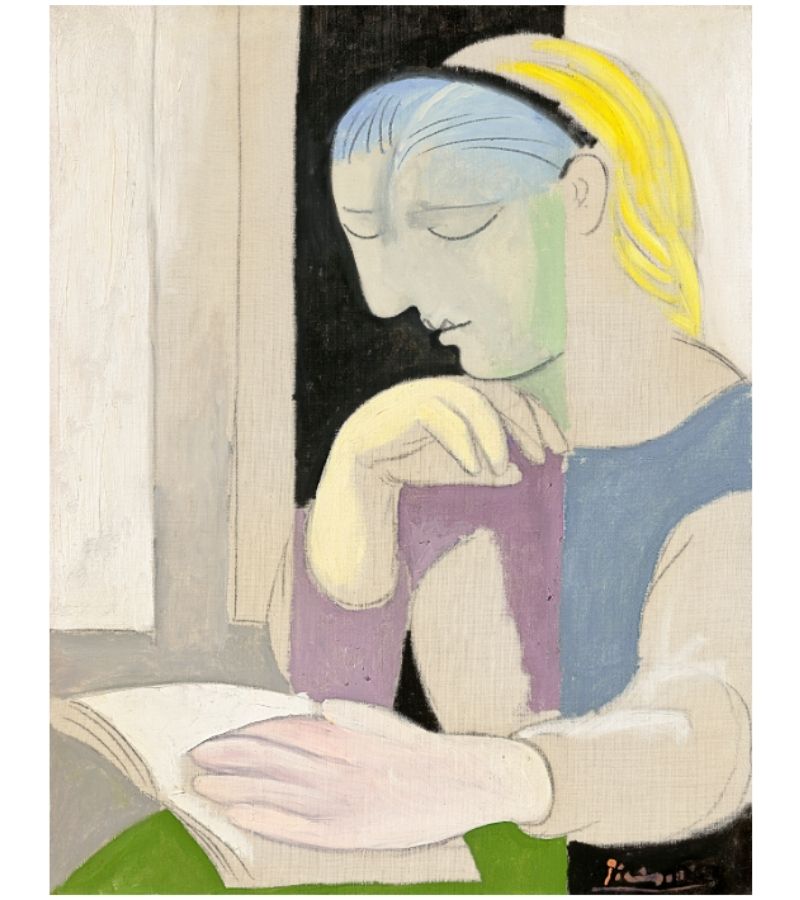
PABLO PICASSO (1881-1973) La Lecture (Marie-Thérèse). Courtesy of Christie's

How Did Mark Rothko No. 31 Reach 62 Million Dollars?

Several levers aligned. First, this is a 1958 canvas, firmly within Rothko’s golden period of Color Field painting, when his stacked rectangles of colour achieved their most luminous, vibrating intensity. Christie’s emphasised the glowing bands of yellow, orange and red that appear to float on the surface, a textbook case of his immersive, meditative palette. 


Second, provenance did heavy lifting. Works from the Ross Weis collection had been largely unseen for decades and carried the aura of a discreet, deeply informed American collection. No. 31 arrived with a pristine ownership trail and an exhibition history that reassured institutions and private buyers alike. 


Third, the competitive field mattered. The same night, Claude Monet’s Nymphéas and Picasso’s La Lecture each brought about 45.5 million dollars, while a David Hockney double portrait achieved over 44.3 million. Rothko still sat at the apex of this blue chip cluster, which reinforced his role as a pricing benchmark for postwar abstraction.

Mark Rothko No. 31
MARK ROTHKO (1903-1970) No. 31 (Yellow Stripe). Courtesy of Christie's
Mark Rothko No. 31
HENRI MATISSE (1869-1954) Figure et bouquet (Tête ocre). Courtesy of Christie's

Why Does This Mark Rothko Painting Still Feel Spiritually Dangerous?

Rothko repeatedly insisted he was “not an abstractionist” and that his interest lay in basic human emotions such as tragedy, ecstasy and doom. He described people who weep before his paintings as sharing the same religious experience he had while painting them. 


No. 31 is built to provoke exactly that kind of encounter. Large scale, soft edges and thin veils of colour pull the viewer into a field of saturated light. In a world addicted to notifications, a painting that demands slow looking and offers a kind of secular chapel effect becomes a luxury object in itself. Collectors are not only buying pigment on canvas. They are buying access to a very expensive silence.


The irony is sharp. Rothko once returned the lucrative Seagram commission rather than see his murals reduced to restaurant décor for wealthy diners. Today, the same moral intransigence forms part of the brand story that makes a Rothko feel pure, and therefore worth a premium, within a market obsessed with authenticity.

What Does This Sale Reveal About The Luxury Art Market In 2025?

The broader context is not euphoric. According to the Art Basel & UBS Art Market Report 2025, global art sales in 2024 fell to about 57.5 billion dollars, a 12 percent decline that hit the very top end of the market hardest. 


Rothko No. 31 shows how the system adjusts. Fewer masterpieces come to auction, but when a work with museum-level quality, fresh provenance and a famous name appears, capital concentrates aggressively. Masterpieces by Rothko, Monet and Picasso each cleared the 40 million dollar mark in the same Christie’s session, reinforcing a narrow safe-haven corridor for wealth. 


It is also important to remember the ceiling. The auction record for a Rothko remains Orange, Red, Yellow, sold at Christie’s in 2012 for about 86.9 million dollars.  In that light, 62.16 million feels less like exuberance and more like a rational price for a prime-period canvas, adjusted to a more cautious, strategically “rebalanced” market.

Mark Rothko No. 31
PIET MONDRIAN (1872-1944) Composition with Red and Blue. Courtesy of Christie's

The sale of Mark Rothko No. 31 (Yellow Stripe) at 62.16 million dollars crystallises a paradox. An artist who chased spiritual intensity now anchors risk-managed portfolios. Yet this tension is exactly where the painting gains its contemporary charge.


In 2025, collectors at the top end are no longer paying only for historic importance. They are paying for rare emotional bandwidth in a jittery world. The value of this Rothko is therefore double and tightly encrypted. On the surface, it is a textbook blue chip asset. Underneath, it is a costly way of asking a very old question: what is a moment of genuine silence worth?

FAQ: Rothko, Records And Luxury Art In 2025

Receive the latest news

Subscribe To Our Magazine

Luster Magazine

Digital Magazine

Ingresa los siguientes datos y comienza a disfrutar de nuestra revista digital.