Art

The Remarkable Recovery of Fra Antonio da Monza’s Illuminated Page

Discover the journey of Fra Antonio da Monza’s illuminated page: provenance, theft, repatriation, and the broader mystery of Renaissance manuscript fragments.

Por: Angela Leon Cervera
Fra Antonio da Monza
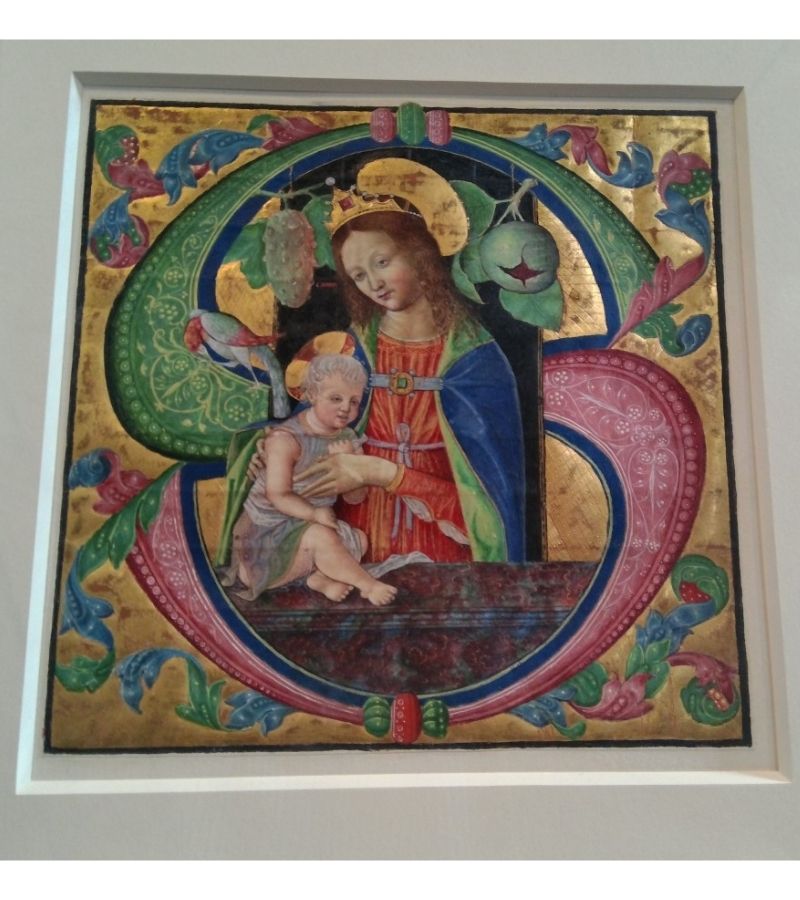
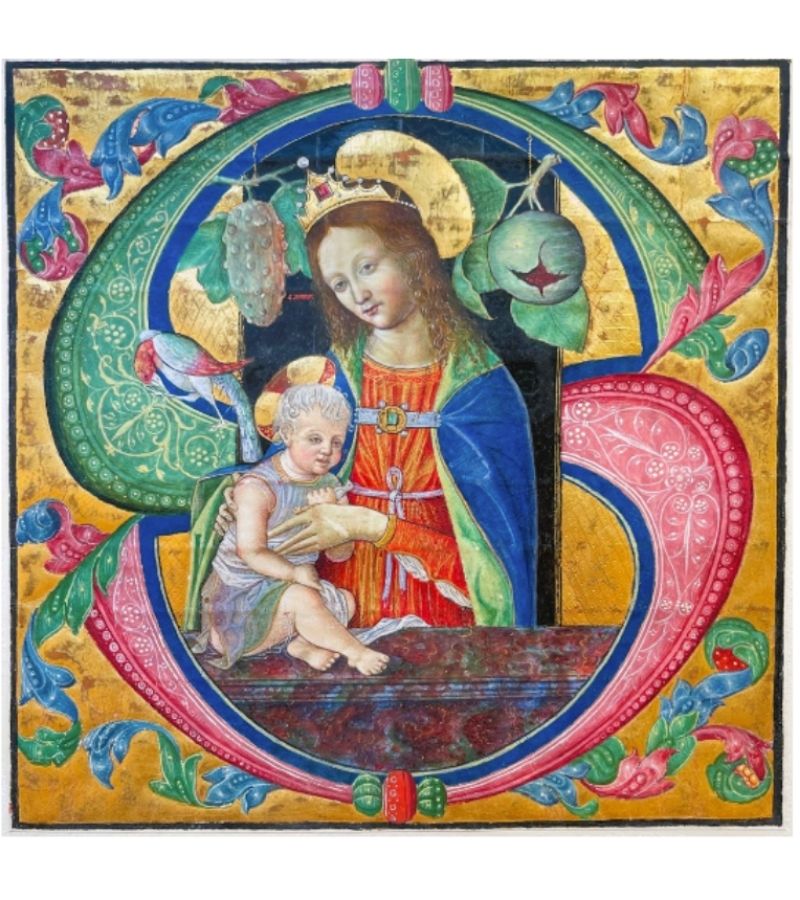
Fra Antonio da Monza. “Virgin with the Child”. Photo: Carabinieri

In the world of Renaissance art, the name Fra Antonio da Monza resonates with rare precision and subtle mystery. This Italian Franciscan friar-illuminary carved out a niche at the intersection of devotion and luxury, his work inhabiting the illuminated margins of sacred texts.


When one of his pages surfaced in February 2025, after decades of disappearance, the recovery marked something more than a mere return. It underlined how the fragmentary world of manuscript illumination can conceal full stories of theft, repatriation and cultural memory.
Fra Antonio da Monza
Fra Antonio da Monza. “Virgin with the Child”.

What does the recovery of Fra Antonio da Monza’s page tell us about provenance and repatriation?

The recovery of the illuminated page attributed to Fra Antonio da Monza offers a case study in how provenance and repatriation operate today. Key data points:


  • The page in question depicted the “Virgin with the Child” and measured 256 × 256 mm.

  • It was taken from the convent of Basilica di Santa Maria in Aracoeli in Rome (via the Franciscan community) sometime around the early 1980s.

  • In February 2025 it appeared online in a major London-based auction house; the piece was physically in Switzerland.

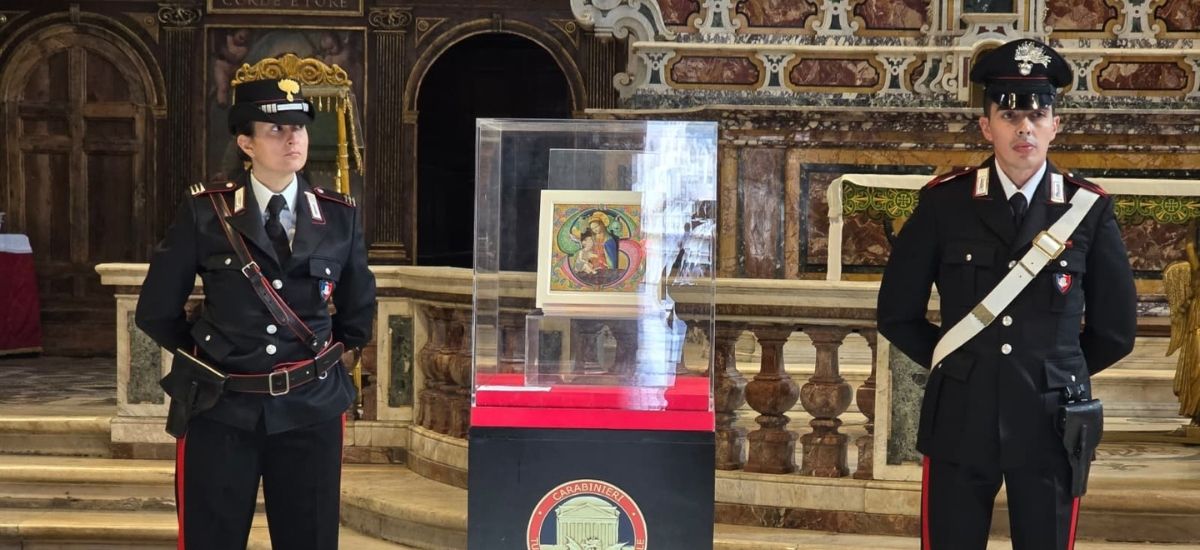
  • On 29 October 2025 the piece was officially returned in Rome after cooperation by the Comando Carabinieri per la Tutela del Patrimonio Culturale (TPC) and the auction house.

From this story we learn:


  • Provenance matters: The scholarly documentation by Fra Antonio da Monza and later experts provided essential evidence.

  • International cooperation is key: Italian police, Swiss and UK jurisdictions played parts.

  • Repatriation can be symbolic and material: The return of the page restores a connection to its original liturgical context.
    In short, the recovery of Fra Antonio da Monza’s page exemplifies how art history, forensic investigation and diplomacy converge in reclaiming cultural heritage.

Fra Antonio da Monza
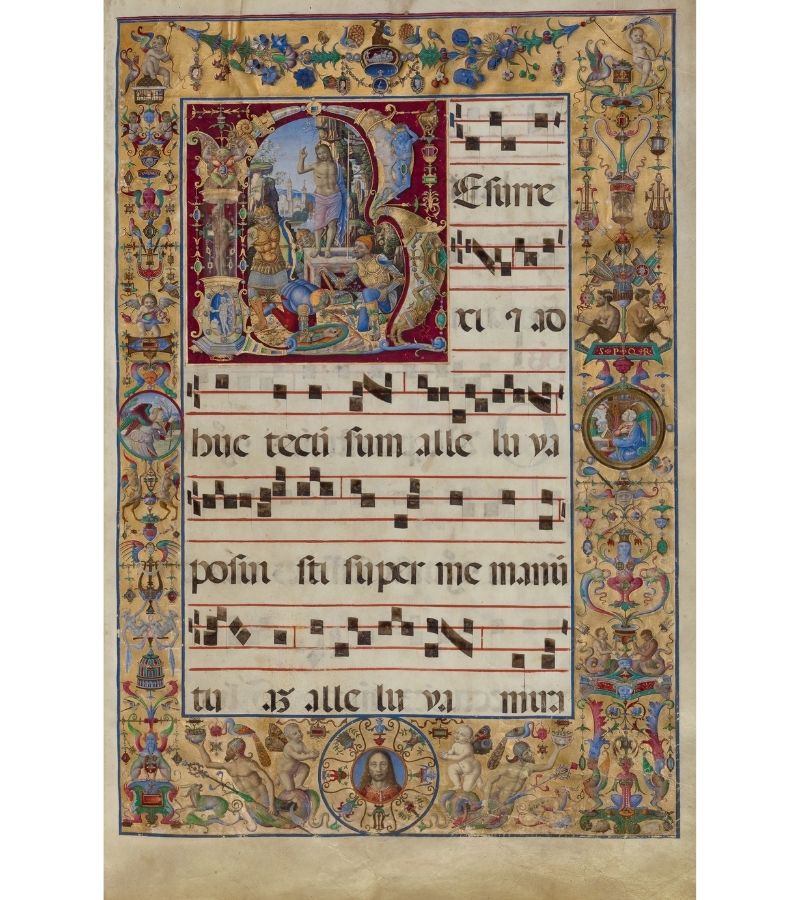
Initial R: The Resurrection by Antonio da Monza
Fra Antonio da Monza
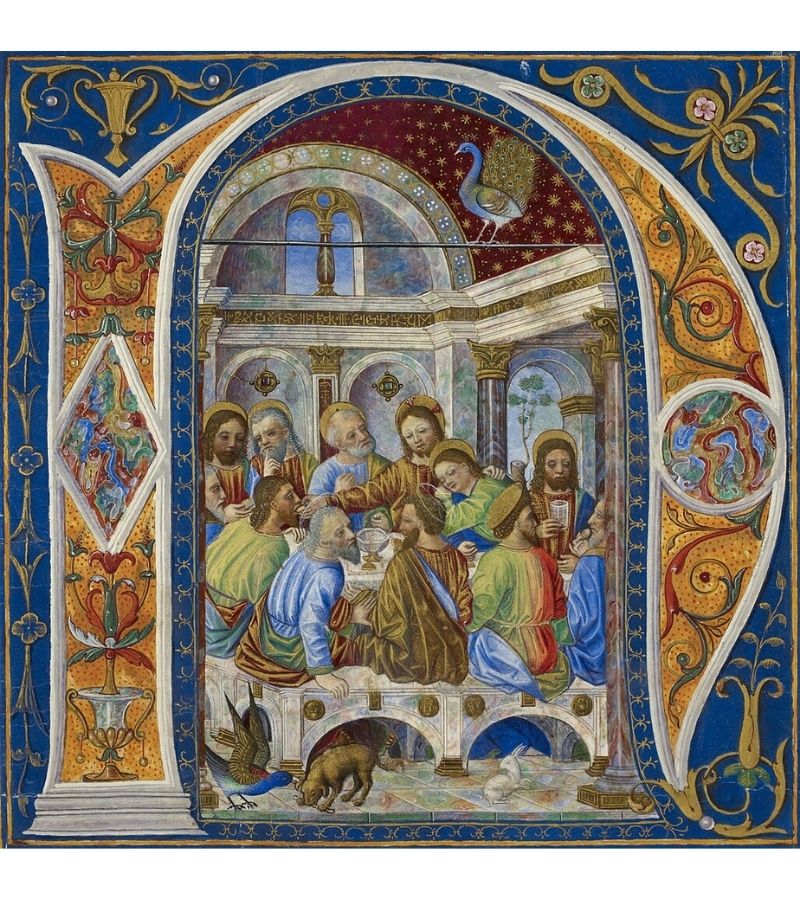
Initial 'N', the Last Supper

Who was Fra Antonio da Monza and why does his work matter?

To appreciate the significance of this recovery we must look at the man behind the micro-masterpiece.


  • Fra Antonio da Monza was active circa 1480–1505 in northern Italy (Monza, Lombardy) and Rome.

  • His illuminated manuscripts belong to the late Quattrocento, mixing Gothic devotional forms with the emerging humanist aesthetic.

  • For example, one of his confirmed works is found in the J. Paul Getty Museum, a gradual made for Santa Maria in Aracoeli. 

  • His style is noted for rich colour, gold leaf, lively border decoration (grotteschi, jewels, cameos) and bold palette choices.

Why it matters:


  • Manuscript illumination is a niche but foundational medium for understanding late-Medieval and early-Renaissance visual culture.

  • Fra Antonio’s manuscripts participated in both liturgical use and high artistic ambition; they were not mere decorations but active tools of devotion.

  • The survival of his works is fragile; each page is a fragment of a larger codex and thus a fragment of history. The return of one page is more than aesthetic—it is an act of historical repair.

What is the broader context of manuscript theft and the “mystery of the missing folios”?

The recovered page is significant, but it also points to the larger phenomenon of manuscript dismemberment and illicit trade.


  • The folio in question belonged to the “Graduale R” of the Franciscan community at Santa Maria in Aracoeli. The theft period is identified as 1981–1986.

  • The modus operandi often involves cutting pages from choir-books or manuscripts, since detached folios sell more easily and discreetly than whole codices.

  • The delay between theft and report (six years in this case: from 1981–86 to official complaint in December 1987) allowed dispersal of fragments.

  • Many of the missing pages remain unrecovered, which means the “mystery of the missing folios” remains open. The recovered page is a victory, but only partial.

What this teaches us:


  • The ‘book as unity’ becomes vulnerable when pages are taken out of their original structure. That loss is harder to quantify than a stolen painting.

  • Effective recovery strategies require detailed catalogues, photographic records and cross-border vigilance.

  • The recovery of one page can provide clues to recover more: matching inks, parchment, script, border motifs, database references.
    In sum, the case of Fra Antonio da Monza invites us to see manuscript theft not as isolated incidents but as ongoing threats to collective cultural memory.

Fra Antonio da Monza
Fra Antonio da Monza. “Virgin with the Child”.

The rescue of a foliated gem by Fra Antonio da Monza charts a remarkable arc—from sacred Franciscan choir-book to international auction block and back to its cradle in Rome. It illustrates the power of provenance scholarship, international policing, and institutional vigilance in reclaiming cultural heritage. Yet it also serves as a sobering reminder: for every illuminated page returned there may be dozens still missing, still wandering. In this way, the recovery is both a milestone and a challenge. The legacy of Fra Antonio da Monza lives on, not only in the shimmer of gold leaf and vibrant pigment, but in the resilience of memory and the quest to restore the unity of what was once whole.

FAQ – Frequently Asked Questions

Receive the latest news

Subscribe To Our Magazine

Luster Magazine

Digital Magazine

Ingresa los siguientes datos y comienza a disfrutar de nuestra revista digital.