Art

Renoir’s Hidden Portrait: Intimacy Revealed

A newly surfaced Renoir portrait of Jean and Gabrielle breaks silence. Discover how this intimate work reshapes our view of Renoir’s late domestic art.

Por: Angela Leon Cervera
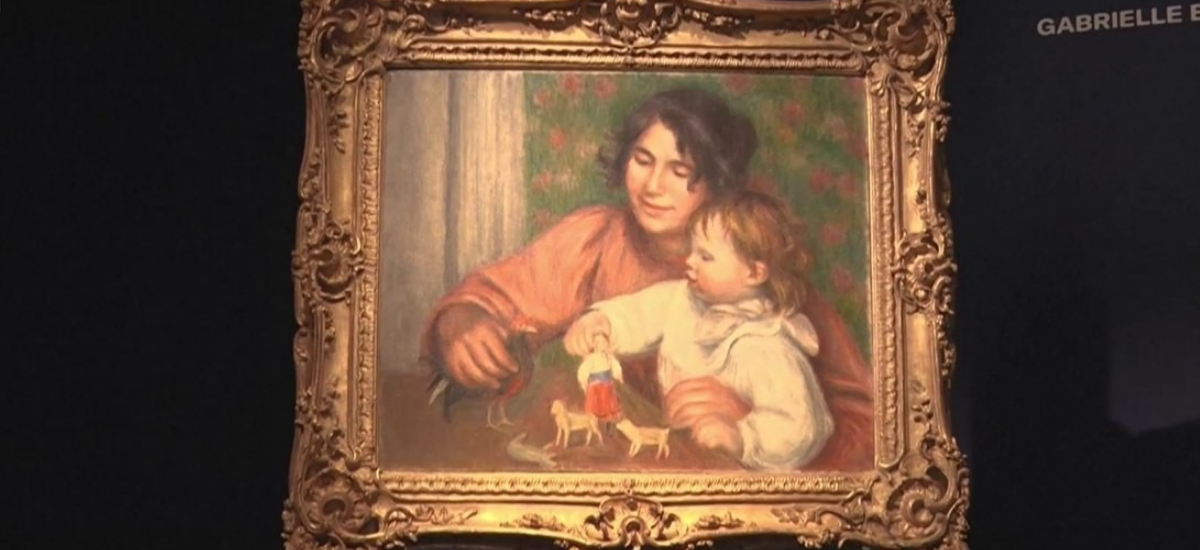
RENOIR L’enfant et ses jouets – Gabrielle et le fils de l’artiste
Renoir. L’enfant et ses jouets – Gabrielle et le fils de l’artiste, Jean / Photo via Dailymotion

What does it mean when an artwork considered lost for more than a century suddenly reemerges? The unveiling of a new Renoir intimate portrait titled L’enfant et ses jouets – Gabrielle et le fils de l’artiste, Jean commands attention not just for its aesthetic power but for the silence it breaks. Announced on 16 October 2025, the painting will go to auction at Drouot in Paris on 25 November, with a modest estimate between €1 million and €1.5 million. 


This is no ordinary sale. The work has never been on the public radar. Its provenance is remarkably direct, tracing through intimate custodians rather than the commercial art market. Its condition is reported to be “perfect, absolutely without retouching”, a rarity for a work more than a century old. In this post we explore how this portrait reconfigures Renoir’s legacy, the art of domestic intimacy, and the modern mechanisms of authentication and value.
Renoir intimate portrait
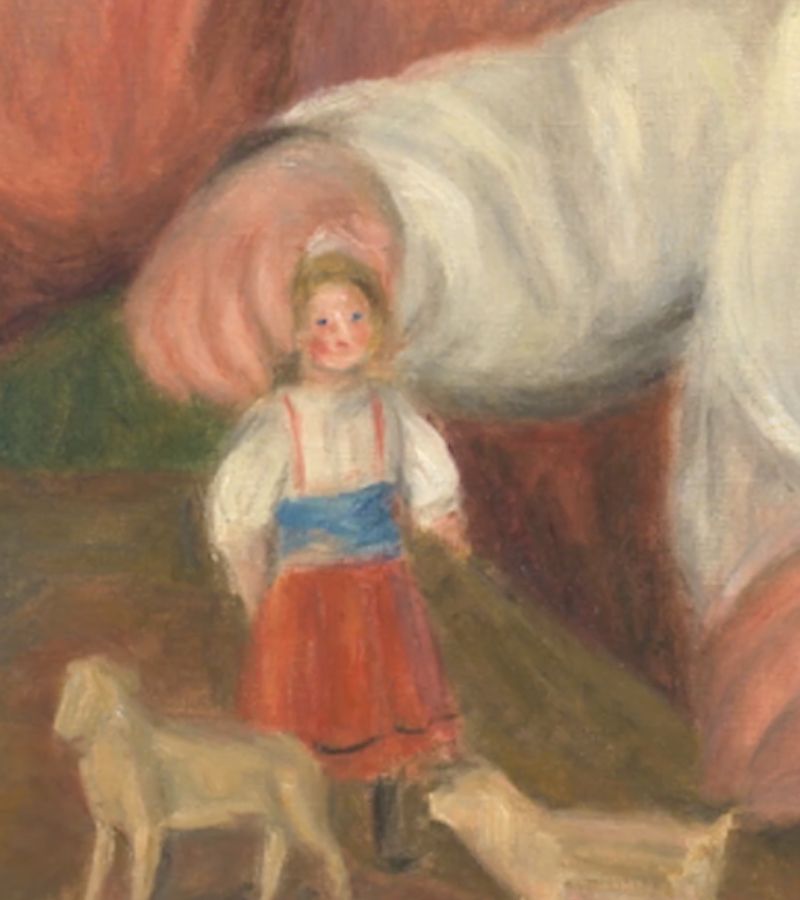
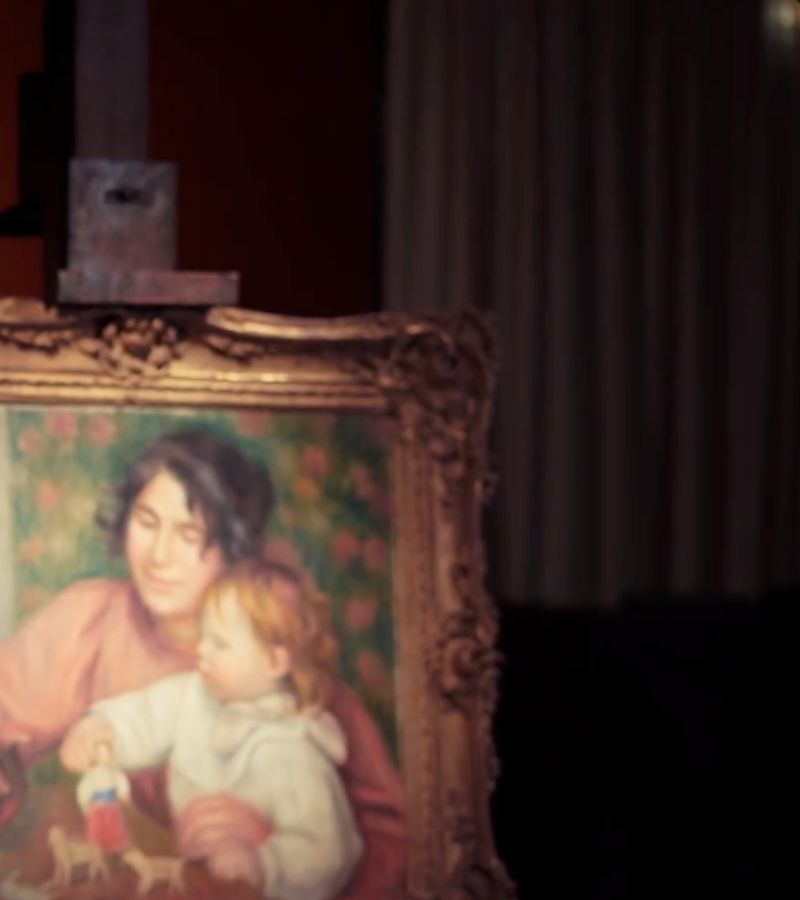
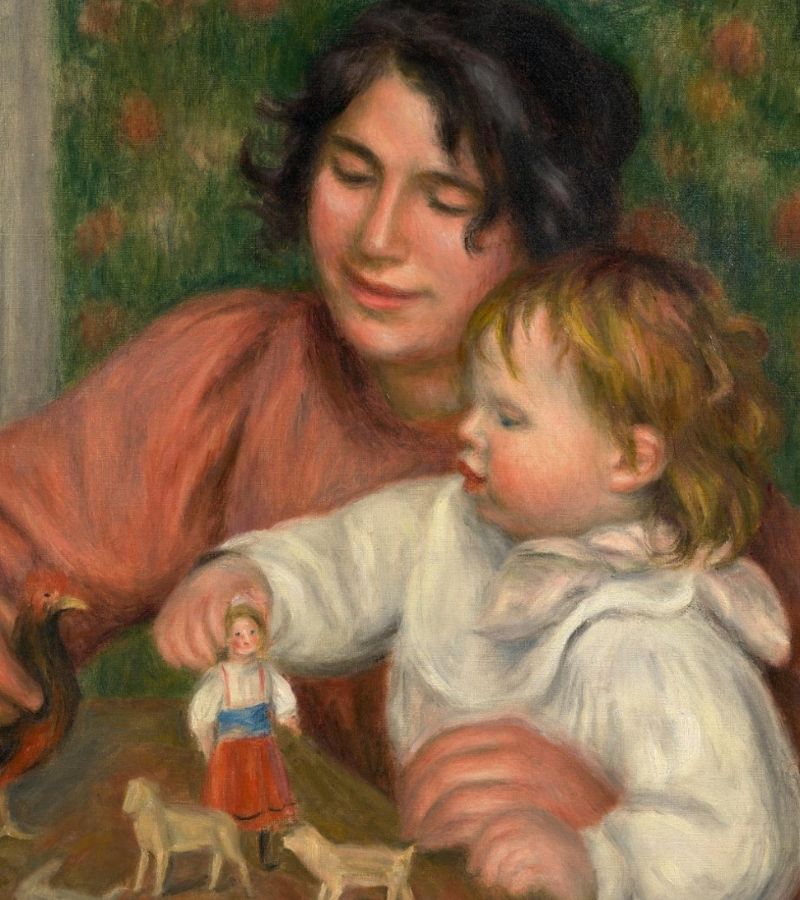
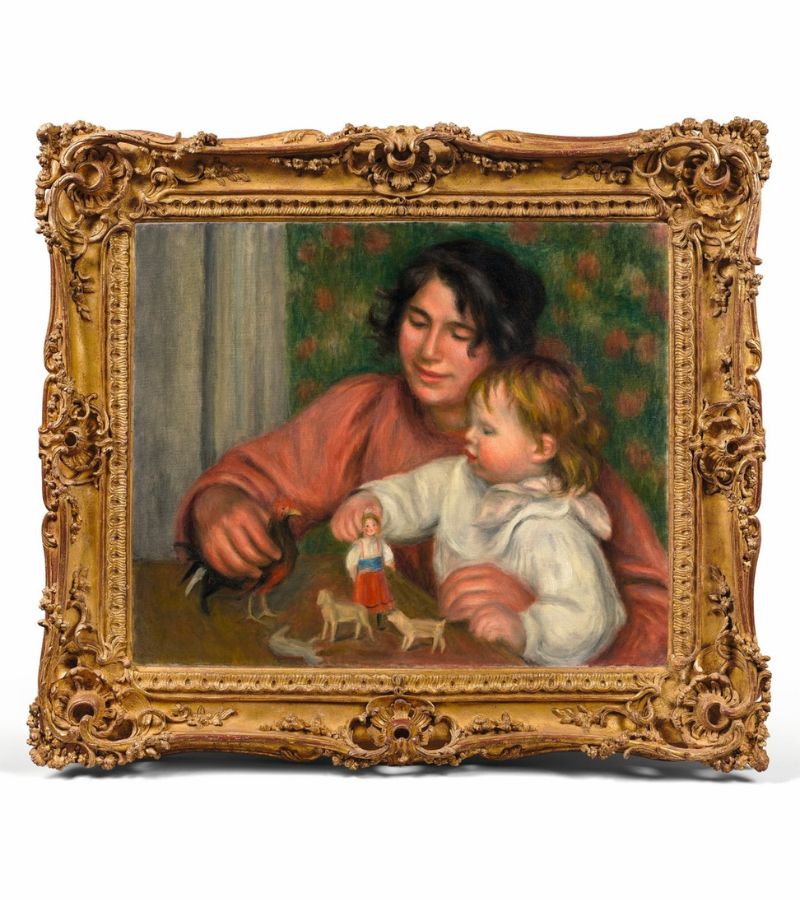
Renoir. L’enfant et ses jouets – Gabrielle et le fils de l’artiste, Jean. Courtesy of Drouot

What makes this Renoir intimate portrait so rare?

  • Hidden to the public until now
    The painting’s most remarkable feature is its invisibility. It never entered the conventional art circuits and did not appear in the Wildenstein Institute’s archives, which serve as a benchmark for Renoir scholarship. That absence, rather than diminishing credibility, is argued by the auction house to confirm its private, familial history.

  • Custody in the inner circle
    After Renoir’s death, the piece passed directly to Jeanne Baudot, Renoir’s student and confidante. She preserved it and bequeathed it to her adoptive son, Jean Griot, under whom it remained until 2011. This chain of custody, anchored by trusted figures, underlines the work’s domestic provenance and helps guard against doubts about alteration or forgery.

  • Condition and technique
    Experts highlight that the canvas is pristine, with no known retouching. They also observe long drying times consistent with Renoir’s mature method, indicating deliberate care and permanence. The untouched state enhances its “intimacy”, it feels as though we peer into a private moment untouched by later hands.

Renoir intimate portrait
Renoir. L’enfant et ses jouets – Gabrielle et le fils de l’artiste, Jean. Courtesy of Drouot
Renoir intimate portrait
Renoir. L’enfant et ses jouets – Gabrielle et le fils de l’artiste, Jean. Courtesy of Drouot

How does this portrait shift our understanding of Renoir’s domestic work?

  • Beyond Impressionist light
    Renoir’s later period often retreats from the fleeting visual experimentation of his early years into a more solid, classical vision of the human figure. In this portrait, we see that shift in full force. The painter emphasizes solidity, gesture, and interior tension over atmospheric effects. The domestic setting fades into softness, allowing only the figures and their bond to matter.

  • Gabrielle as muse and guardian
    Gabrielle Renard was not merely a servant in the Renoir household; she became a maternal figure and a recurrent subject in Renoir’s art. Her relationship with Jean is the emotional core here. She appears calm, strong, almost protective. In many ways this painting encapsulates the quiet power of everyday intimacy, how family and care become part of an artist’s palette.

  • Bridging Renoir, his heirs, and modern art
    The young boy in the painting, Jean Renoir, would grow into a major filmmaker. He later facilitated the meeting between Pablo Picasso and Dora Maar, thereby weaving a connective thread between Impressionism and the avant-garde. Picasso himself collected Renoirs and drew influence from his humanist vision. Thus, this portrait is not just a relic of the past—it is a hinge between generations of creators.

What does the market and archives gain (or risk) from this revelation?

  • Rewriting the catalogues raisonnés
    The exclusion of this work from the Wildenstein archives is both its obstacle and asset. As the Wildenstein Plattner Institute moves toward digital cataloging, adding works of private lineage is essential to completeness. This painting invites rethinking how silent missing works distort art history.

  • “Virgin” market status
    Because it has not been publicly sold before, it is “market-fresh.” That term excites auctions and collectors alike who prize novelty and provenance. The relatively low estimate is a strategic move to ignite bidding dynamics that could drive the price far beyond expectation.

  • Pressure of validation
    For scholars, this painting will test attribution protocols, conservation methods, and archival research. Any misstep in authentication would carry high reputational risk. But if accepted, it becomes a flagship example of how intimate domestic works can reshape narrative fields.

Renoir intimate portrait
Renoir. L’enfant et ses jouets – Gabrielle et le fils de l’artiste, Jean. Courtesy of Drouot

The unveiling of this Renoir intimate portrait is more than a headline in auction catalogs. It challenges us to reconsider how we define an “important work”: by public acclaim, by archival listing, or by the personal sensitivity it records. As the canvas moves from private custody into public view, it may well shift how we tell Renoir’s story, emphasizing that even the artist’s private life is terrain for aesthetic exploration. The auction on 25 November is the beginning, not the end, of that reckoning.

FAQ — Questions About the Hidden Renoir

Receive the latest news

Subscribe To Our Magazine

Luster Magazine

Digital Magazine

Ingresa los siguientes datos y comienza a disfrutar de nuestra revista digital.