Art

The Trial of Modernity: Manet’s Le Déjeuner sur l’herbe Under Judgment

Manet’s Le Déjeuner sur l’herbe faces a mock trial at the Musée d’Orsay—reopening the 1863 scandal that reshaped the path of modern art.

Por: Angela Leon Cervera
Trial of Modernity
Manet’s Le Déjeuner sur l’herbe

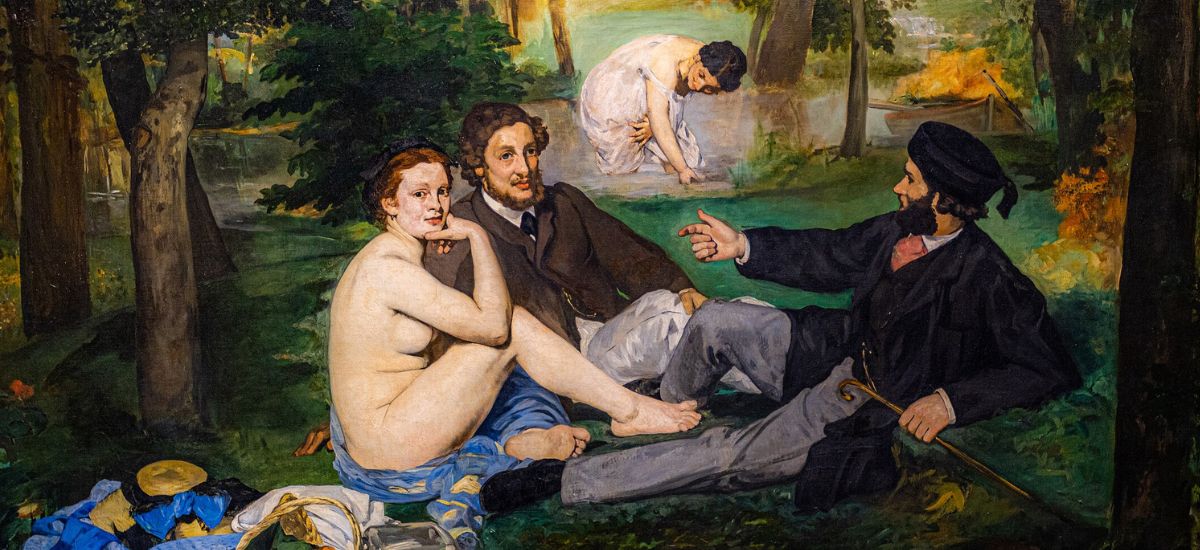
In October 2025, the Musée d’Orsay transformed its auditorium into a courtroom. On trial: Édouard Manet’s Le Déjeuner sur l’herbe (1863), one of the most shocking paintings in Western art history. The audience, acting as jury, was asked to deliver a verdict—was Manet guilty of indecency and arrogance toward tradition, or was he an innocent visionary laying the foundations of modernity?


This theatrical “mock trial” is more than performance. It revives the century-old debate over what it means for art to be modern, forcing spectators to confront questions of morality, innovation, and freedom that remain startlingly contemporary.

Trial of Modernity
Manet’s Le Déjeuner sur l’herbe

The Original Offense: How a Picnic Shook Paris

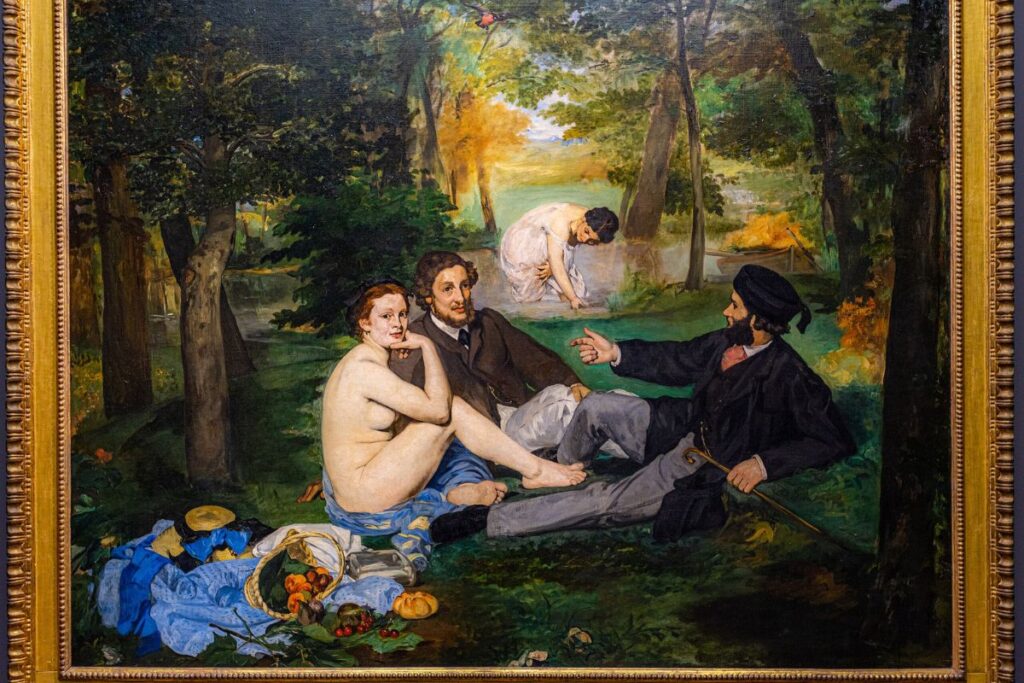
When Le Déjeuner sur l’herbe was submitted to the Salon de Paris in 1863, it was rejected for “indecency.” Napoléon III, noticing the uproar, decreed the creation of the Salon des Refusés—an exhibition for rejected works. There, Manet’s canvas became the center of ridicule and fascination, dividing critics and igniting the press.


Three factors made it scandalous:


  1. The nude without myth. Manet depicted Victorine Meurent, a contemporary Parisian woman, sitting naked beside two fully clothed men. In an era when nudes were acceptable only within mythological or allegorical contexts, the scene was read as vulgar and immoral.

  2. The gaze that dared. Unlike passive classical nudes, Meurent looks directly at the viewer—an act of defiance that dismantled the painter-viewer hierarchy.

  3. The brush that broke rules. Manet’s loose technique and unblended shadows shocked an audience trained in academic finish. Critics dismissed it as “unfinished,” not recognizing that its flatness and spontaneity heralded a new aesthetic language.

The uproar cemented Le Déjeuner sur l’herbe as both scandal and revolution.

Trial of Modernity
Manet’s Le Déjeuner sur l’herbe
Trial of Modernity
Manet’s Le Déjeuner sur l’herbe

The Mock Trial at the Musée d’Orsay: A New Forum for Old Crimes

Fast-forward more than 160 years: on October 2, 2025, the Musée d’Orsay staged Le Procès du Déjeuner sur l’herbe, a public “trial of modernity.” The museum invited art historians, actors, and lawyers to reenact the painting’s historical controversy before a live audience.


The prosecution accused Manet of desecrating tradition—of arrogance, indecency, and technical laziness. The defense argued that he liberated painting from myth, democratized beauty, and gave voice to the modern condition.


This immersive approach reflects a growing museological trend: transforming exhibitions into spaces of debate rather than silent contemplation. Like Matisse’s satirical trial in Chicago (1913), Orsay’s version uses performance to make history tactile, emotional, and alive. The audience, now judge and jury, must decide whether the scandal still holds weight—or whether modernity itself has become the establishment it once defied.

Legacy and Verdict: The Birth of Modern Art

Regardless of the mock verdict, history has spoken. Manet’s rebellion paved the way for Impressionism, influencing Monet, Renoir, and Cézanne. His technical daring redefined what painting could be—less about illusion and more about perception.


Moreover, Le Déjeuner sur l’herbe became an artistic touchstone: Picasso revisited it in 1961 in a series of reinterpretations, reaffirming its central role in the evolution of modern art. Each reinterpretation—whether homage or parody—confirms Manet’s status as both icon and insurgent.


If once accused of blasphemy, today he stands acquitted by history. The “crime” of Manet was not indecency, but innovation. His true transgression was to paint the modern world with unflinching honesty.

Trial of Modernity
Manet’s Le Déjeuner sur l’herbe

The mock trial at the Musée d’Orsay underscores a timeless truth: every act of artistic rebellion will eventually stand before the court of time. Le Déjeuner sur l’herbe reminds us that progress in art is never polite—it is disruptive, disobedient, and profoundly human.


Whether found guilty or not, Manet’s audacity redefined what it means to see. His verdict, rendered not by juries but by generations of artists, remains final: modernity is innocence reclaimed through defiance.

FAQ — “Judging the Moderns”

Receive the latest news

Subscribe To Our Magazine

Luster Magazine

Digital Magazine

Ingresa los siguientes datos y comienza a disfrutar de nuestra revista digital.