Design

JW Anderson’s Floral Revolution at Dior

JW Anderson’s Dior SS26 redefines haute couture with organic shapes, floral poetry, and a bold fusion of tradition and modernity.

Por: Karla Sofía Espinoza
DIOR SS26 JW ANDERSON
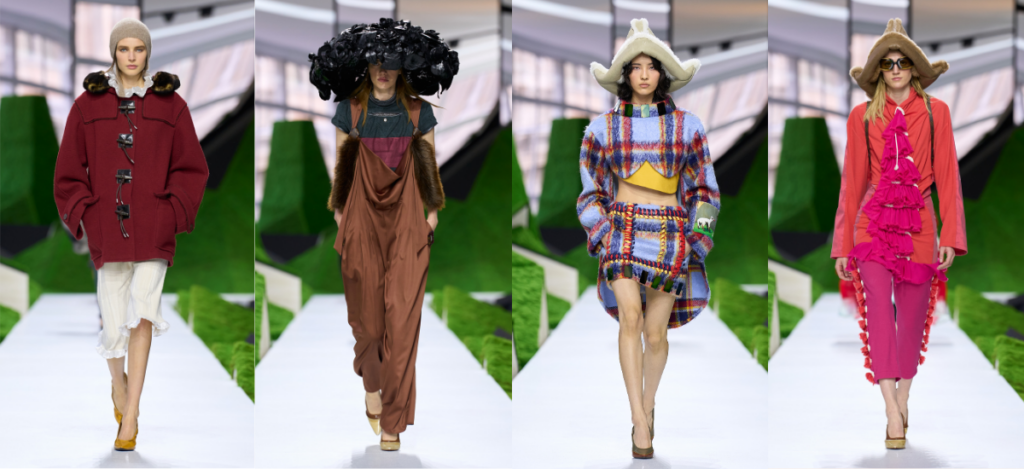
JW Anderson’s Dior SS26 is more than a collection—it’s a manifesto for the future of couture, where tradition and innovation bloom together / Photos @Dior

Paris Haute Couture Week opened with a debut that had the fashion world holding its breath: Jonathan Anderson’s first haute couture collection for Dior. Set against a mirrored ceiling draped with cascading flowers, the show was a sensory immersion into a world where nature, craftsmanship, and avant-garde design intertwine.

Anderson, known for his cerebral and tactile approach at Loewe and his eponymous label, brought his singular vision to Dior, transforming the maison’s legacy into a living, breathing laboratory of form and movement.

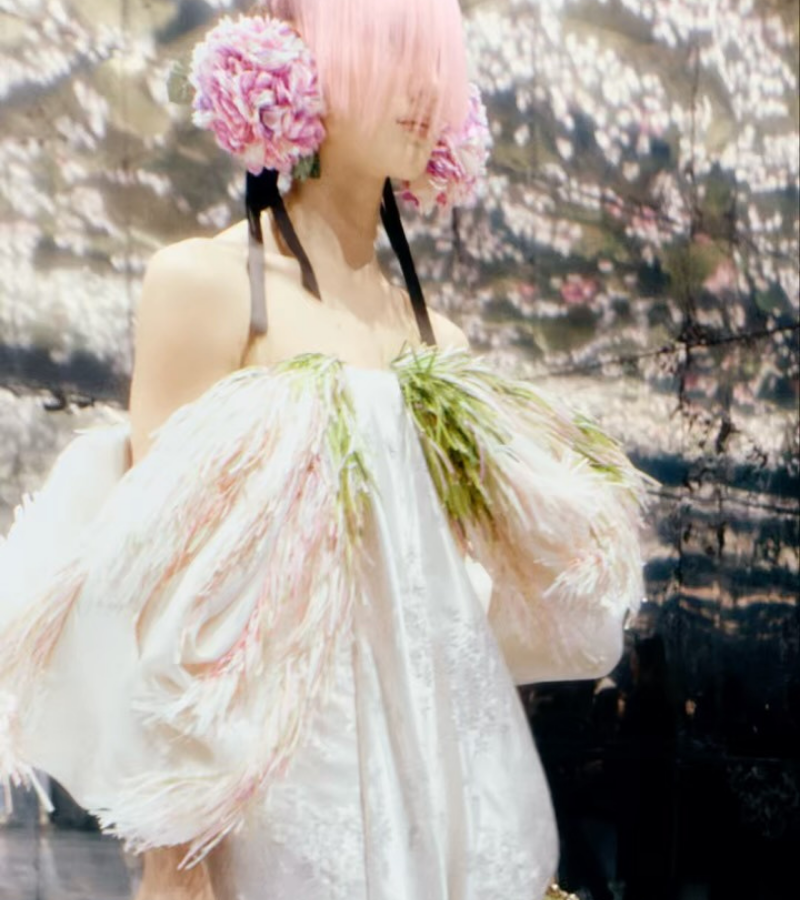
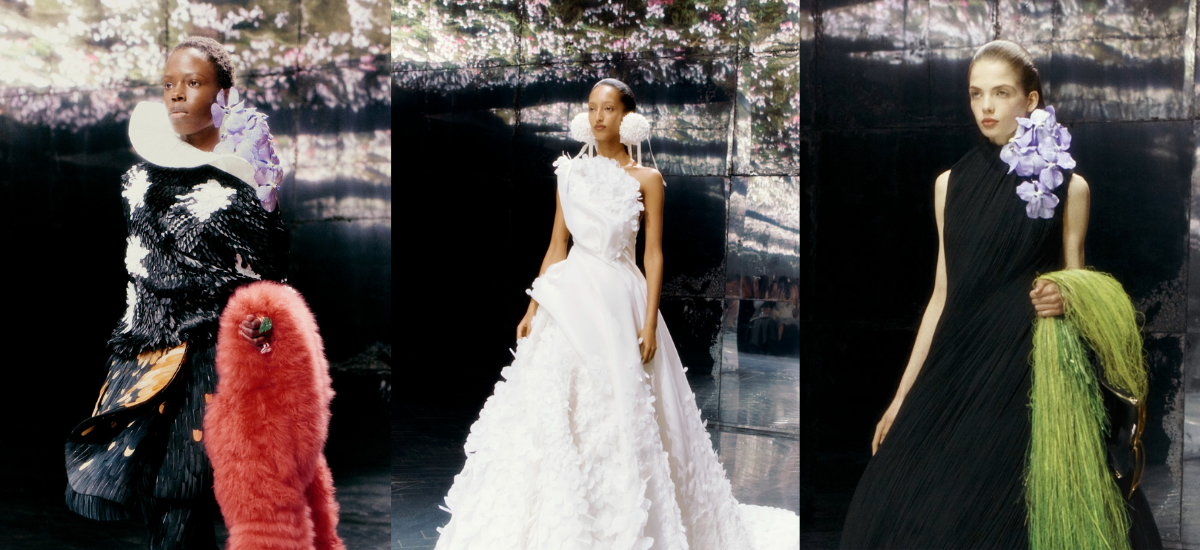
Floral embroidery and appliqués, inspired by Dior’s historic love of gardens, added tactile depth / Photo @Dior

Le Flou: The Art of Soft Tailoring

At the heart of Anderson’s collection is the French concept of “le flou”—soft, fluid tailoring that prioritizes drape and intuition over rigid structure. This philosophy was evident in every look: dresses that seemed to grow organically from the fabric, skirts that billowed like petals, and jackets that reimagined Dior’s iconic Bar silhouette with a newfound lightness.

The result was a collection that felt both timeless and radically contemporary, where garments moved with the wearer, blurring the line between body and cloth.

Organic Silhouettes: Nature as Muse

Anderson’s fascination with the natural world was palpable. The runway was a garden of sculptural volumes: dresses with bulbous skirts reminiscent of blooming flowers, capes that cocooned the body like unfurling leaves, and accessories that extended the organic narrative.

The opening look—a long black dress with a rounded, plant-like volume—set the tone, while subsequent pieces played with asymmetry, exaggerated proportions, and unexpected textures. The designer’s collaboration with ceramicist Magdalene Odundo further emphasized this dialogue between fashion and nature, with silhouettes echoing the sensual curves of her vessels.

A Palette of Poetic Contrasts

The color story was as deliberate as the shapes. Anderson balanced soft neutrals—chalky ivories, dove grays, and pale blush—with vibrant bursts of acid green, intense red, and deep inky blue.

Floral embroidery and appliqués, inspired by Dior’s historic love of gardens, added tactile depth, while accessories like quilted bags and floral headpieces completed the harmonious ensemble. Each hue and texture was chosen not for decoration, but to construct a visual language that spoke to both heritage and innovation.

Craftsmanship as Experimentation

Beyond aesthetics, Anderson’s collection was a testament to the artistry of Dior’s ateliers. Traditional techniques were pushed to new limits: hand-knitted sweaters, upcycled 18th-century fabrics, and intricate embroidery transformed classic motifs into something fresh.

The wedding dress finale—a cascade of petals—was a masterclass in couture craft, embodying the collection’s ethos: haute couture as an experience, not just a spectacle.

With this debut, Anderson has not only honored Dior’s past but also redefined its future. His approach—rooted in curiosity, technical mastery, and a deep respect for the natural world—positions Dior at the forefront of contemporary luxury.

As the designer himself noted, “When you copy nature, you always learn something.” This collection is a testament to that belief, offering a vision of couture that is as poetic as it is groundbreaking.

Enter your caption here

5 Q&A’s About the Collection

RELATED POSTS

Receive the latest news

Subscribe To Our Magazine

Luster Magazine

Digital Magazine

Ingresa los siguientes datos y comienza a disfrutar de nuestra revista digital.