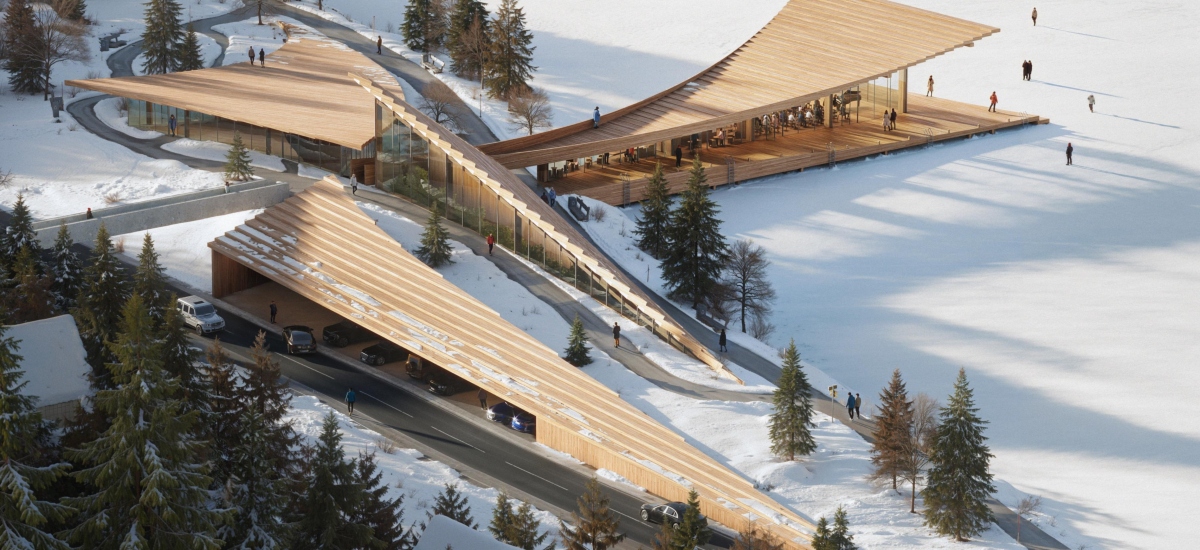
St. Moritz is not defined solely by luxury or alpine prestige. Its true identity emerges from the intimate relationship between settlement and nature.
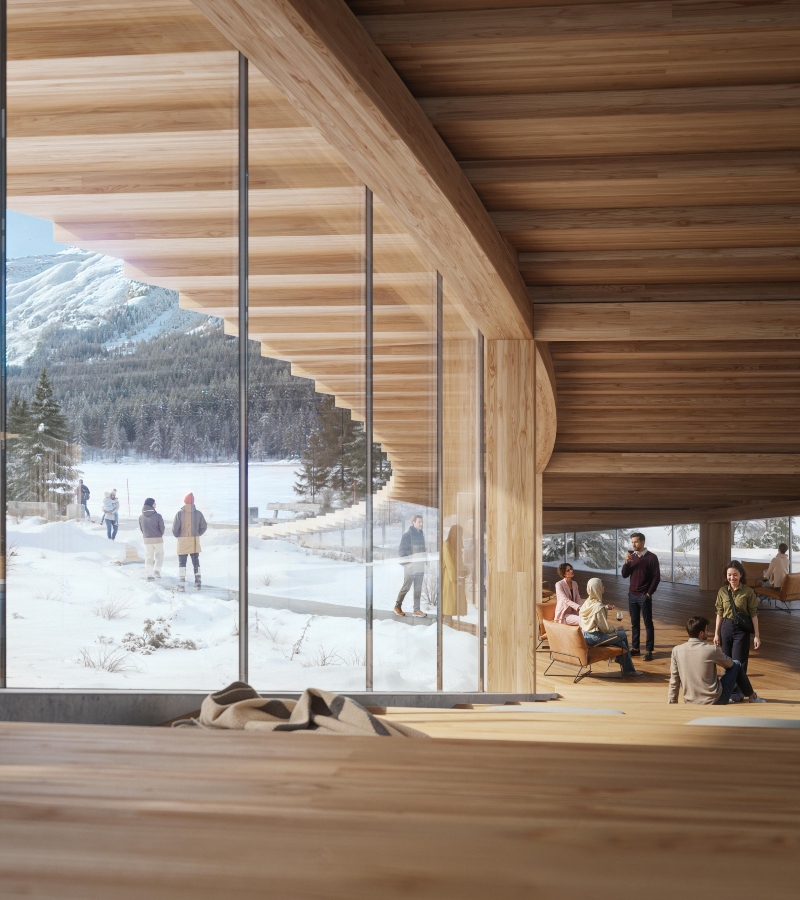
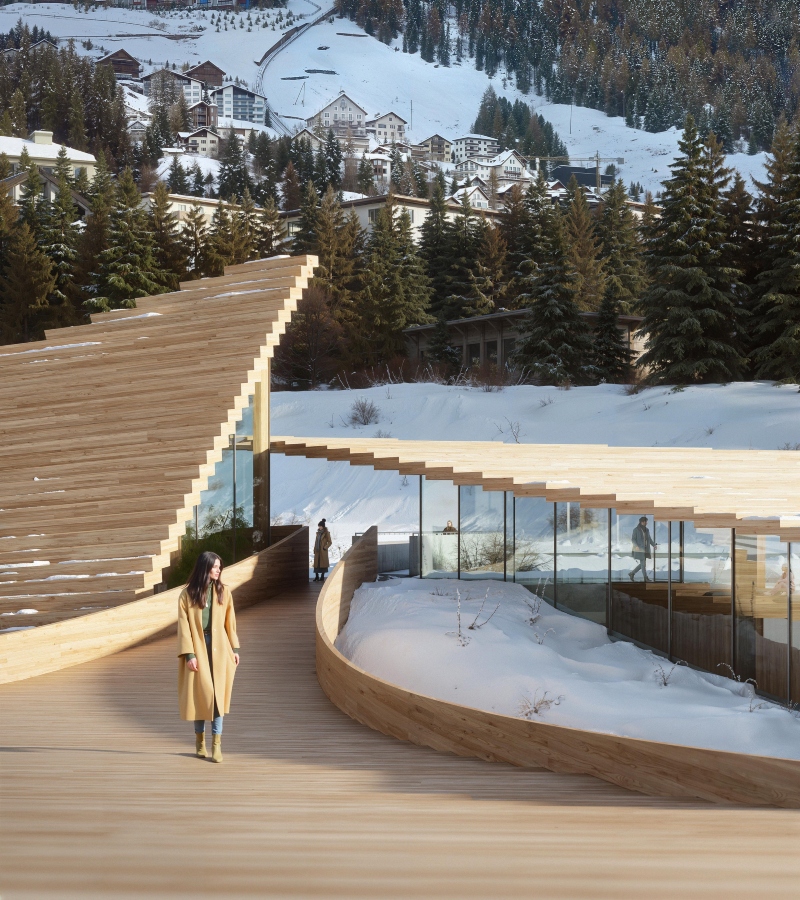
This context forms the foundation of .lacum respira, the lake pavilion designed by .ket bureau.
Mountains, forests, and water coexist as a continuous system of silence and movement. Here, the environment does not frame architecture.
It actively dictates how space should breathe and exist. The lakeshore stands as the most delicate threshold of this balance.
Snow-dusted slopes descend gently toward reflective waters shaped by centuries of seasonal rituals.
Architecture That Listens Rather Than Leads
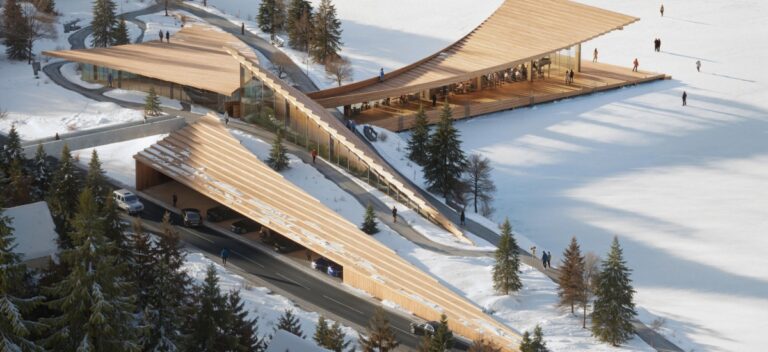
The core ambition of .lacum respira is subtle integration. The pavilion avoids visual dominance and symbolic excess. Instead, it becomes an extension of the existing topography.
Its form follows the natural rhythm of the shoreline. Curves echo the relief, while silhouettes dissolve into the alpine horizon.
Swiss vernacular architecture served as a conceptual reference.
However, the project does not replicate historical forms. It translates inherited principles into contemporary spatial language.
Proportion, restraint, and material honesty guide every decision. The result is architecture that feels discovered rather than constructed.
Sloping rooflines mirror surrounding mountain profiles. Volumes remain low and horizontally oriented. This approach reinforces continuity between landscape and structure.
The pavilion becomes part of the visual cadence of St. Moritz. It appears shaped by climate, memory, and terrain.