Architecture

Tiffany’s Store Rises as a Sculptural Landmark in Beijing

Designed by the Dutch architecture studio MVRDV, the project reimagines how luxury façades interact with urban space.

Por: Rubén Carrillo
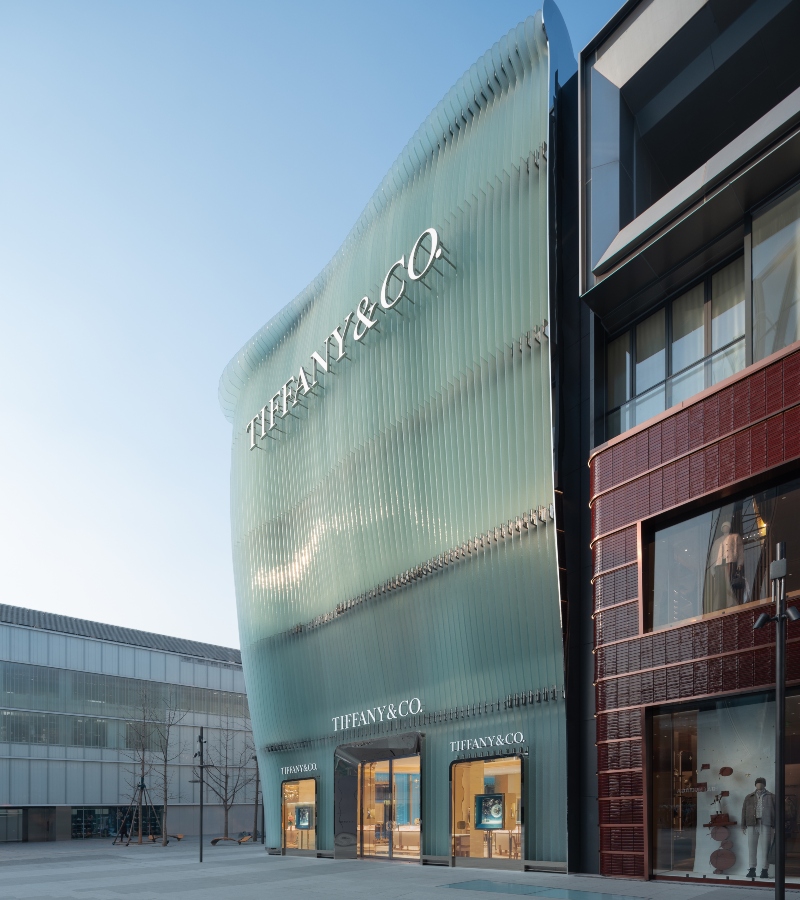
The Tiffany & Co. flagship store introduces a refined visual language rooted in movement and light / Photo Tiffany & Co
The Tiffany & Co. flagship store introduces a refined visual language rooted in movement and light / Photo MVRDV

In the heart of Beijing’s Taikoo-Li Sanlitun, a new architectural landmark has quietly emerged.

The Tiffany & Co. flagship store introduces a refined visual language rooted in movement and light.

Rather than relying on excess, the building communicates elegance through form, material, and restraint.

Its presence feels deliberate, designed to stand out without overpowering its surroundings.

Designed by the Dutch architecture studio MVRDV, the project reimagines how luxury façades interact with urban space.

This Tiffany & Co. flagship store is the fifth collaboration between the brand and the architecture firm.

Each project in the series explores a distinct architectural identity while maintaining brand continuity.
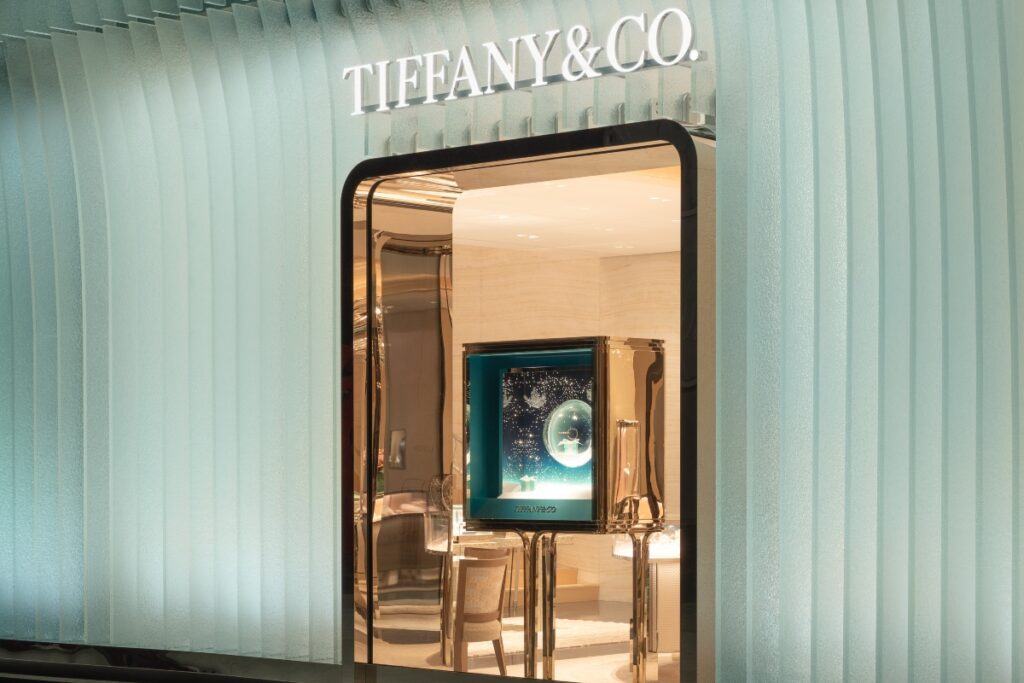
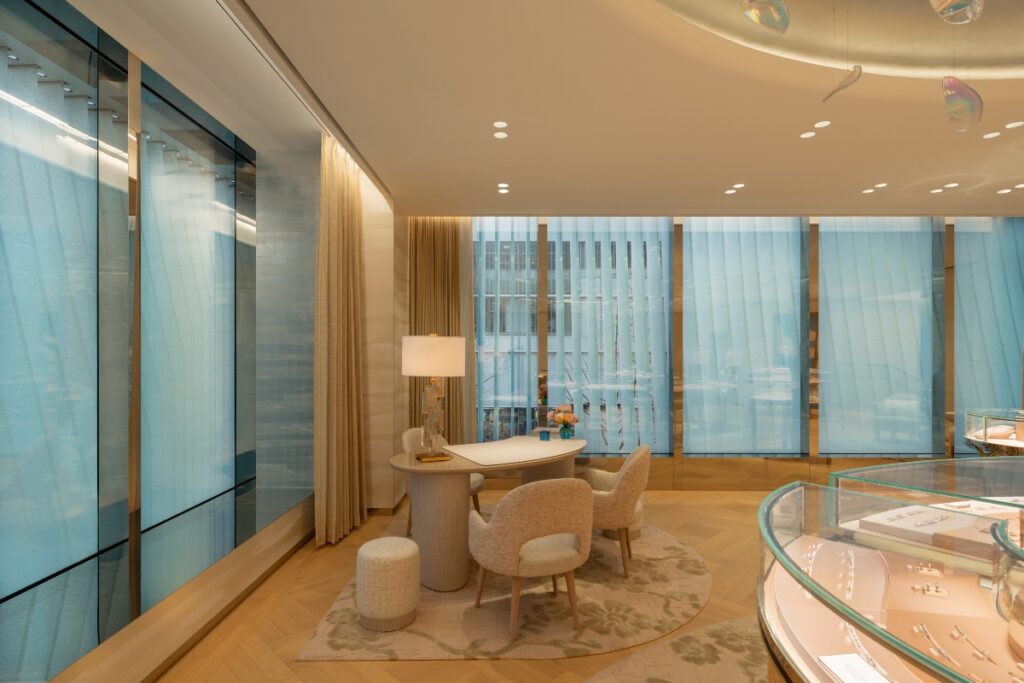
Designed by the Dutch architecture studio MVRDV, the project reimagines how luxury façades interact with urban space / Photo Tiffany & Co
Designed by the Dutch architecture studio MVRDV, the project reimagines how luxury façades interact with urban space / Photo MVRDV

Fluid Geometry Inspired by Jewelry Design

The façade immediately captures attention through its vertical glass fins. These elements rise across the building’s four levels with a sense of soft motion.

Their curved profiles echo the organic lines found in fine jewelry.

MVRDV drew direct inspiration from Elsa Peretti’s iconic Bone Cuff.

That piece is celebrated for its sculptural simplicity and ergonomic elegance. Those same qualities translate seamlessly into architectural scale.

The fins are crafted from translucent, textured glass with gently flowing edges.

They create a rhythmic surface that feels light, almost floating. The design avoids rigidity, favoring motion and softness instead.

Light, Transparency, and Urban Interaction

The Tiffany & Co. flagship store benefits from a strategic location at a major intersection.

Luxury retailers dominate this section of Sanlitun, increasing visual competition. Rather than adding bold signage, the building responds through material expression.

During daylight, the layered glass interacts with natural light.

Shadows shift subtly as the sun moves across the sky. The façade never looks static from different viewpoints.

When observed from an angle, the fins intensify reflections and depth.

This layering effect enhances transparency without revealing everything at once. Passersby catch brief glimpses of jewelry displays through narrow openings

Nighttime Identity and Tiffany Blue®

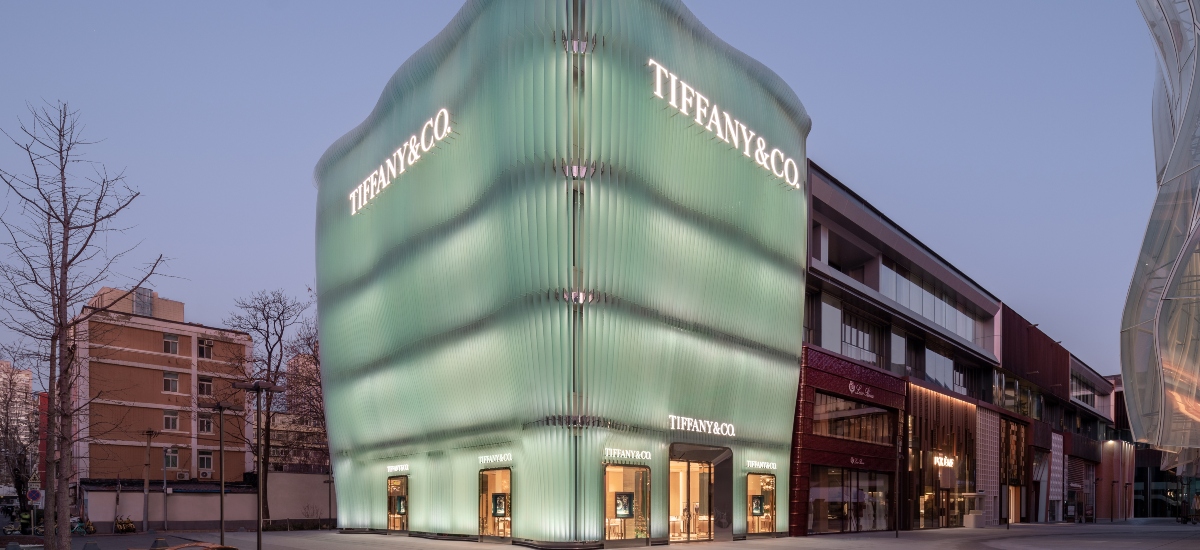
After sunset, the building transforms into a luminous object.

The glass, already selected for its natural bluish tone, becomes softly illuminated. The glow references Tiffany & Co.’s iconic Tiffany Blue® without overwhelming brightness.

Lighting modules are discreetly integrated into custom brackets.

This approach eliminates visual clutter and exposed hardware. The light appears to emanate naturally from the glass itself.

At night, the Tiffany & Co. flagship store feels calm and atmospheric. It avoids the aggressive lighting common in retail architecture.

Instead, it projects refinement and serenity into the streetscape.

The glass, already selected for its natural bluish tone, becomes softly illuminated. The glow references Tiffany & Co.’s iconic Tiffany Blue® without overwhelming brightness / Photo Tiffany & Co
The glass, already selected for its natural bluish tone, becomes softly illuminated. The glow references Tiffany & Co.’s iconic Tiffany Blue® without overwhelming brightness / Photo MVRDV

Sustainable Thinking Behind the Elegance

Beyond aesthetics, sustainability plays a central role in the design strategy. The glass fins are responsibly recycled and manufactured locally.

This reduces transportation impact and supports regional production.

The façade system is fully demountable by design.

Each glass fin can be removed without structural damage. This allows future reuse or recycling at the end of its lifecycle.

Such flexibility aligns with evolving standards in sustainable luxury architecture.

The building demonstrates how craftsmanship and environmental responsibility can coexist.

The façade system is fully demountable by design / Photo Tiffany & Co
The façade system is fully demountable by design / Photo MVRDV

A New Chapter for Tiffany in Asia

This Tiffany & Co. flagship store reflects a broader evolution of the brand.

Architecture becomes a storytelling tool rather than a mere container for products. The building communicates heritage through contemporary design language.

MVRDV’s approach avoids nostalgia while honoring Tiffany’s legacy. The façade translates jewelry craftsmanship into spatial experience.

It reinforces the emotional connection between design, material, and identity.

In Beijing’s dynamic retail landscape, the store stands apart through subtlety.

Its strength lies in precision, not spectacle. This balance ensures long-term relevance in an ever-changing urban context.

MVRDV’s approach avoids nostalgia while honoring Tiffany’s legacy. The façade translates jewelry craftsmanship into spatial experience / Photo Tiffany & Co
MVRDV’s approach avoids nostalgia while honoring Tiffany’s legacy. The façade translates jewelry craftsmanship into spatial experience / Photo MVRDV

Questions and Brief Answers

RELATED POSTS

Receive the latest news

Subscribe To Our Magazine

Luster Magazine

Digital Magazine

Ingresa los siguientes datos y comienza a disfrutar de nuestra revista digital.