Cuisine

80 Bars along 150 Meters: An Unparalleled Destination for Foodies

In Santiago de Compostela, Spain, a single street condenses centuries of tradition and gastronomy, offering 80 bars within just 150 meters—an unparalleled destination for food lovers worldwide.
Por: Rubén Carrillo
RUA FRANCOS SANTIAGO DE COMPOSTELA
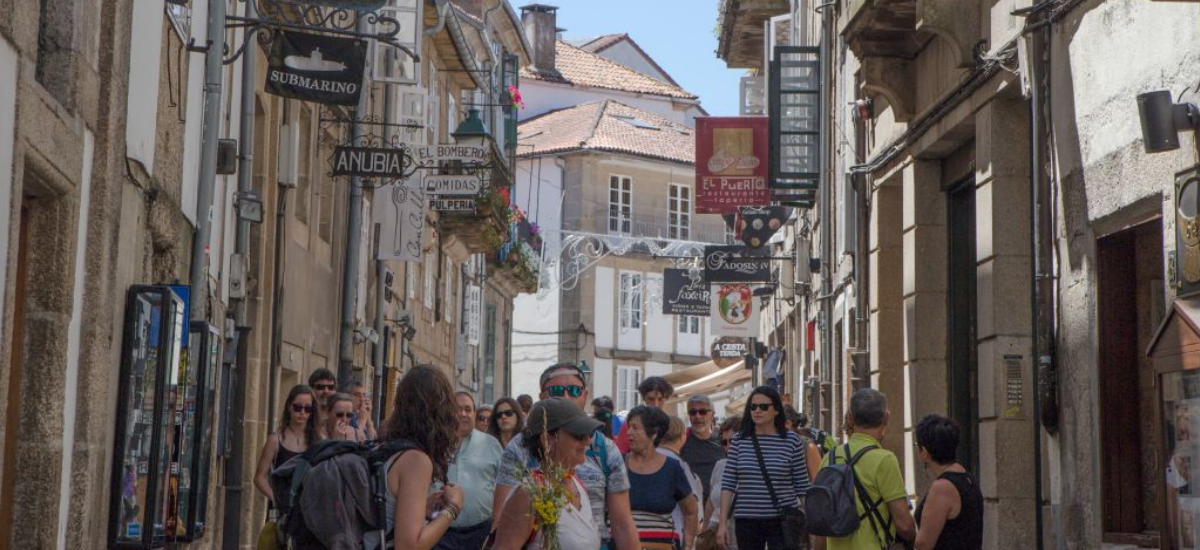
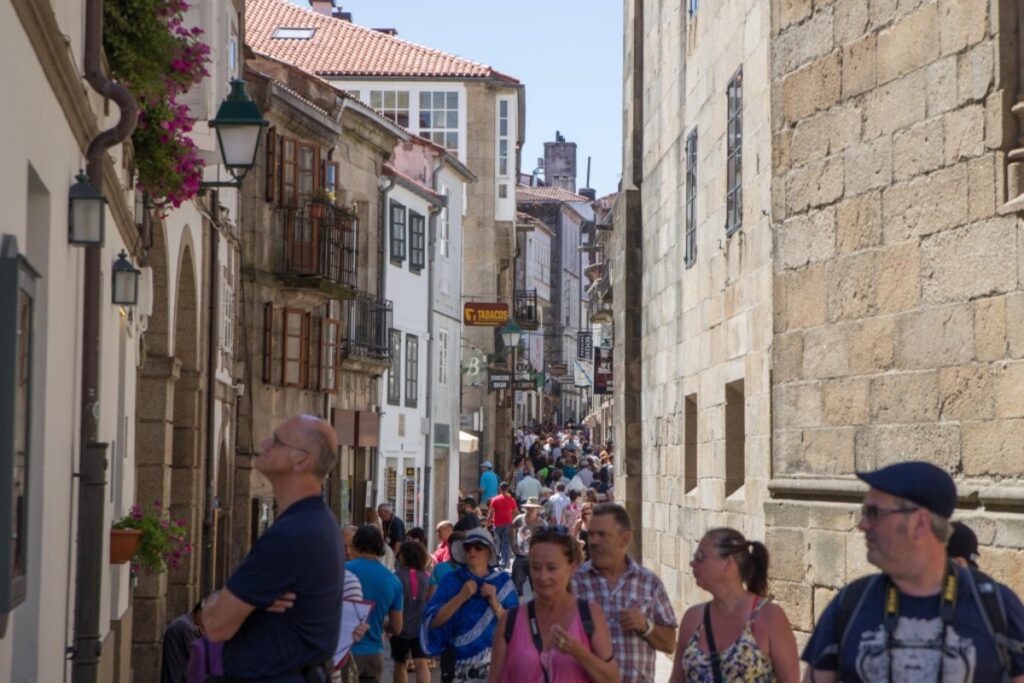
From empanadas to percebes, the variety is staggering at Santiago de Compostela’s Rúa do Franco / Photo Turismo de Santiago

Spain is renowned for its vibrant culinary culture, but nowhere is this spirit more concentrated than in Santiago de Compostela’s Rúa do Franco. Known as the street with the most flavor in the world, it hosts an astonishing 80 bars along a stretch of only 150 meters. 

The street’s name itself comes from “francos,” the term used for pilgrims crossing the Pyrenees / Photo via Turismo de Santiago

This unique corridor of taste has become a pilgrimage site in its own right, where locals, travelers, and students converge to celebrate the art of tapas, wine, and conviviality.

A Tradition Rooted in History

The origins of Rúa do Franco date back to the Middle Ages, when pilgrims arriving at Santiago’s cathedral sought food and lodging nearby.

Santiago de Compostela’s Rúa do Franco Photo @asasixtosantiago

The street’s name itself comes from “francos,” the term used for pilgrims crossing the Pyrenees. Over time, taverns and bars multiplied, transforming the street into a gastronomic artery that continues to thrive today. Its medieval stone houses, wrought-iron balconies, and cobblestone pavement preserve the charm of centuries past, while its culinary offerings remain ever-evolving.

80 Bars, Endless Flavors

Walking down Rúa do Franco is like embarking on a miniature tasting tour of Galicia. Each of its bars offers specialties that reflect the region’s bounty:

  • At Gato Negro, diners savor liver with onions.
  • Abellá serves its famous “cocodrilo,” a tapa of pork loin.
  • Trafalgar delights with “tigres rabiosos,” mussels in spicy sauce.
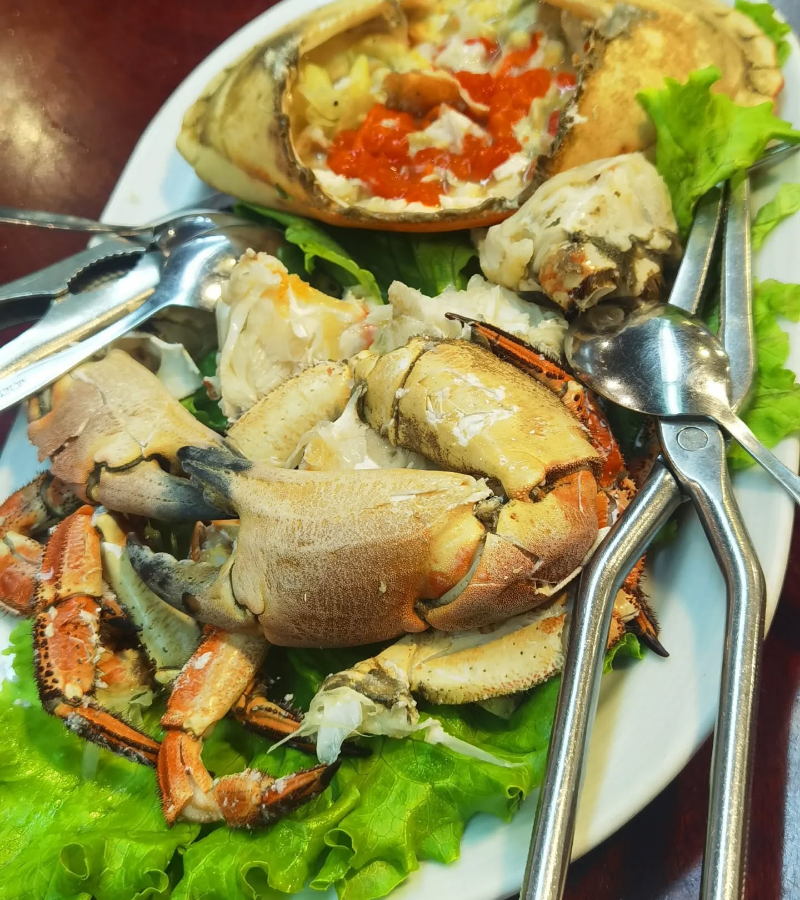
  • María Castaña is celebrated for squid, while Barrola excels in seafood straight from the Atlantic.
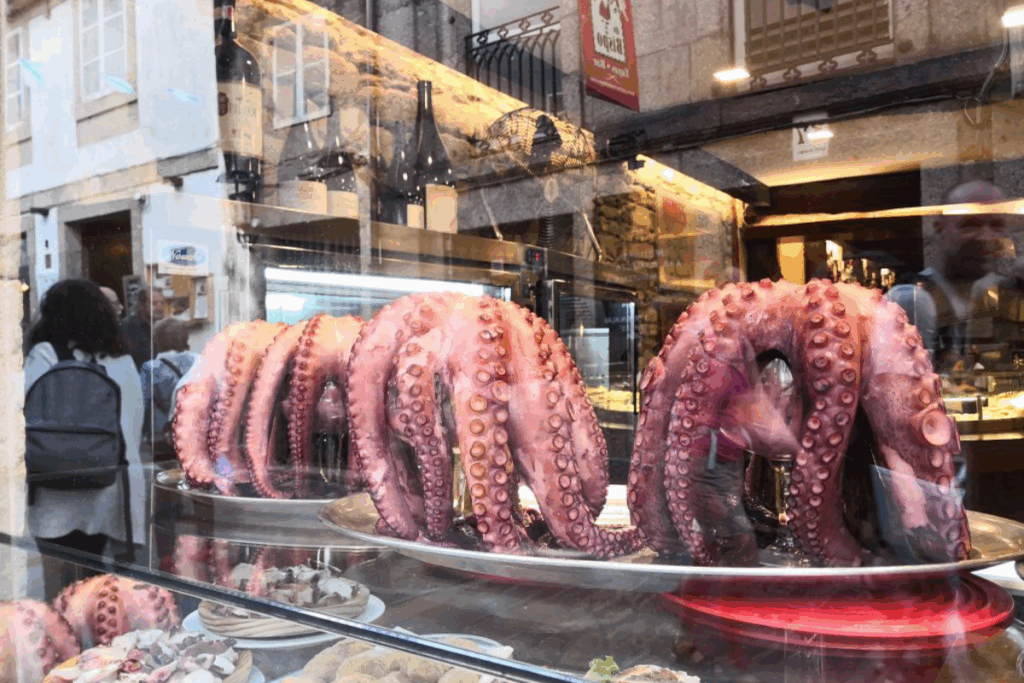
  • Sixto is the place for authentic pulpo a la gallega.

From empanadas to percebes, the variety is staggering, and the density of bars ensures that every step offers a new flavor.

The Paris-Dakar Route

In the 1980s, university students invented the now-famous “Paris-Dakar” route: a playful gastronomic journey that begins at the bar O París and ends at Dakar, stopping at multiple bars along the way.

Though often limited to 15 stops to avoid excess, the tradition embodies the festive spirit of the street and highlights its role as a social hub.

With 80 bars packed into 150 meters, Santiago de Compostela’s Rúa do Franco is more than a street—it is a living testament to Spain’s culinary identity. Here, history, tradition, and gastronomy converge, offering visitors not just food but an experience of community and culture. 

For anyone seeking the essence of Spanish hospitality, this street proves that the soul of a nation can be found in its bars.

Santiago de Compostela’s Rúa do Franco / Photo Turismo de Santiago

Key Information

RELATED POSTS

Receive the latest news

Subscribe To Our Magazine

Luster Magazine

Digital Magazine

Ingresa los siguientes datos y comienza a disfrutar de nuestra revista digital.