Art

Portrait of Elisabeth Lederer: Klimt’s Record Breaker

Portrait of Elisabeth Lederer becomes the priciest modern artwork at Sotheby’s, uniting Klimt’s Vienna, Holocaust survival and today’s ultra prime art market.

Por: Angela Leon Cervera
Portrait of Elisabeth Lederer
Gustav Klimt Bildnis Elisabeth Lederer (Portrait of Elisabeth Lederer). Courtesy of Sotheby's

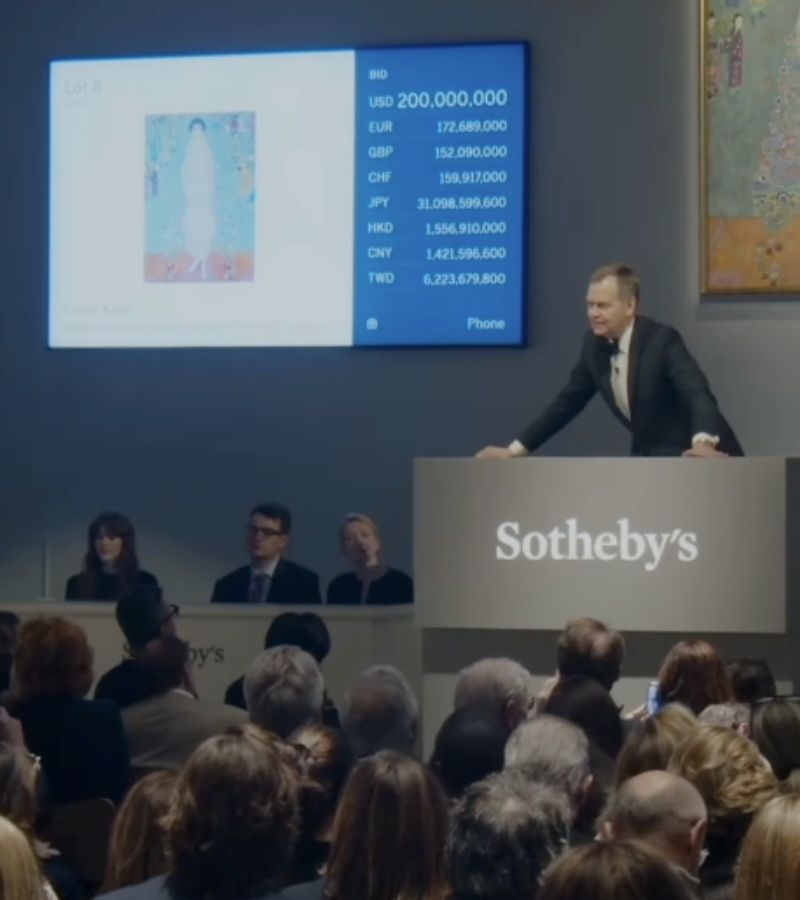
One portrait just reset the thermostat of the art market. When Portrait of Elisabeth Lederer sold at Sotheby’s New York for 236.4 million dollars, something shifted. Modern art entered a new price zone.


Painted by Gustav Klimt between 1914 and 1916, the canvas now holds the auction record for modern art and sits just behind Salvator Mundi in the all-time ranking.
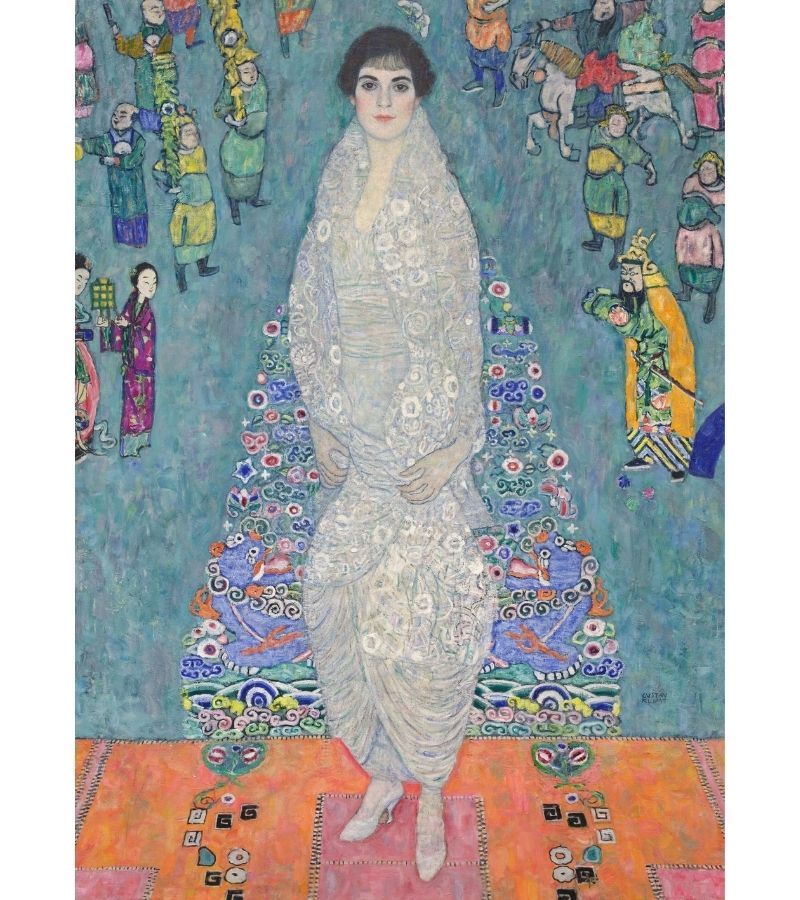

Portrait of Elisabeth Lederer
Gustav Klimt Bildnis Elisabeth Lederer (Portrait of Elisabeth Lederer). Courtesy of Sotheby's

Who was Elisabeth Lederer behind the portrait?

Elisabeth Lederer was the daughter of industrialist August Lederer and his wife Serena. They were leading Jewish patrons of Klimt in Vienna and among the city’s wealthiest families. She grew up in homes full of avant garde art and later worked as a sculptor.


In 1921 she married Baron Wolfgang von Bachofen-Echt and converted to Protestantism. After their divorce in 1934 she was classified as Jewish again. The change came just as antisemitic laws tightened across Austria.

Portrait of Elisabeth Lederer
The Leonard A. Lauder Collection Auction. Courtesy of Sotheby's
Portrait of Elisabeth Lederer
The Leonard A. Lauder Collection Auction. Courtesy of Sotheby's

How close was Klimt to Elisabeth Lederer?

Klimt was almost family. He visited the Lederer homes frequently and painted three generations of their women, turning the clan into a small dynasty inside his oeuvre.


In Portrait of Elisabeth Lederer he shows her at about twenty. She stands in a white dress and chiffon shawl on a vivid patterned carpet. Around her, East Asian inspired figures drift in a hazy background. The scene feels intimate and slightly unfinished, closer to a captured mood than a stiff society pose, which fits perfectly with today’s taste for narrative-driven images.

Why did Portrait of Elisabeth Lederer break the modern art record?

After the Nazi annexation of Austria, Elisabeth faced deportation as a Jew. She avoided that fate by securing an official document naming Klimt, a non Jewish Austrian, as her father. A former Nazi brother in law supported the claim. The legal fiction allowed her to remain in Vienna until her death in 1944.


The painting was confiscated and later restituted in 1948 to her brother Erich. It was sold to dealer Serge Sabarsky in 1983 and to Leonard Lauder in 1985. In 2025 it anchored Sotheby’s inaugural auction at the Breuer Building. Six bidders pushed it past Andy Warhol’s Shot Sage Blue Marilyn record of 195 million dollars to 236.4 million.


Extreme scarcity and pristine provenance met a powerful survival story. The portrait shifted from glamorous décor to a charged historical object that younger collectors instantly understand.

Portrait of Elisabeth Lederer
The Leonard A. Lauder Collection Auction. Courtesy of Sotheby's

The portrait feels almost designed for the way we look at images today. Its surface holds layers that reveal themselves slowly. A first glance offers glamour. A closer one exposes fragility, privilege and the weight of history pressing against a single life. The painting lingers because it suggests that survival often begins with a story written down, and sometimes a face in paint becomes the final witness to everything that tried to erase it.

FAQ: Portrait of Elisabeth Lederer, Explained

Receive the latest news

Subscribe To Our Magazine

Luster Magazine

Digital Magazine

Ingresa los siguientes datos y comienza a disfrutar de nuestra revista digital.