Art

Wifredo Lam’s Transnational Modernism at MoMA

Explore Wifredo Lam’s bold modernism and decolonial vision in his U.S. retrospective at MoMA, redefining Caribbean-European art.

Por: Angela Leon Cervera
Wifredo Lam
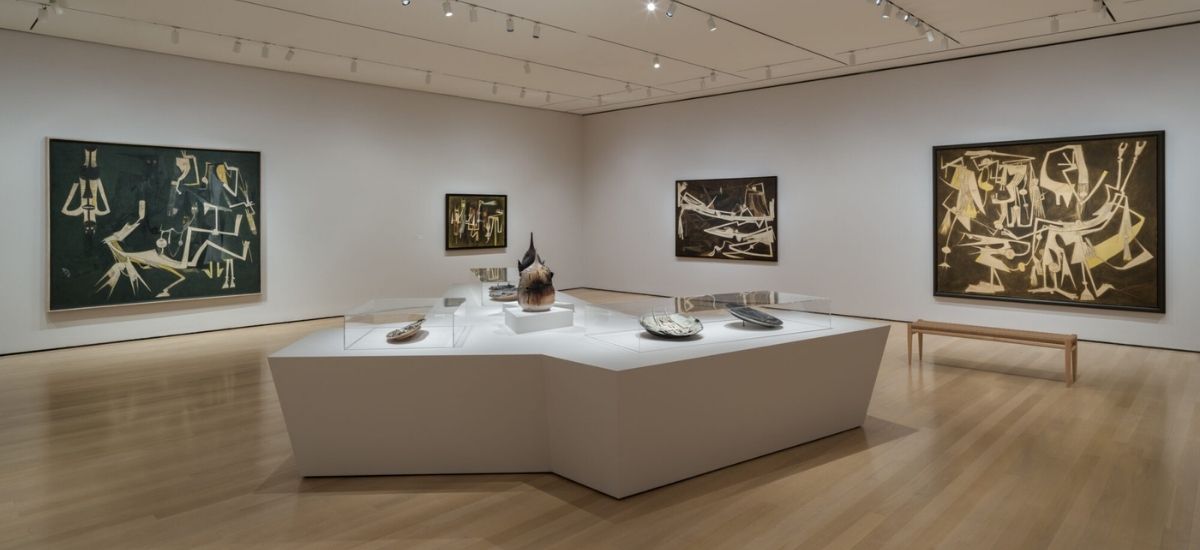
Installation view of Wifredo Lam: When I Don’t Sleep, I Dream on view at The Museum of Modern Art, New York, from November 10, 2025, through April 11, 2026. Photo by Jonathan Dorado

The art of Wifredo Lam emerges as a vibrant crossroads between Caribbean heritage and European avant-garde, inviting us to rethink the contours of modernism itself. With roots in Cuba yet formative experiences in Spain and France, Lam forged a visual language that speaks of diaspora, hybridity and political resistance.


Now, the major U.S. retrospective titled “Wifredo Lam: When I Don’t Sleep, I Dream” at the Museum of Modern Art (MoMA) in New York, running from November 10 2025 to April 11 2026, marks a turning point in the reception of his work. In this blog we trace how Lam’s “Trojan-horse” strategy of inserting Afro-Caribbean culture into the heart of modernism unfolds across his career, why his “laboratory” years matter, and how his legacy resonates today on a global scale.
Wifredo Lam
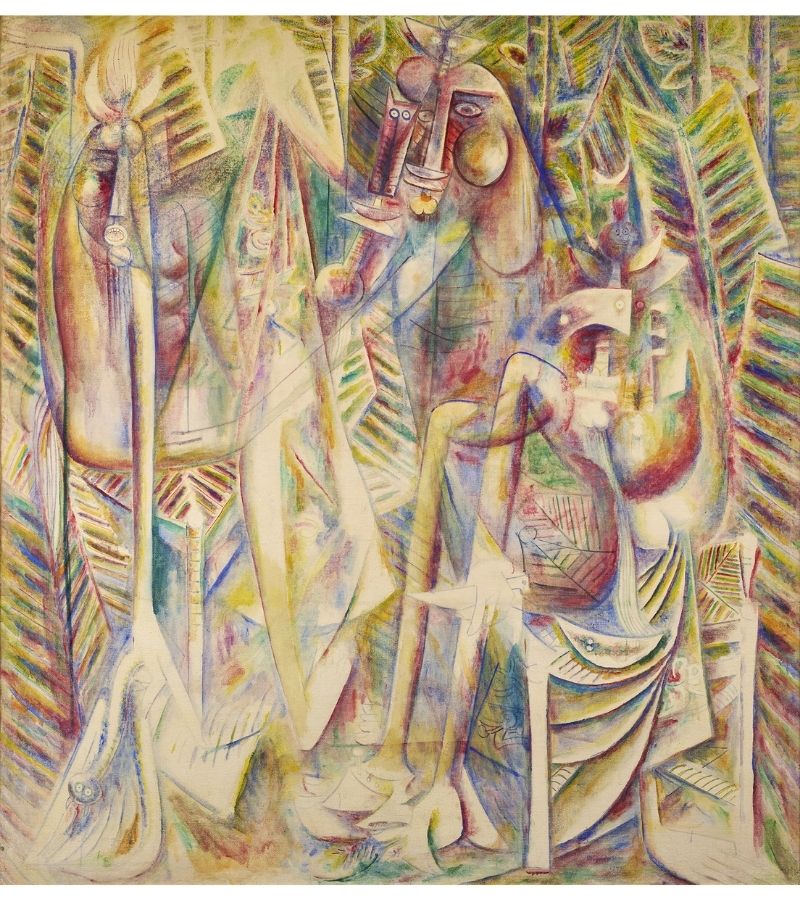
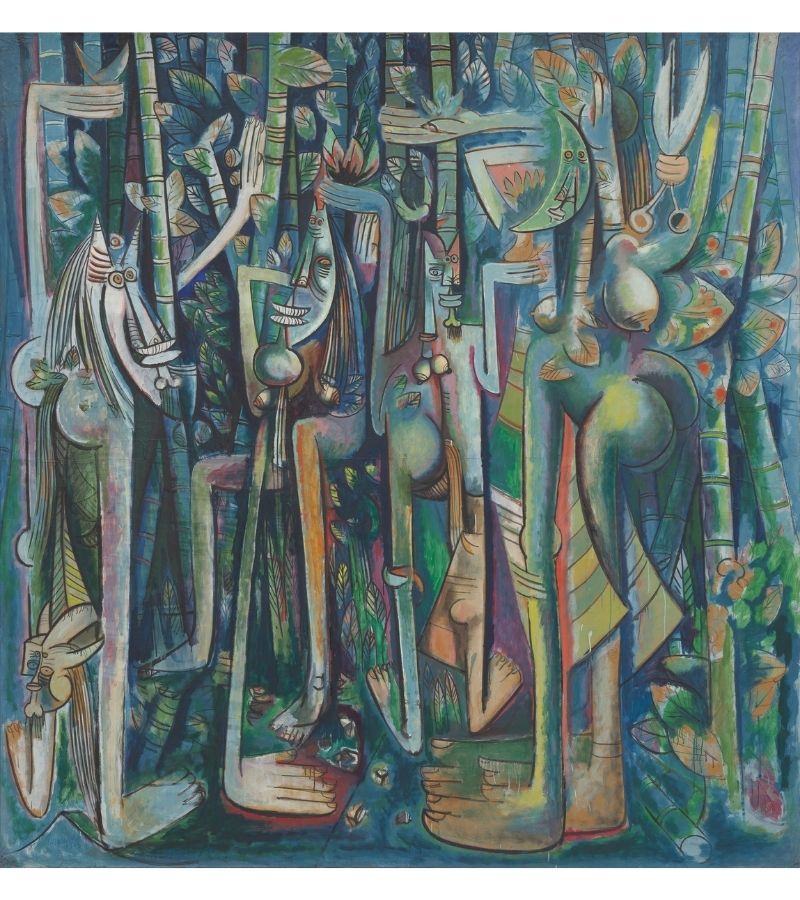
Wifredo Lam. La jungla (The Jungle), 1942-43. Oil and charcoal on paper mounted on canvas, 7’10 ¼” × 7’6 ½” (239.4 × 229.9 cm). The Museum of Modern Art, New York © Wifredo Lam Estate, Adagp, Paris / ARS, New York 2025

How did Wifredo Lam’s early years become a laboratory for modernism?

Lam’s formative period across Europe laid the groundwork for his mature synthesis of styles.


  • From 1923 onward he lived in Spain, studying at the Royal Academy in Madrid and absorbing European painting traditions.
  • During the Spanish Civil War era and his time in France, he engaged with Cubism and Surrealism, not to replicate them, but to learn their tools.
  • This “laboratory” of technique and ideology enabled Lam to confront cultural asymmetry: he observed European traditions from a Caribbean perspective, and the result was a growing sense of his own estrangement and mission.
  • By positioning Afro-Caribbean spiritual cosmologies, such as Santería and Yoruba symbolism, into a formal modernist idiom, Lam began crafting what he described as an “act of decolonization.”

Thus this phase was not mere apprenticeship but a critical experiment: how to take the tools of the dominant modernist tradition and redirect them to speak of suppressed cultures.

Wifredo Lam
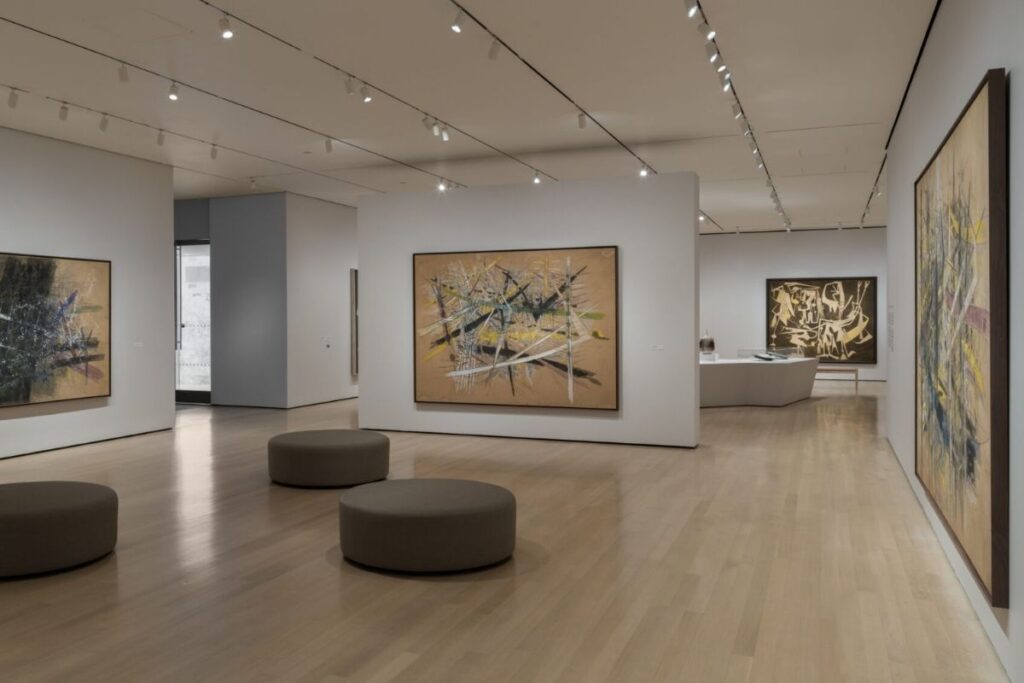
Installation view of Wifredo Lam: When I Don’t Sleep, I Dream on view at The Museum of Modern Art, New York, from November 10, 2025, through April 11, 2026. Photo by Jonathan Dorado
Wifredo Lam
Wifredo Lam. Harpe astrale (Astral Harp), 1944. Oil on canvas, 6’10 ⅝” × 6’2 ¾” (210 × 190 cm). Private collection. © Wifredo Lam Estate, Adagp, Paris / ARS, New York 2025

Why is The Jungle (1942-43) so pivotal and how does it serve as a Trojan horse?

La Jungla (1942–43) is the dramatic visual milestone in Lam’s oeuvre: oil and charcoal on paper mounted on canvas, measuring 239.4 × 229.9 cm, now in MoMA’s collection.


In this work Lam blends hybrid figures, human-animal-vegetal, with dense foliage and spiritual iconography drawn from Afro-Caribbean traditions. The result disrupts the familiar narrative of tropical “exoticism” by making the landscape itself uncanny and layered. 


The “Trojan horse” strategy is explicit: Lam adopted a modernist visual grammar (Cubism fragmentation, Surrealist automatism) but filled it with a content that unsettled colonial dreams. He once remarked his goal was to “surprise and disturb the dreams of the exploiters.”


When MoMA acquired The Jungle in 1945, it became his best-known work in the United States and a key entry point to his career.


Yet in the exhibition now at MoMA, curators stress that Lam’s achievement is far broader: they include over 130 works spanning from the 1920s to the 1970s, revealing that The Jungle is only one chapter.


In short, this piece is the manifesto, but the full story demands the archive.

What is the relevance of Lam’s legacy in the 21st century?

Lam’s career exemplifies the “transnational artist”: moving across islands, continents and cultures while retaining a political and aesthetic core.


The exhibition catalogue emphasises how his life traversed Cuba, Spain, France, Italy and beyond. 


His influence continues in Latin America, the Caribbean and globally; his visual vocabulary offers alternatives to Eurocentric modernist canons. Scholars speak of “other modernisms” and post-colonial revision of the art historical narrative.


For institutions like MoMA, this retrospective is a corrective: decades in which Lam was understood only through The Jungle are giving way to a richer, fuller appreciation of his trajectory, experimentation and cultural anchorage.


Finally, for current creators and critics his work invites questions about hybridity, diasporic identity and the role of art as resistance. In an era of global art markets and decolonial reckoning, Lam remains startlingly relevant.


Thus his legacy is not locked in the past but continues to prompt dialogues about globalization, artistic diversity and power.

Wifredo Lam
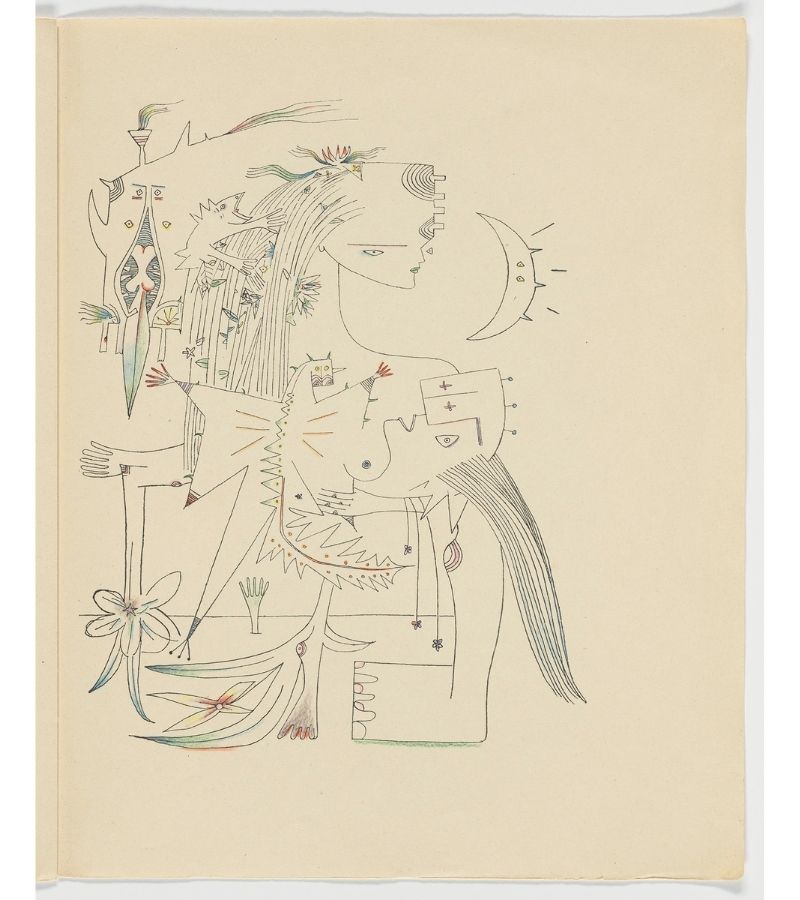
Wifredo Lam. Fata Morgana, 1941. Illustration from an unbound proof of an illustrated book with letterpress text and seven line block illustrations with hand additions in colored pencil and annotations in ink, sheet (closed): 11 × 9″ (28 × 22.8 cm), sheet (open): 11 × 17 11/16″ (28 × 45 cm). The Museum of Modern Art, New York © Wifredo Lam Estate, Adagp, Paris / ARS, New York 2025

The MoMA retrospective “Wifredo Lam: When I Don’t Sleep, I Dream” does far more than revisit a major artist: it invites us to rethink modernism altogether. From his laboratory years in Europe, to the breakthrough of The Jungle, to his transnational influence today, Lam navigated form and culture with a relentless curiosity and political heart. His art was a Trojan horse that challenged established norms, and now its unlocking offers fresh insight into how Caribbean thought, African-diasporic traditions and European modernist language can converge into something radically new. If you seek to explore the frontiers of art history, here is a path worth following.

FAQs – Questions You Might Ask

Receive the latest news

Subscribe To Our Magazine

Luster Magazine

Digital Magazine

Ingresa los siguientes datos y comienza a disfrutar de nuestra revista digital.