Architecture

From Crystal Pyramid to Stone Beacon: I. M. Pei’s Museum of Islamic Art Doha

Explore I. M. Pei’s Museum of Islamic Art in Doha — a masterpiece of abstraction and geo-culture shaping Qatar’s cultural identity.

Por: Angela Leon Cervera
Museum of Islamic Art Doha
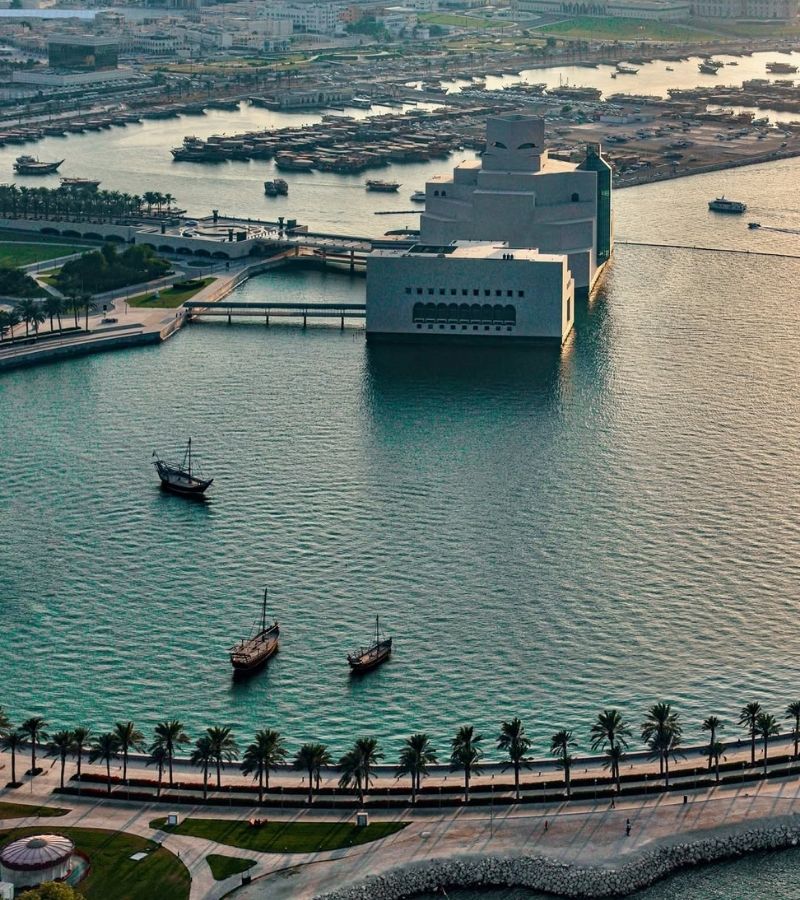
Museum of Islamic Art Doha. Photo: @miaqatar

Right on the shimmering waters of Doha Bay stands the Museum of Islamic Art Doha, a bold and sculptural achievement by the legendary architect I. M. Pei. From the moment you glimpse its stacked geometric volumes rising out of the Gulf, the museum declares a vision of abstraction, culture and place.


It is more than a building. In the context of Qatar’s ambitions, this museum became a beacon of diversification, art and identity. Its form reflects Islamic architectural traditions in a distilled modernist vocabulary, merging architecture, geopolitics and cultural poetics.
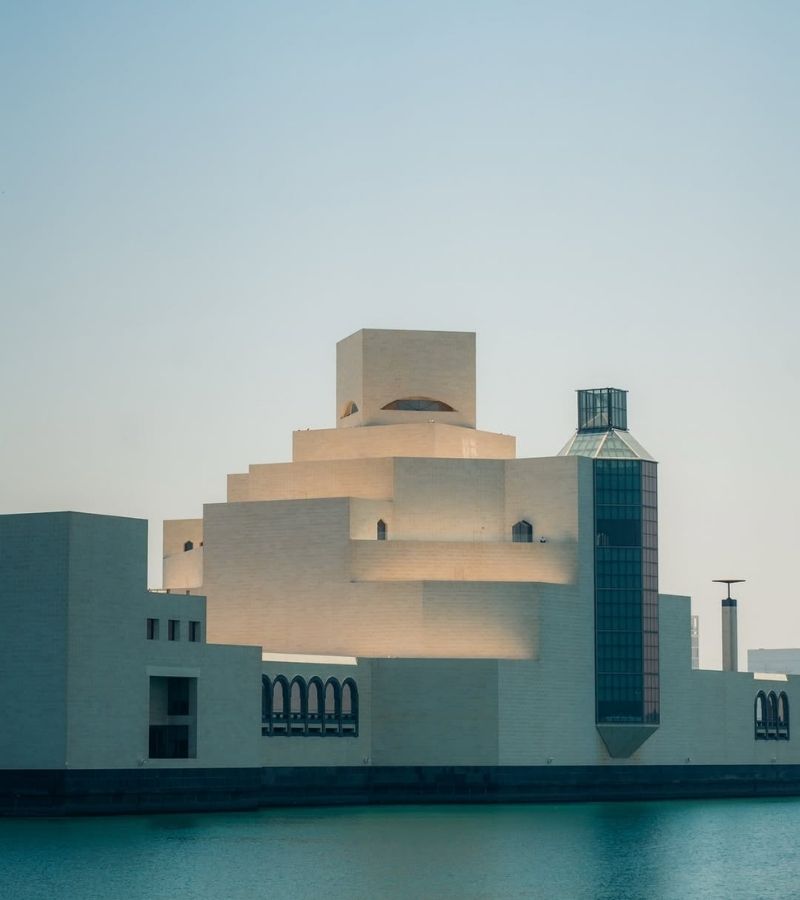
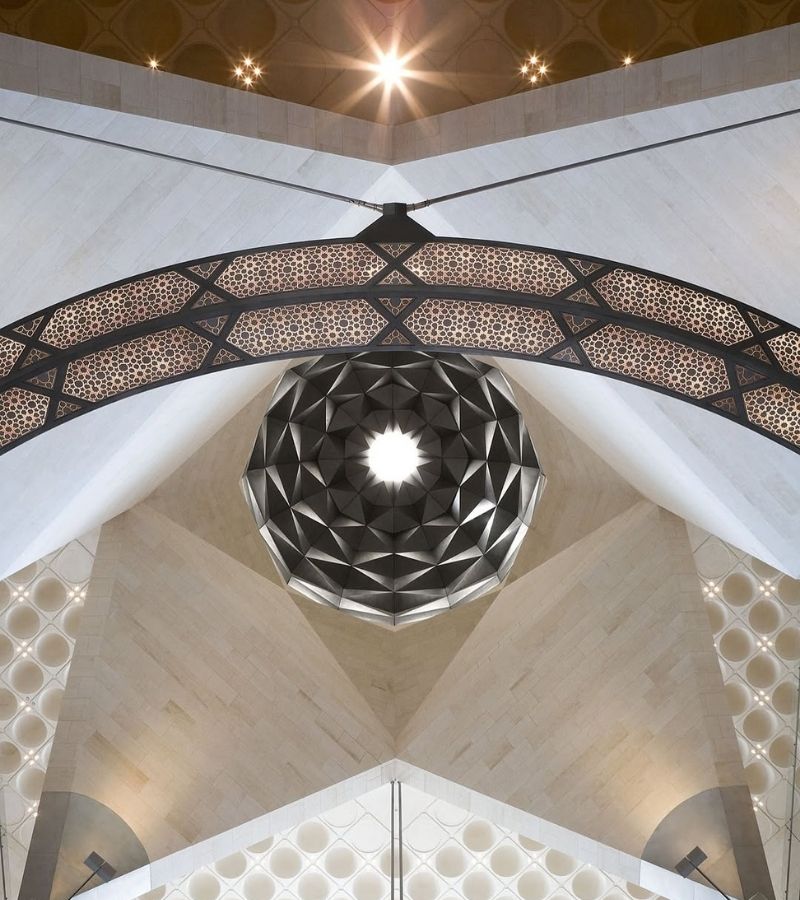
Museum of Islamic Art Doha
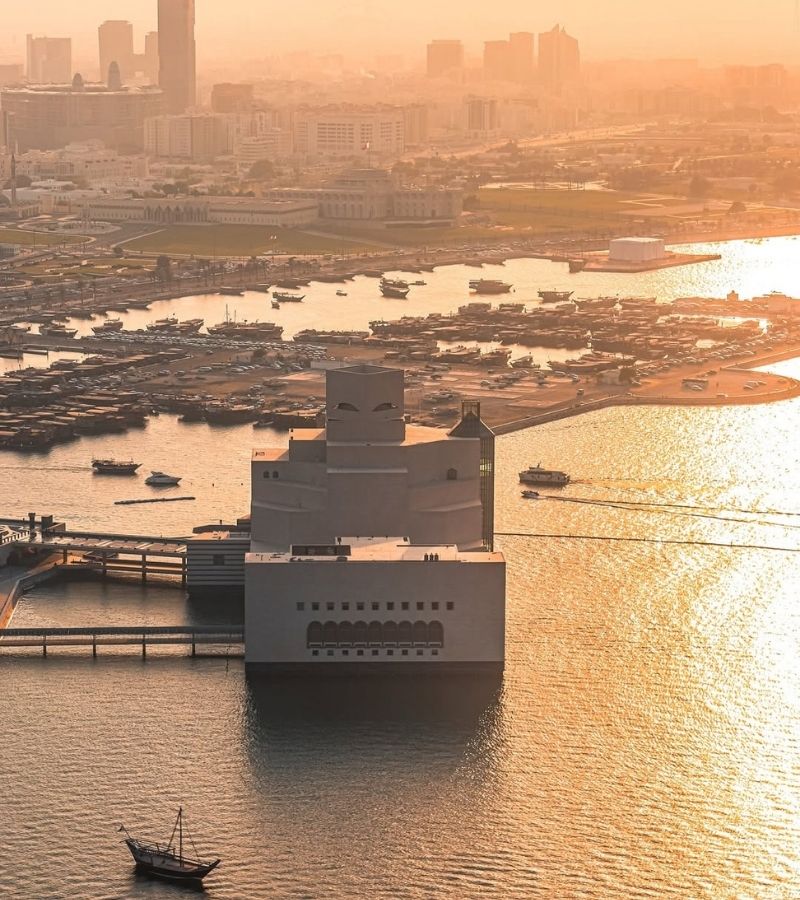
Museum of Islamic Art Doha. Photo: @miaqatar

Why did Qatar commission the Museum of Islamic Art Doha and what does it represent?

The Museum of Islamic Art was conceived as a strategic cornerstone of Qatar’s cultural policy, symbolising the nation’s shift from hydrocarbons to knowledge and creativity.


  • Through Qatar Museums, the country aimed to transform Doha into a global hub for art, heritage and education.

  • The MIA, inaugurated in 2008, became the anchor of this transformation, elevating Qatar’s soft power on the international stage.

  • Built on its own man-made island 60 metres from the Corniche, the museum stands apart from the city’s skyline — a literal and symbolic lighthouse of culture.

  • Its architecture fuses modern engineering and traditional symbolism, representing Qatar as a bridge between its heritage and the global cultural future.

In essence, the Museum of Islamic Art Doha is a physical manifestation of Qatar’s ambition to project its identity through design and intellect.

Museum of Islamic Art Doha
Museum of Islamic Art Doha. Photo: @miaqatar
Museum of Islamic Art Doha
Museum of Islamic Art Doha. Photo: @miaqatar

How did I. M. Pei merge abstraction and geo-culture in the Museum of Islamic Art Doha?

Pei’s design is a masterclass in the balance between modernist geometry and spiritual essence. The Chinese-American architect, famous for the Louvre Pyramid in Paris, spent months travelling through the Islamic world before committing to the design.


  • He rejected several urban sites, insisting on an isolated location to preserve the museum’s silhouette and visual integrity.

  • The structure, clad in cream limestone, interacts with the Gulf light, creating rhythmic shadows that change with the sun.

  • The composition was inspired by the ninth-century sabil of the Mosque of Ibn Tulun in Cairo, an austere fountain pavilion admired by Pei for its purity and geometry.

  • Inside, a soaring atrium crowned by a hidden dome modulates daylight, transforming illumination into ritual.

By abstracting rather than imitating Islamic forms, Pei achieved a new idiom, neo-vernacular modernism,  where heritage becomes universal through proportion, light and restraint.

What architectural and curatorial features make the Museum of Islamic Art Doha a landmark?

Several defining features position the MIA as a milestone of 21st-century architecture:


  • Site & Isolation: The museum’s offshore position allows unobstructed views of both the bay and the city, reinforcing its monumental solitude.

  • Materiality: The limestone exterior, selected for its warm tone, captures the desert sun and reveals subtle gradations of colour.

  • Geometry: The building progresses from square to circle to dome, echoing sacred geometric hierarchies found in Islamic architecture.

  • Interior Design: French architect Jean-Michel Wilmotte designed the exhibition galleries using dark stone and wood, creating a calm contrast to Pei’s luminous atrium.

  • Curatorial Vision: The collection spans the 7th to 20th centuries, covering three continents. Objects are presented as part of an interconnected narrative celebrating calligraphy, pattern and scientific innovation.

Together, these elements make the Museum of Islamic Art Doha not only a museum but a spiritual and intellectual experience — an encounter between light, matter and meaning.

Museum of Islamic Art Doha
Museum of Islamic Art Doha. Photo: @miaqatar

The Museum of Islamic Art in Doha stands as more than stone and glass. Through I. M. Pei’s geometric precision and philosophical depth, it embodies Qatar’s synthesis of abstraction, heritage and ambition.


In a region where spectacle often eclipses substance, Pei’s monument offers permanence and clarity. It invites visitors to pause on its pier, watch the sunlight fade over the Corniche, and realise that art, in its purest form, is an act of alignment, between past and future, between earth and light.

FAQs – Architecture & Culture Unpacked

Receive the latest news

Subscribe To Our Magazine

Luster Magazine

Digital Magazine

Ingresa los siguientes datos y comienza a disfrutar de nuestra revista digital.