Art

The Face of Eternity: Mask of Tutankhamun at 100 Years

Explore the Mask of Tutankhamun’s 100-year legacy: craftsmanship, myth and modern museology of this gold Egyptian icon.

Por: Angela Leon Cervera
Mask of Tutankhamun
King Tut Burial Mask

The Mask of Tutankhamun is perhaps the most instantly recognisable artefact from ancient Egypt, and its 100-year anniversary (nearly) since its discovery invites us to revisit the story with fresh eyes. From the moment it emerged from the royal coffin in the tomb of Howard Carter in 1925, the golden face of the young pharaoh locked the world’s imagination. 


But beyond the shimmer of gold lies a tale of masterful orfebrería, religious symbolism and seismic cultural impact. In this article, we examine the material and iconographic brilliance of the Mask of Tutankhamun, its ripple effect on design and culture, and its current journey into a new museological era.
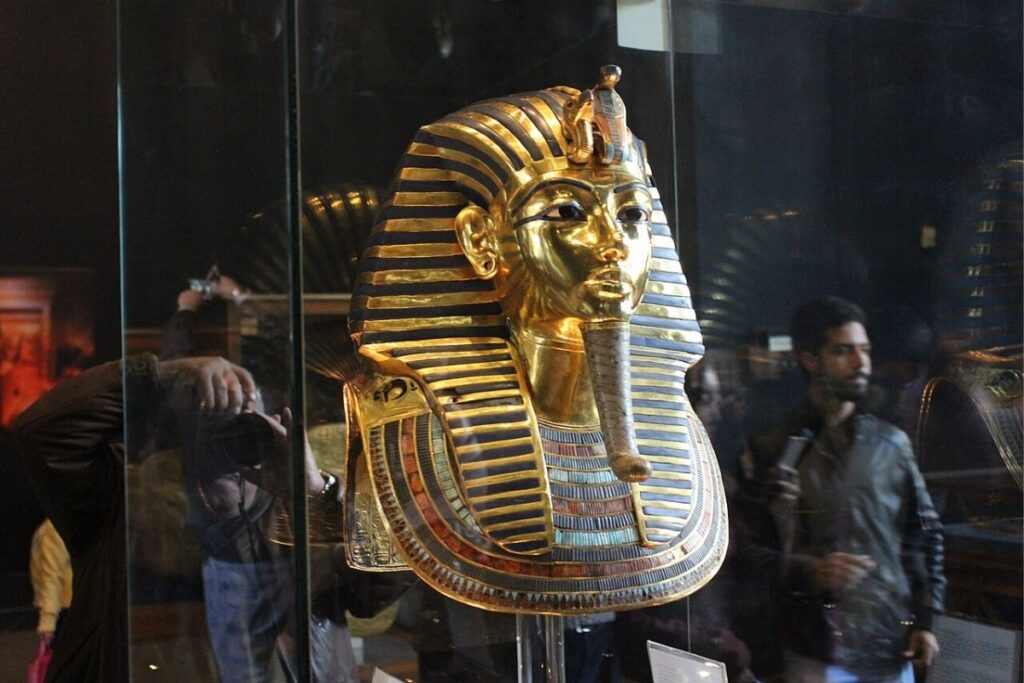
Mask of Tutankhamun
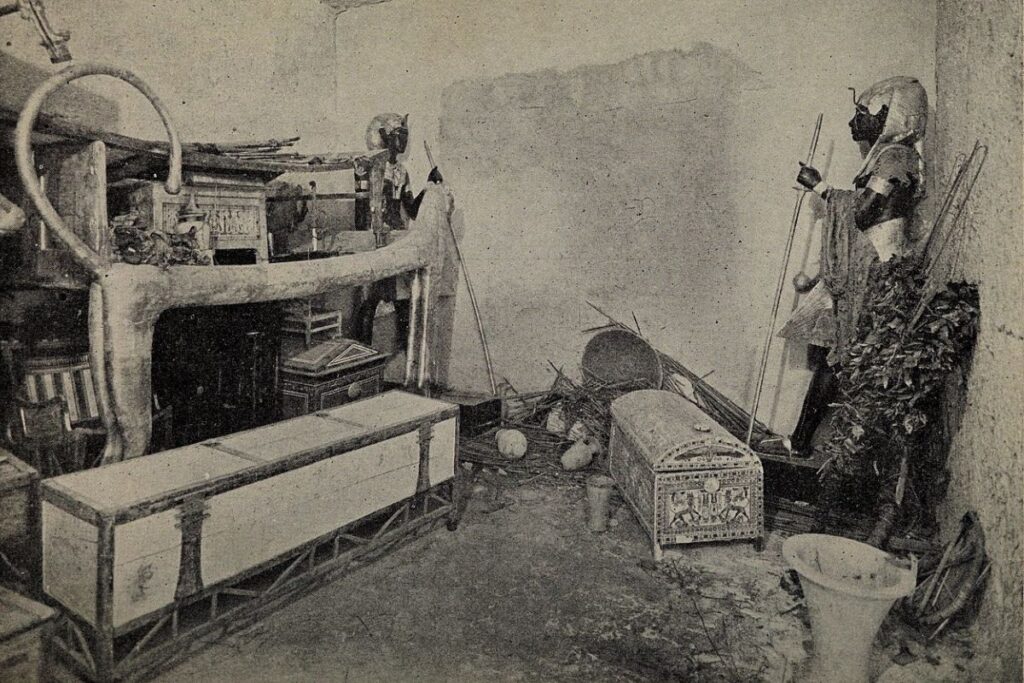
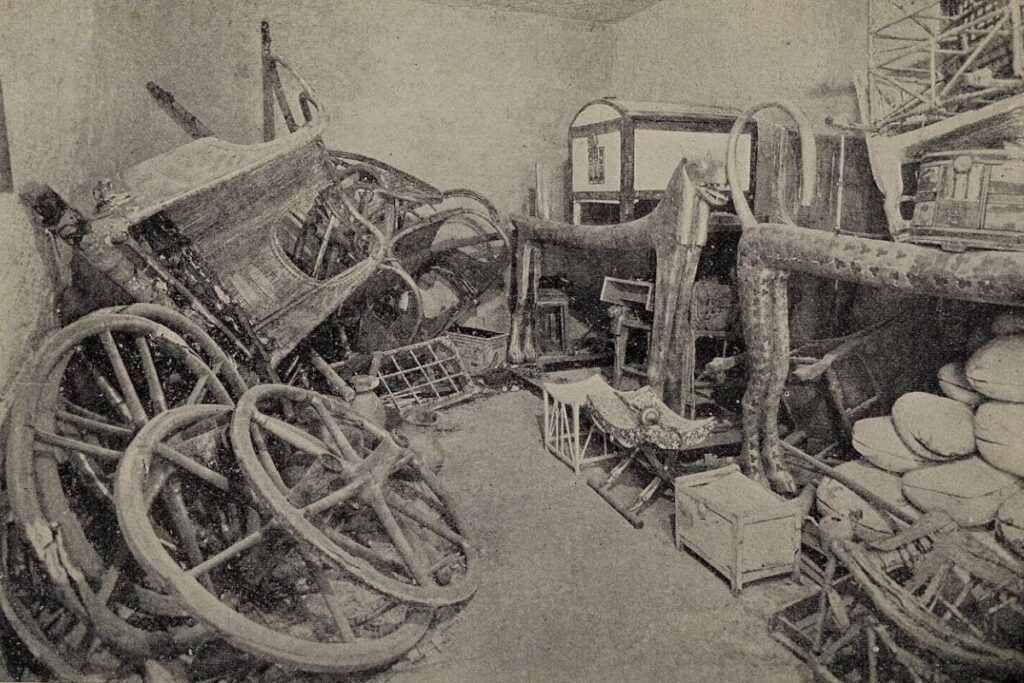
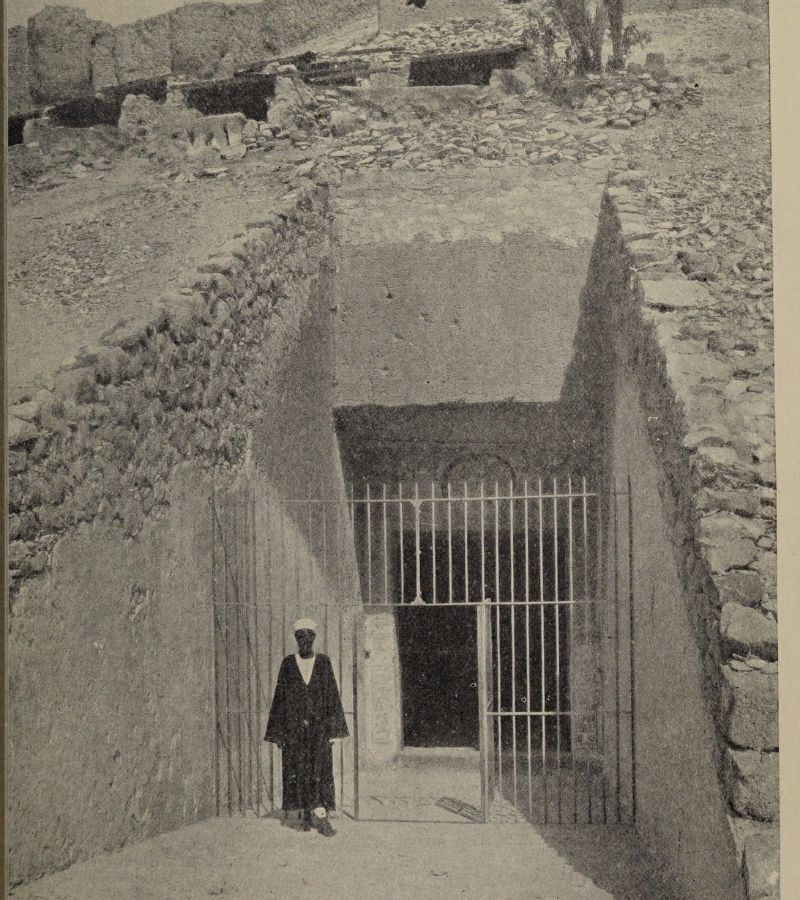
Tomb of Tut-Ankh-Amen

What makes the Mask of Tutankhamun a masterpiece of ancient Egyptian craftsmanship?

  • The mask stands about 54 cm high and weighs over 10 kg.

  • It is made from layered gold sheets, hammered and shaped with the finest skill.

  • Inlays include lapis lazuli, quartz, obsidian and glass paste, each chosen for symbolic resonance and aesthetic brilliance.

  • The headdress (nemes), cobra (uraeus) and vulture motifs symbolise dual rulership of Upper and Lower Egypt and divine protection.

  • The back includes an inscribed passage from the Book of the Dead (chapter 151B) for protection in the afterlife.

Together, this fusion of material opulence, theological meaning and artisanal mastery makes the mask not simply a funerary object, but a statement of transcendence – mortal king to deity.

Mask of Tutankhamun
King Tut Burial Mask
Mask of Tutankhamun
Illustration from The Tomb of Tut-Ankh-Amen

How did the Mask of Tutankhamun influence culture, design and the so-called Egyptomania?

  • The discovery of the tomb of Tutankhamun in 1922 and the subsequent unveiling of this mask triggered a global fascination with all things Egyptian.

  • That fascination aligned perfectly with the rise of the Art Déco movement in the 1920s and 1930s. Designers sought luxury, exotic materiality and geometric clarity — exactly what the mask visually offered.

  • Motifs drawn from the mask (gold polish, bold lines, stylised Egyptian symbols) appeared in architecture, jewellery and interiors.

  • The mask thus stands not only as an artefact of ancient power, but as a catalyst for modern aesthetic shifts — bridging millennia to influence the 20th century.

What are the contemporary museum- and conservation-challenges for the Mask of Tutankhamun?

  • Despite its iconic status, modern analysis has raised questions about origin and reuse: some scholars suggest the mask may originally have been made for another royal and re-inscribed for Tutankhamun.

  • Conservation issues loom large: in 2014 the mask’s beard was re-attached using unsuitable epoxy, compromising authenticity; subsequent restoration used beeswax to allow future reversibility.

  • Museologically the mask is set to move into the Grand Egyptian Museum (GEM) in Giza, where it will join thousands of associated objects from KV62 in a cohesive narrative display.

  • This move prompts debate on presentation, security, visitor experience and the ethics of moving national treasures. The mask must be displayed not just as spectacle, but as a living artefact of cultural memory.

Mask of Tutankhamun
Illustration from The Tomb of Tut-Ankh-Amen

The Mask of Tutankhamun is much more than a glittering relic. It is the culmination of ancient craftsmanship, a banner of divine kingship, and a progenitor of modern visual culture. As it marks nearly a century since its discovery and prepares for a new chapter at the Grand Egyptian Museum, it prompts us to ask deeper questions: what does legacy mean? How does design carry meaning across eras? And how do we steward icons of the past into the future? The young king’s golden visage continues to captivate, in part because it still challenges us to see beyond gold, into eternity.

FAQ: Insights into the Golden Mask of King Tut

Receive the latest news

Subscribe To Our Magazine

Luster Magazine

Digital Magazine

Ingresa los siguientes datos y comienza a disfrutar de nuestra revista digital.