Architecture

Everything You Need to Know About the White House’s Grand Ballroom

A historic and aesthetic analysis of the proposed grand ballroom at the White House, exploring architectural intervention and heritage preservation.

Por: Angela Leon Cervera
White House Ballroom
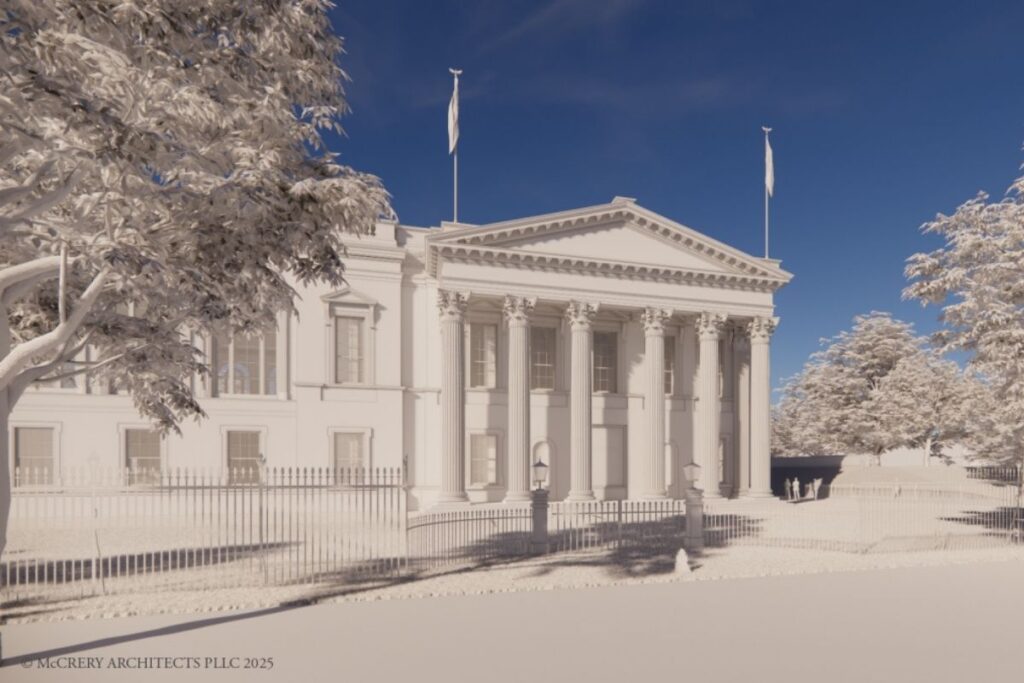
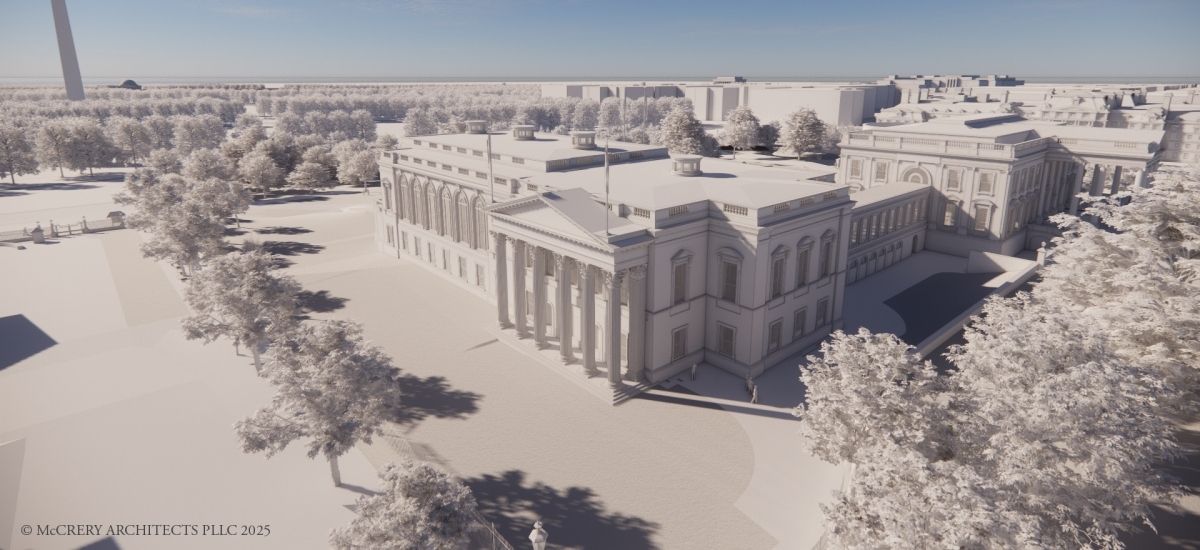
Whit House. Photo: McCRERY ARCHITECTS PLLC 2025

The proposed White House Ballroom is nothing less than a bold architectural statement. The concept of the White House Ballroom emerges from vision and controversy alike, and carries with it the weight of history, symbolism, and aesthetic consequence.


In this report we investigate how this grand addition confronts both the physical and symbolic integrity of the executive residence. We explore the architectural layers that have shaped the White House, the precedents of major interventions, and how the Ballroom proposal tests the limits of visual composition and heritage preservation.

White House Ballroom
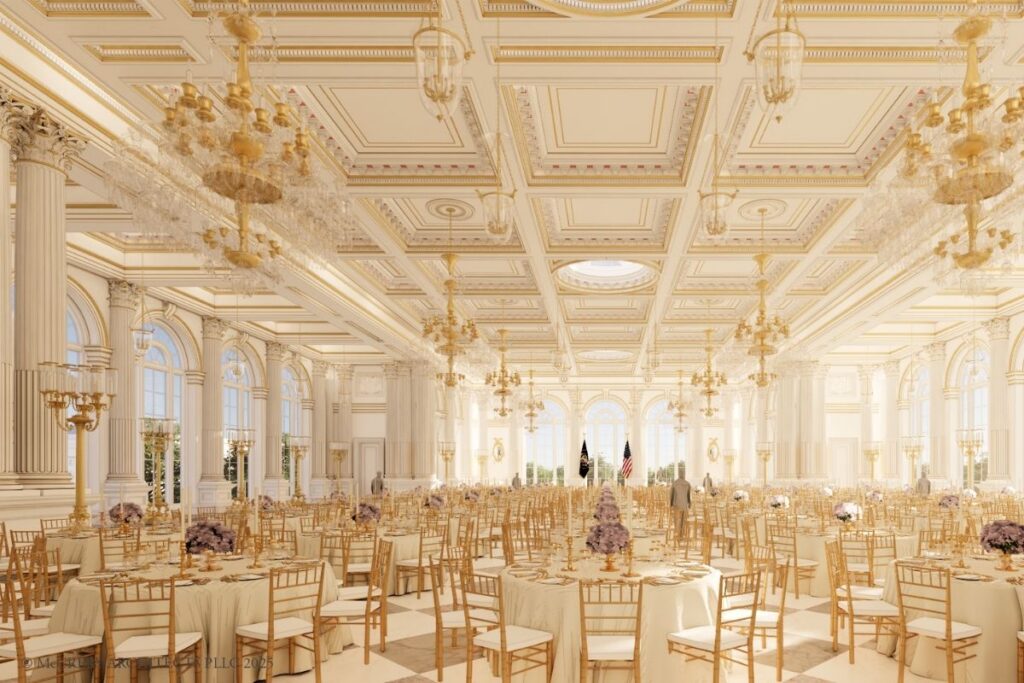
Whit House. Photo: McCRERY ARCHITECTS PLLC 2025

What is the historical architectural identity of the White House and how does the Ballroom proposal interact with it?

At its origin the White House, designed by James Hoban and completed between 1792 and 1800, established a Neoclassical Federal style rooted in symmetry, order and references to classical antiquity. 


The body of the residence reflects a restraint in scale and formal composition appropriate to early-American republican ideals. Large wings or oversized annexes were not part of Hoban’s original typology.


When the Ballroom proposal calls for the demolition of the East Wing (built in 1902 and rebuilt in 1942) and replacement with an approximate 8 000 m² (90 000 sq ft) space, the scale shifts dramatically.


This raises questions about whether the Ballroom can complement the established architecture or instead upend the balance and visual hierarchy of the original Neoclassical design.

White House Ballroom
Whit House. Photo: McCRERY ARCHITECTS PLLC 2025
White House Ballroom
Whit House. Photo: McCRERY ARCHITECTS PLLC 2025

How have prior presidential interventions shaped the White House, and what lessons do they offer for the Ballroom project?

A. The 1902 aesthetic renewal under Theodore Roosevelt and firm McKim, Mead & White
This renovation eliminated heavy Victorian decoration and returned the interior toward a more formal Georgian-inspired dignity. It asserted that the White House needed to present an image of “dignity, enterprise, vigour and stability”.


B. The 1948–1952 structural rebuild under Harry S. Truman
Here the entire interior was removed and a steel-and-concrete structure inserted behind the external façade. The lesson: preservation of the exterior icon was deemed paramount even at the cost of radical internal change. 


C. The 1961 curatorial renewal under Jacqueline Kennedy
In this phase the White House embraced its role as historic monument and cultural site, consolidating furniture, works of art, and public programming.
Taken together these interventions establish three guiding principles: external form must be respected; interior function may evolve; monumental scale may be acceptable only if subordinated to the existing composition.

Why does the proposed White House Ballroom present an aesthetic and volumetric challenge?

A. The structural and locational context of the East Wing
The East Wing was originally built in 1902 as a visitor entrance and was significantly expanded in 1942 to include support offices and a bunker beneath. Its design was intentionally subsidiary to the main Presidential Residence.


B. The volumetric contradiction
With the Ballroom project’s footprint reportedly near 8 000 m² (approximately 90 000 sq ft) and capacity up to 999 people, the scale veers into monumental. The formal mass of such an addition threatens to compete visually with the original house rather than serve it.


C. The hierarchy and visual integrity at risk
When an addition becomes the dominant mass, the original structure may appear as a subsidiary annex. Such a shift contradicts the established visual priority of the Presidential Residence and endangers the “subordination” of extensions that previous architects upheld.
Architecturally, the new Ballroom must be visually discreet, harmonise with the language of the house, and preserve the external silhouette and proportions that have symbolised American executive architecture for over two centuries.

White House Ballroom
Whit House. Photo: McCRERY ARCHITECTS PLLC 2025

The White House Ballroom proposal sits at the crossroads of architectural ambition and heritage constraint. If executed with sensitivity it could become a new chapter in the evolving narrative of one of America’s principal monuments. Yet if scale and form overwhelm the original design, the synergy of past and present may fracture. The challenge will be to blend function and grandeur without sacrificing dignity, harmony or historic identity. From here the future of the White House’s aesthetic and symbolic role depends on whether the Ballroom truly honours the building’s legacy, or reshapes it beyond recognition.

FAQ – What readers want to know

Receive the latest news

Subscribe To Our Magazine

Luster Magazine

Digital Magazine

Ingresa los siguientes datos y comienza a disfrutar de nuestra revista digital.