Art

The “Tudor Heart”: A Golden Symbol of Henry VIII’s Promise

A dazzling gold pendant tied to Henry VIII and Catherine of Aragon reveals lost Tudor love and power in the “Tudor Heart.”

Por: Angela Leon Cervera
Tudor Heart
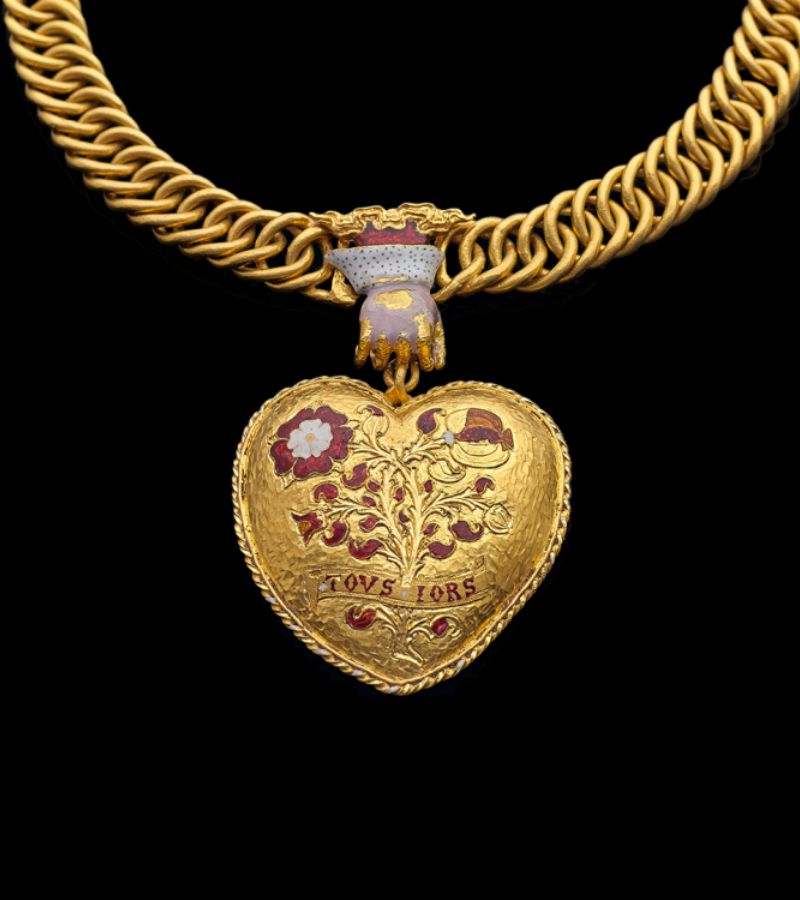
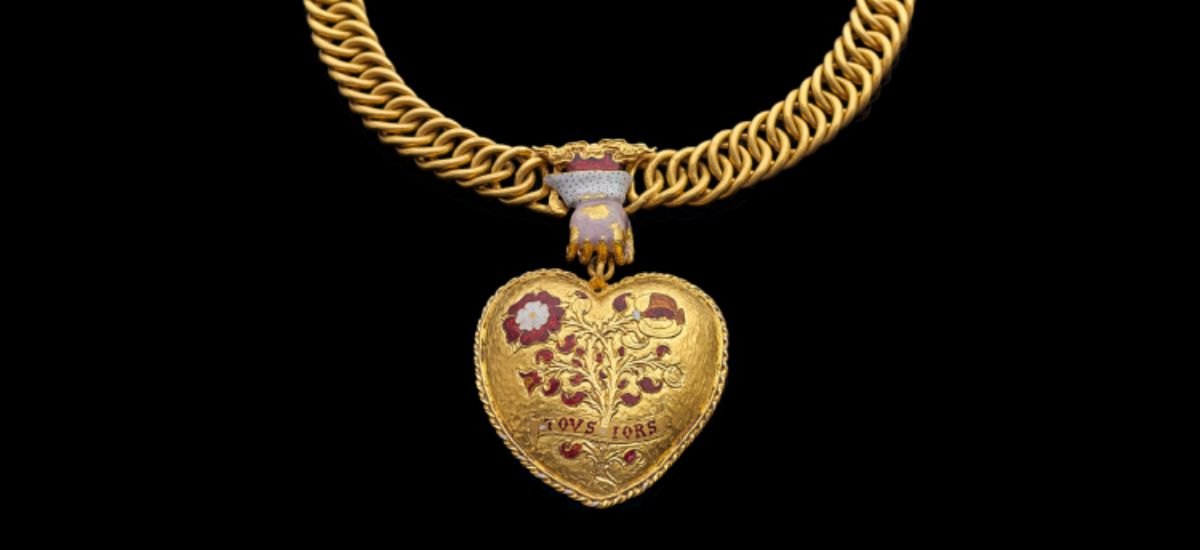
Tudor Heart. Photo: British Museum

In December 2019, a metal detectorist named Charlie Clarke uncovered a remarkable heart-shaped gold pendant buried in a field in Warwickshire. Reported under Britain’s Treasure Act, this piece, now dubbed the Tudor Heart, has rapidly become one of the most enigmatic finds from the early reign of Henry VIII.


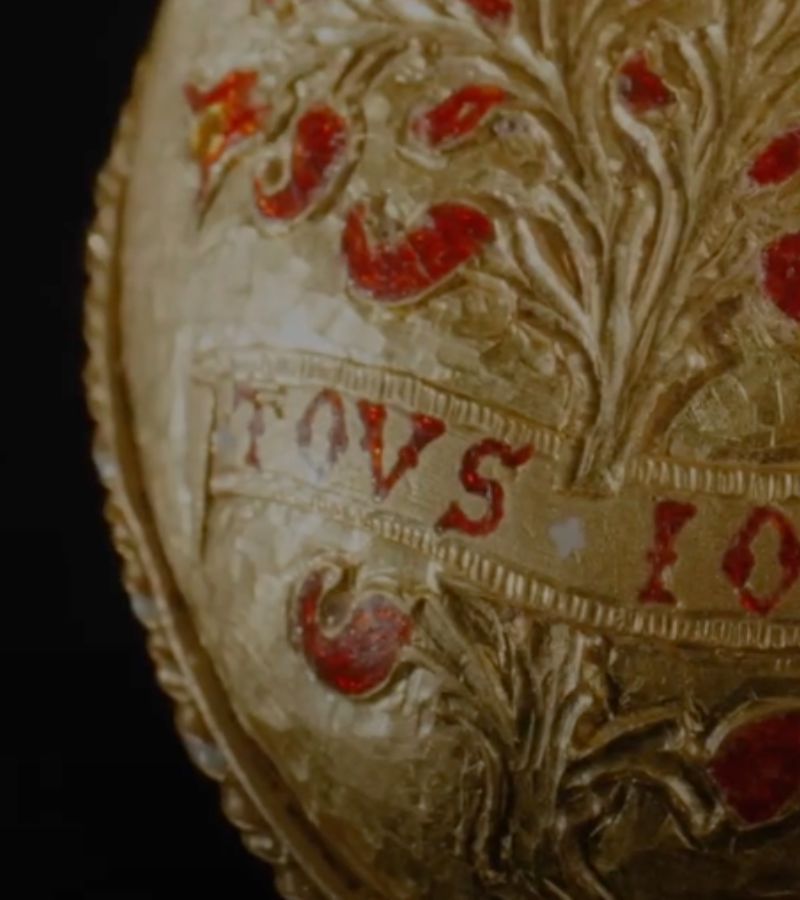
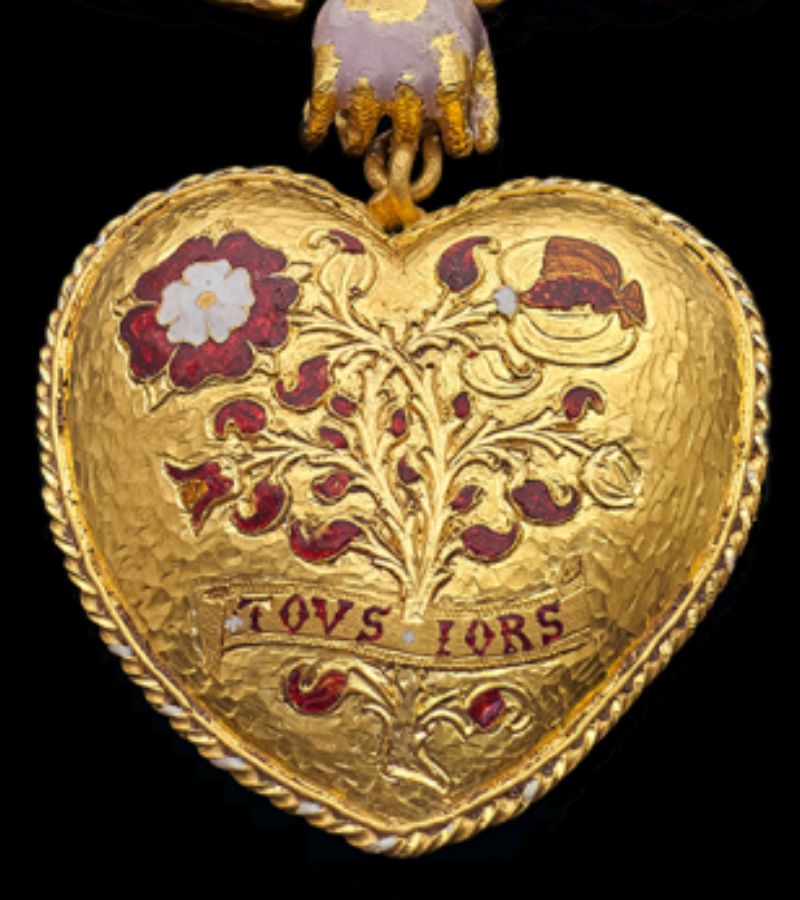
The pendant’s design unites Tudor and Spanish iconography: a rose, a pomegranate, the initials “H” and “K,” and the Old French inscription TOUSIORS (meaning “always”). The jewel offers a tangible link to the marriage of Henry VIII and Catherine of Aragon, tracing fissures between love, politics, and legacy.
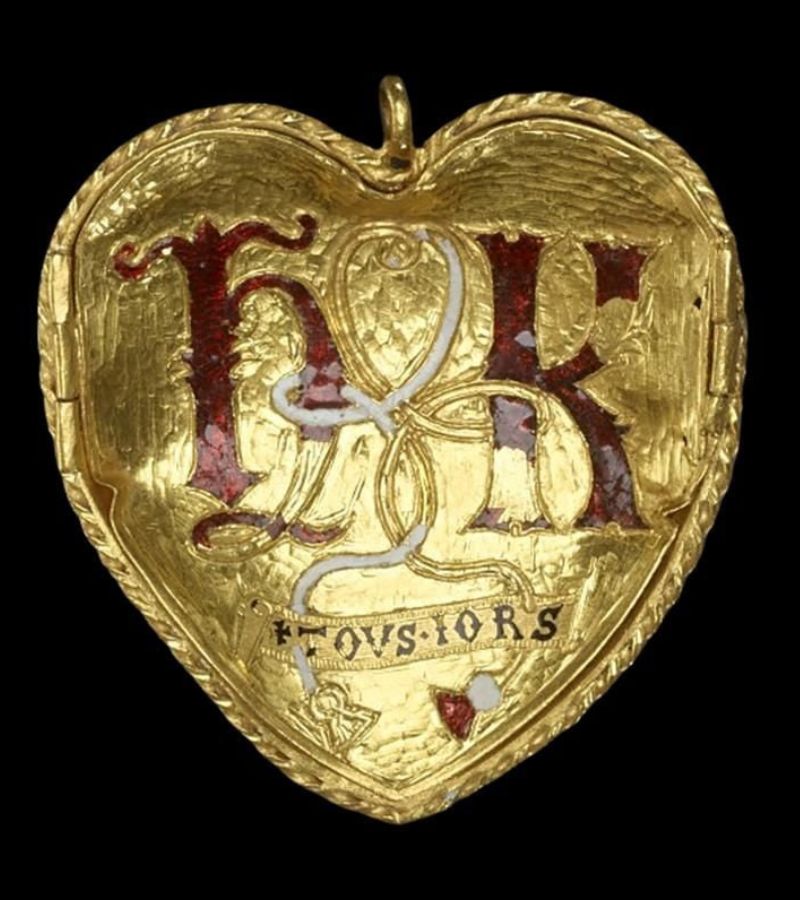
Tudor Heart
Tudor Heart. Photo: British Museum

How Was the Tudor Heart Discovered and Protected?

Discovery and legal handling

  • The pendant was found in a rural Warwickshire field in December 2019 by Clarke, an amateur detectorist.

  • Under England’s Treasure Act 1996, finds of potential treasure must be reported; the British Museum then has first rights of acquisition.

  • The piece was assessed and valued by the Treasure Value Committee at £3.5 million.

  • A fundraising campaign has been launched to keep the pendant in the public domain; a £500,000 pledge has already been made by the Julia Rausing Trust.

Significance of provenance

Because few pieces tied so closely to Henry and Catherine’s union survive, the Tudor Heart offers rare material testimony.


Its journey, from courtly context to rural soil, remains mysterious, but it was successfully secured for scholarly study and potential museum acquisition.

Tudor Heart
Tudor Heart. Photo: British Museum
Tudor Heart
Tudor Heart. Photo: British Museum

What Is the Design and Symbolism of the Tudor Heart?

Artistic details

  • The pendant is made of 24-carat gold and features a 75-link chain.

  • A gold-and-enamel hand (from a cloud motif) once clasped the heart to the chain.

  • The heart pendant itself opens with a hinge, revealing interior surfaces that bear the initials “H” and “K.”

  • On both faces is the inscription tousiors (“always” in Old French).

Iconography and dynastic meaning

  • One side merges the Tudor Rose (England) with the pomegranate tree (symbol of Catherine’s Spanish lineage).

  • The initials “H” and “K” bind the monarch and queen in visual union.

  • The inscription tousiors conveys a vow of perpetual fidelity—a poignant message given the marriage’s later dissolution.

  • The pendant is believed to have been created for a 1518 tournament celebrating the betrothal of Princess Mary to the French heir, highlighting the role of pageantry and spectacle in court politics.

How Does the Tudor Heart Reshape Our View of Henry VIII and Catherine?

A rare physical voice from early Tudor court

Most knowledge of Tudor jewelry derives from inventories and portraits; the Tudor Heart is among the only surviving pieces that link directly to Henry and Catherine.


It provides tangible evidence of how royal material culture operated as political language and personal narrative.


Irony, memory, and legacy

The vow inscribed—“always”—becomes tragically ironic in light of the couple’s later divorce, the break with Rome, and Catherine’s repudiation.


Many Tudor objects tied to rejected queens or political rivals were destroyed or melted down. The Tudor Heart’s survival hinges on misplacement rather than preservation by court decree.


Contemporary stakes: museum campaign and heritage

  • The British Museum wants to retain the piece for public access.

  • The acquisition campaign underscores debates about heritage, national patrimony, and the ethics of collecting.

  • If successfully acquired, the pendant promises to enrich future exhibitions, scholarship, and public engagement with Tudor culture.

Tudor Heart
Tudor Heart. Photo: British Museum

The Tudor Heart is more than a stunning jewel. It is a deeply layered artifact: a romance and a manifesto, a design and a drama, a surviving artifact that reframes the early story of Henry VIII and Catherine of Aragon. As the British Museum races to secure it for the nation, the pendant stands between public memory and private ownership, carrying the weight of dynastic promise sealed in gold.


This little heart could well reshuffle the way we see Tudor power, intimacy, and material voice, if we can ensure it remains a shared treasure rather than a hidden one.

FAQ: Key Questions About the Tudor Heart

Receive the latest news

Subscribe To Our Magazine

Luster Magazine

Digital Magazine

Ingresa los siguientes datos y comienza a disfrutar de nuestra revista digital.