Journey

Amanbagh: Reinvention of Mughal Luxury in Rajasthan

Amanbagh blends Mughal-inspired architecture, Ayurvedic immersion, and desert wilderness in Rajasthan — an oasis of cultural luxury and holistic wellness.

Por: Angela Leon Cervera
Amanbagh
Amanbagh, Rajasthan. India. Courtesy of Amanbagh

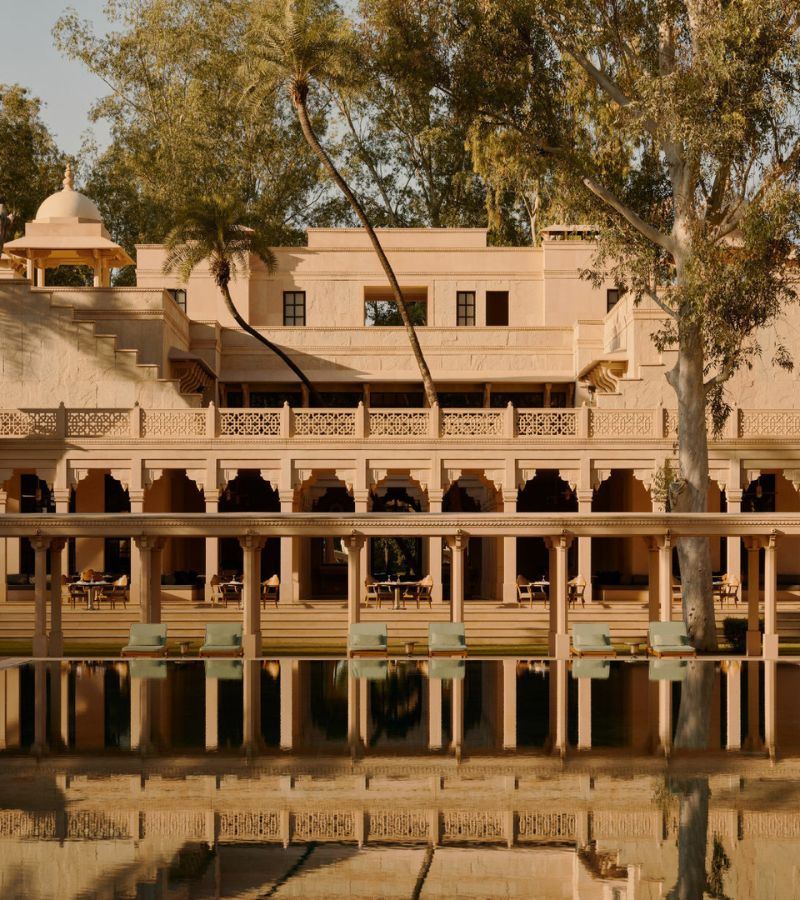
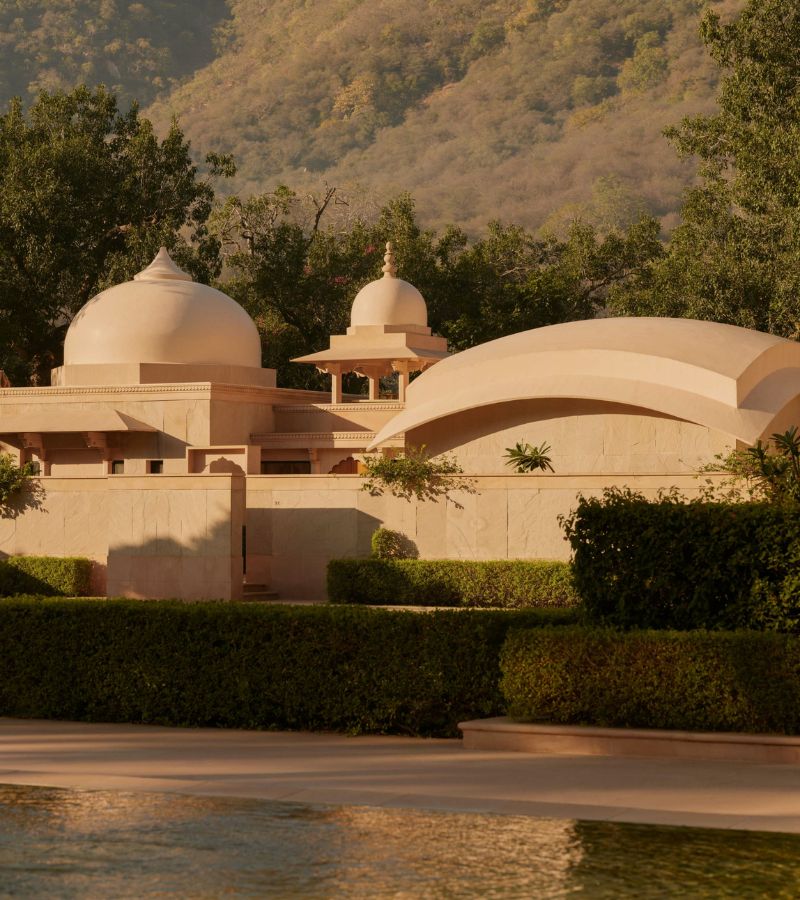
Nestled in the Aravalli Hills near Alwar, Rajasthan, Amanbagh manifests as more than a resort — it is a deliberate architectural reverie, a modern reinvention of Mughal sensibility in the desert. Here, the word “oasis” is literal: water channels, verdant gardens, and a walled enclave temper the harsh terrain beyond.


From the moment you pass through its threshold, Amanbagh evokes the grandeur of royal retreats, yet in whispers rather than proclamations. Every courtyard, lauburu arch, and stone-paneled corridor is calibrated to balance the ancient and the contemporary.

Amanbagh
Amanbagh, Rajasthan. India. Courtesy of Amanbagh

What narrative does the walled sanctuary of Amanbagh tell?

Amanbagh is conceived as a walled oasis, reminiscent of historic sanctuaries in India, where lush interiors contrast with arid exteriors. The walls do not only enclose, they frame an internal world, one of privacy, stillness, and refuge. Aman describes the grounds as a walled compound fed by a reliable water supply from a neighboring lake, allowing palm trees and fruit groves to flourish in the otherwise austere surroundings.


In a regional context rich with legends, the site’s location resonates with deeper layers. The epic Mahabharata locates the Pandavas’ final years of exile in lands near this region over two millennia ago. Later, the Rajput clans held sway here for centuries before Mughal conquest under Shah Jahan in the seventeenth century. 


In more recent history, the land on which Amanbagh stands once served as the Maharajah of Alwar’s mobile tiger-hunting camps. The walled compound echoes that heritage: it is a reimagined enclosure, not of game, but of spirit.


Thus, the sanctuary concept is both spatial and symbolic: it articulates exclusion (the privacy of the elite), and inclusion (a landscape of history and nature folded into one’s stay).

Amanbagh
Amanbagh, Rajasthan. India. Courtesy of Amanbagh
Amanbagh
Amanbagh, Rajasthan. India. Courtesy of Amanbagh

How does architect Ed Tuttle reimagine Mughal language for today?

The architectural ambition of Amanbagh rests in a fine balance: to evoke Mughal motifs without succumbing to pastiche. The resort was designed by Ed Tuttle, who sought to interpret traditional forms through a contemporary lens. 


A modern palace rather than a replica

The central building of Amanbagh rises across three levels. It houses a reception hall, shaded courtyard, a library, terraces, and dining spaces—all organized to feel majestic yet accessible. The configuration recalls palatial layouts, but Tuttle’s restraint avoids clubbing the guest with ornamental excess.


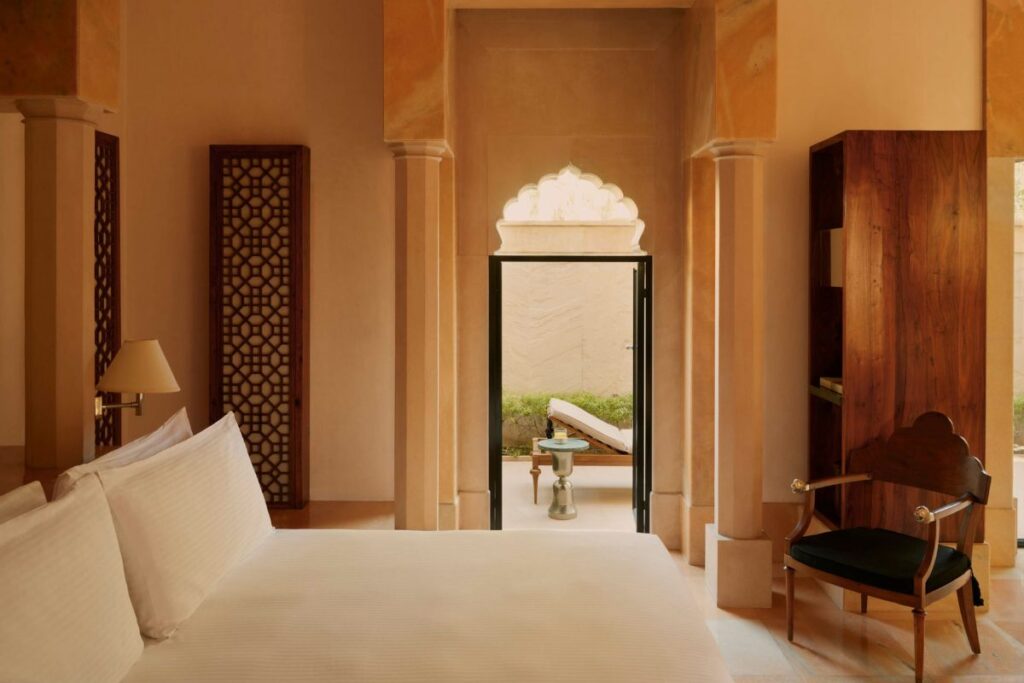
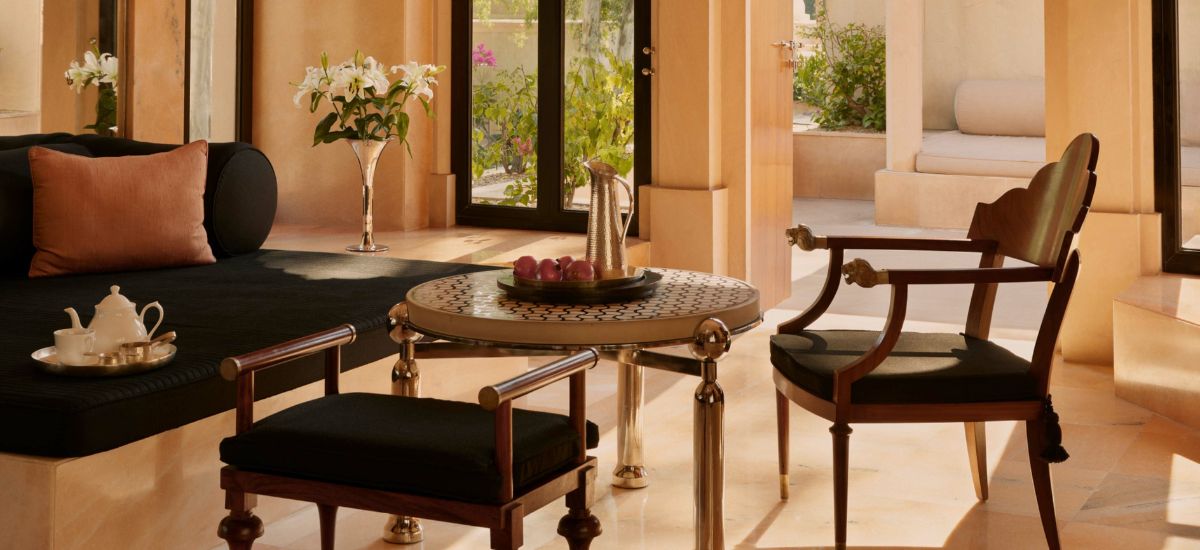
Crowning the design are pink sandstone façades, scalloped archways, vaulted entries, and domed pavilions, gestures that echo the Mughal vocabulary. Inside, the palette is calm, with pale tones, carved stone screens (jali work), and a quiet minimalism that lets texture and proportion speak.


The role of indigenous materials

Amanbagh evokes its setting through the deliberate selection of materials. Pink sandstone and regional marble ground the project to the earth. The bathrooms, in particular, are a highlight: deep tub basins are carved from a single slab of Udaipur green marble, a luxurious, locally sourced stone.


The Pool Pavilions, some of the resort’s most exclusive units, are conceived as mini‐havelis (traditional mansions) with private gardens, their own plunge pools, and interiors that open into courtyards. Proportion, sight lines, and light are handled such that these pavilions are simultaneously intimate and expansive.


In short, Amanbagh’s architecture is a translation, not imitation, Mughal forms filtered through modern discipline.

How are wellness, nature, and cultural immersion integrated in stay?

Amanbagh’s appeal lies in how it layers holistic wellness, nature, and heritage into the guest journey.


Immersion through Ayurvedic and wellness programs

Wellness sits at the heart of Amanbagh’s identity. The resort offers Wellness Immersions, tailored multi-day retreats focusing on Ayurveda, yoga, detox, and mindful living. A resident Ayurvedic physician prescribes treatments, diets, meditation, and movement therapies.


Daily yoga and meditation sessions—often held in the gardens or scenic spots—are part of the routine. The immersion option typically comes with a minimum stay of four nights, reinforcing the idea that true transformation requires time.


Culinary expression as heritage and healing

The resort operates on a farm-to-table ethos: its organic kitchen garden supplies vegetables, herbs, and fruits for the menu. The cuisine blends regional Rajasthani and Indian recipes with global sensibilities, and can be adapted for individual health prescriptions. For immersion guests, meals become part of the wellness prescription, not mere sustenance.


Romantic, culturally inflected dinners are offered in unconventional settings: terraces, ruins, garden pavilion, all lit by candle or lantern.


Adventure, wildness, and region-rooted experiences

Amanbagh is a launchpad for exploration. The resort is close to Sariska Tiger Reserve, a habitat for tigers, leopards, and deer. Guests can arrange safaris via Aman’s itinerary programs.


Nearby ruins and temples invite forays into history and legend. Bhangarh, an abandoned city reputedly haunted, is a popular half-day trip. Neelkanth’s temple complex, with over eighty temples, is another excursion.


A distinctive “Cow Dust Tour” gives guests a window into rural Rajput life: witnessing the return of cattle at dusk, a ritual deeply rooted in local rhythm.


The combined itinerary “Aman’s Camp & Oasis Journey” links Amanbagh with Aman-i-Khás (a luxury camp in tiger land), allowing guests to traverse serenity and wilderness in one trip.

Amanbagh
Amanbagh, Rajasthan. India. Courtesy of Amanbagh

Amanbagh is more than a resort; it is a narrative in stone, water, and experience. It channels the majesty of Mughal architecture through a contemporary lens. It embeds wellness in every gesture, from diet to setting to ritual. And it reaches outward into Rajasthan’s wilds and histories to ground the stay in place, time, and meaning.


In a world of commodified luxury, Amanbagh stands apart by refusing superficial spectacle. It invites the guest to inhabit a space of reverence, with privacy, with pace, and with purpose. That is its achievement: a palace built for today, rooted in the past, guiding toward renewal.

FAQ: Questions You Might Ask Before Visiting Amanbagh

Receive the latest news

Subscribe To Our Magazine

Luster Magazine

Digital Magazine

Ingresa los siguientes datos y comienza a disfrutar de nuestra revista digital.