Culture

Sitges 2025: Where Fear, Feminism, and Folklore Redefine Horror

The Sitges 2025 Film Festival, the world’s most prestigious celebration of fantasy and horror cinema, returns this year with a bolder vision than ever before.

Por: Rubén Carrillo
SITGES 2025
Two standout films dominate the competitive section of Sitges 2025—Gaua by Basque filmmaker Paul Urkijo and The Ugly Stepsister by Norwegian director Emilie Blichfeldt / Photo sitgesfilmfestival.com

This edition of Sitges 2025 Film Festival not only honors the roots of the genre but also expands its boundaries, embracing stories that explore identity, gender, and mythology through a modern, subversive lens.


Two standout films dominate the competitive section of Sitges 2025Gaua by Basque filmmaker Paul Urkijo and The Ugly Stepsister by Norwegian director Emilie Blichfeldt. 


Both productions share a powerful theme: reclaiming female narratives long buried under centuries of fear and folklore.


Urkijo’s Gaua takes inspiration from real witch trials conducted in 17th-century Zugarramurdi, where women were accused of witchcraft, cannibalism, and consorting with demons. 


Rather than recreating the Inquisition’s horror, Urkijo transforms it into a poetic act of resistance. 


His witches are not villains—they are symbols of wisdom, spirituality, and rebellion against oppression.


The film, shot entirely in medieval Basque, intertwines ancestral myths with psychological horror. 


Urkijo infuses his story with imagery from Malleus Maleficarum engravings, Goya’s black paintings, and cinematic references such as The Company of Wolves by Neil Jordan and The Brothers Grimm by Terry Gilliam. 


The nonlinear narrative allows the protagonist, Kattalin—played by Yune Nogueiras—to experience legends where she becomes both storyteller and victim, dissolving the line between myth and memory.
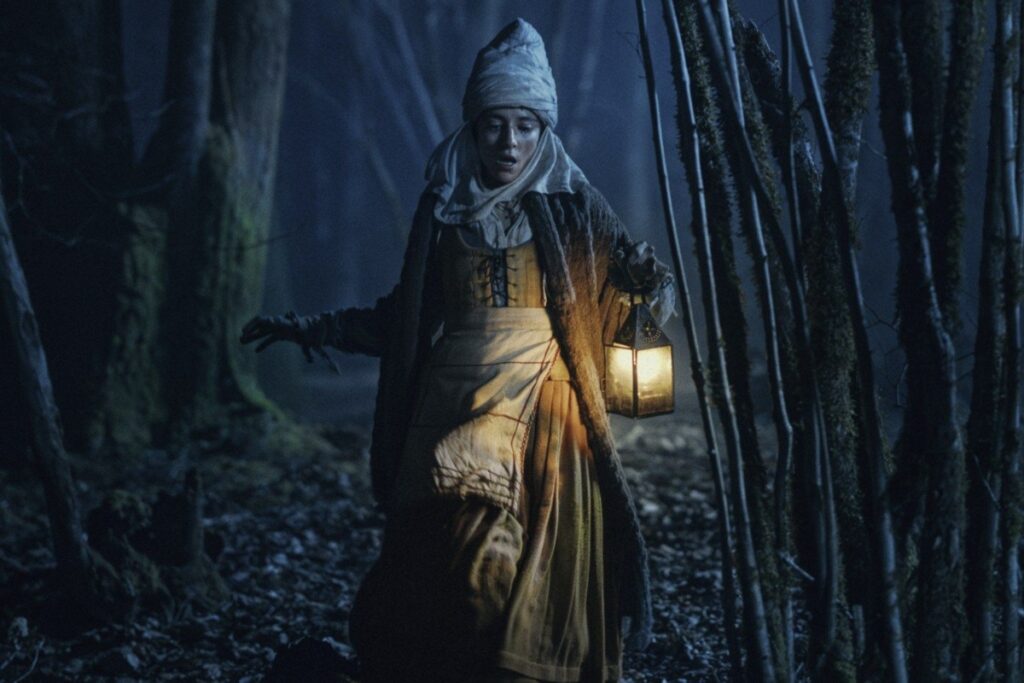
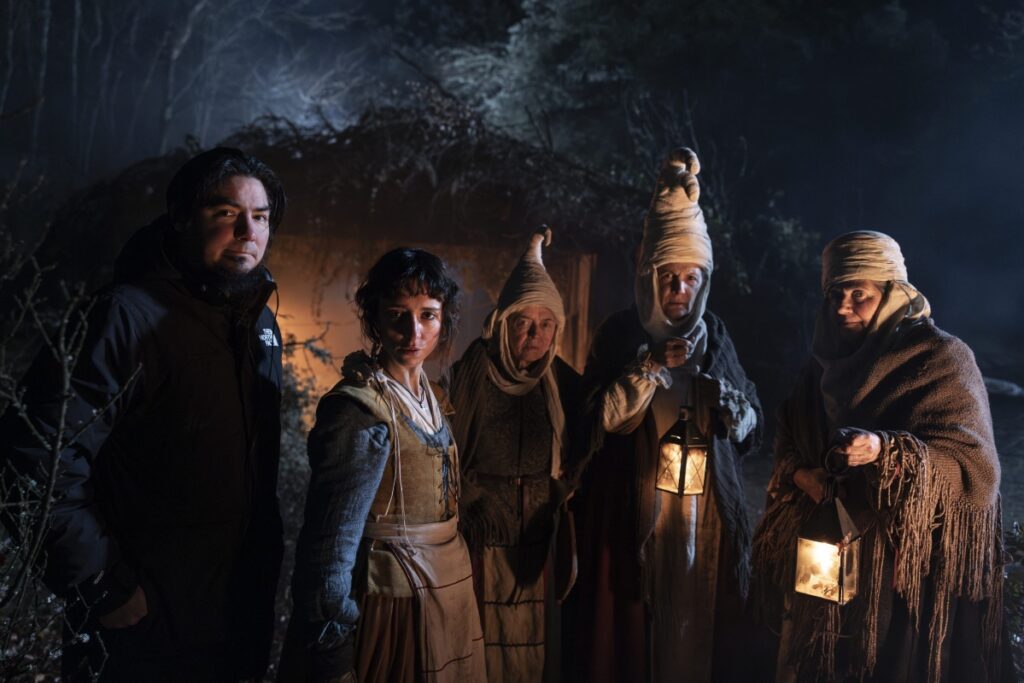
Urkijo’s Gaua takes inspiration from real witch trials conducted in 17th-century Zugarramurdi, where women were accused of witchcraft, cannibalism, and consorting with demons. / Photo Sitges 2025

Witchcraft and Empowerment

Urkijo sees Gaua as part of the modern reinterpretation of the witch figure, which emerged during the second half of the 20th century. 


Once feared, the witch now stands as a feminist emblem, a voice of liberation. 


The film’s climactic sabbath scene becomes a visual hymn to freedom and defiance—a cinematic ritual that honors women persecuted for their independence.


Yet Gaua also mirrors today’s society. Urkijo draws a chilling parallel between historical inquisitors and modern-day oppressors—those who still impose moral standards and silence dissent on social media or political platforms. 


His message is as timeless as it is urgent: control often disguises itself as righteousness.

Urkijo sees Gaua as part of the modern reinterpretation of the witch figure, which emerged during the second half of the 20th century. / Photo Sitges 2025

The Ugly Stepsister: A Mirror of Modern Beauty

Meanwhile, Emilie Blichfeldt’s The Ugly Stepsister brings a grotesque, deeply psychological twist to the Cinderella myth. 


Told from the perspective of the vilified stepsister, the film blends body horror and surrealism to expose the cruelty of beauty standards.


Blichfeldt conceived the story after dreaming of the character standing before the prince, her bloodied foot jammed into the glass slipper. 


The disturbing image became a metaphor for conformity—a woman mutilating herself to fit into a mold of perfection.


For the director, this narrative isn’t about monsters or magic but about the violence of expectation. “We all carry that sister inside us,” she explains. “The one who doesn’t fit the ideal.”


Actress Lea Myren brings haunting empathy to Elvira, portraying her not as a villain but as a victim of cultural conditioning. 


Through her, the film questions how beauty and femininity are defined, exposing the social wounds beneath vanity and shame.

Humor as Healing

Despite its unsettling premise, The Ugly Stepsister also finds light in darkness. Blichfeldt uses dark humor as catharsis—a way to reclaim the body and break free from self-loathing. 


The film echoes the tone of The Substance, starring Demi Moore, suggesting that across eras and continents, women continue to fight the same battle for self-ownership.

Despite its unsettling premise, The Ugly Stepsister also finds light in darkness. / Photo Sitges 2025

Quick Questions & Answers

Receive the latest news

Subscribe To Our Magazine

Luster Magazine

Digital Magazine

Ingresa los siguientes datos y comienza a disfrutar de nuestra revista digital.