Art

The Indelible Crown: Basquiat and Phillips’ Hyper-Valuation Game

A precise look at how Phillips uses Basquiat’s myth to anchor Frieze Week auctions and shape the high-stakes contemporary art market.

Por: Angela Leon Cervera
Basquiat market
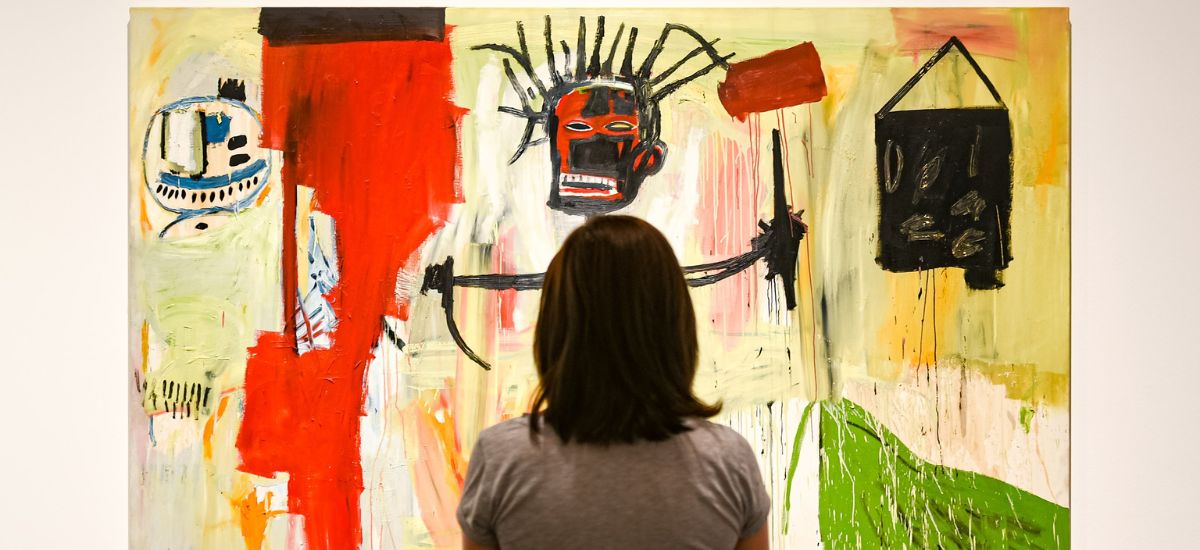
Self-Portrait (Jean-Michel Basquiat, 1986). Photo: Jorge Franganillo

Jean-Michel Basquiat’s crown is more than a symbol; it’s an economy unto itself. Decades after his death in 1988, the Basquiat market continues to orbit around the gravitational pull of myth, scarcity, and cultural capital. Few artists embody the fusion of rebellion and return on investment quite like him.


During Frieze Week London 2025, Phillips reaffirmed Basquiat’s dominance. The auction house positioned his works not just as trophies of cultural prestige but as tools of market stabilization—proving that, in the ultra-luxury art sphere, narrative can be as lucrative as paint.
Basquiat market
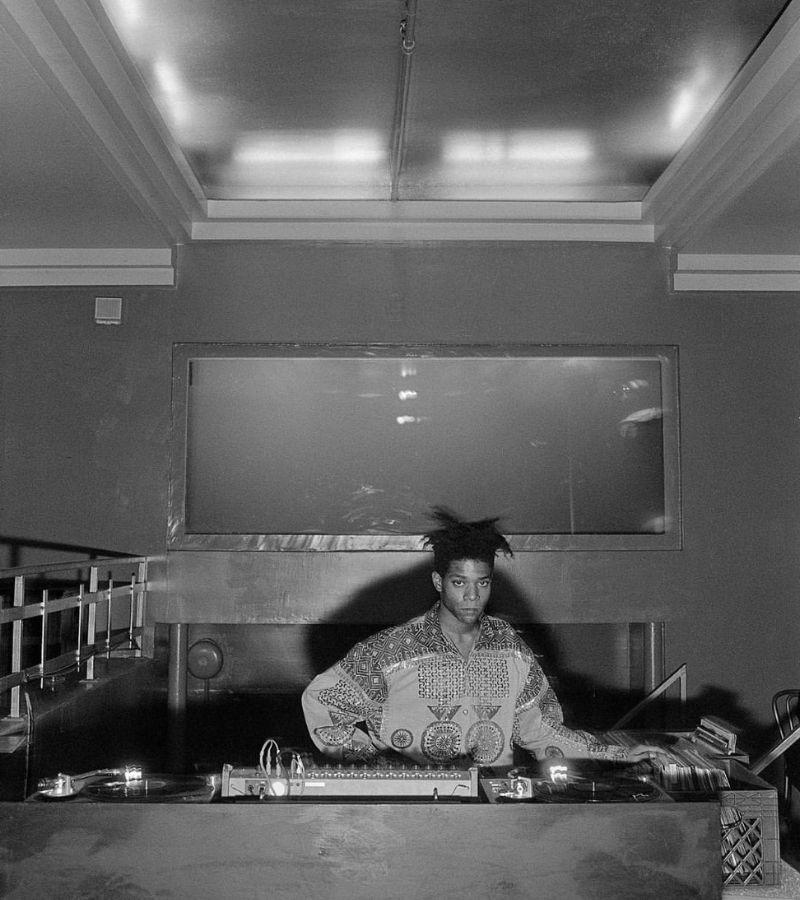
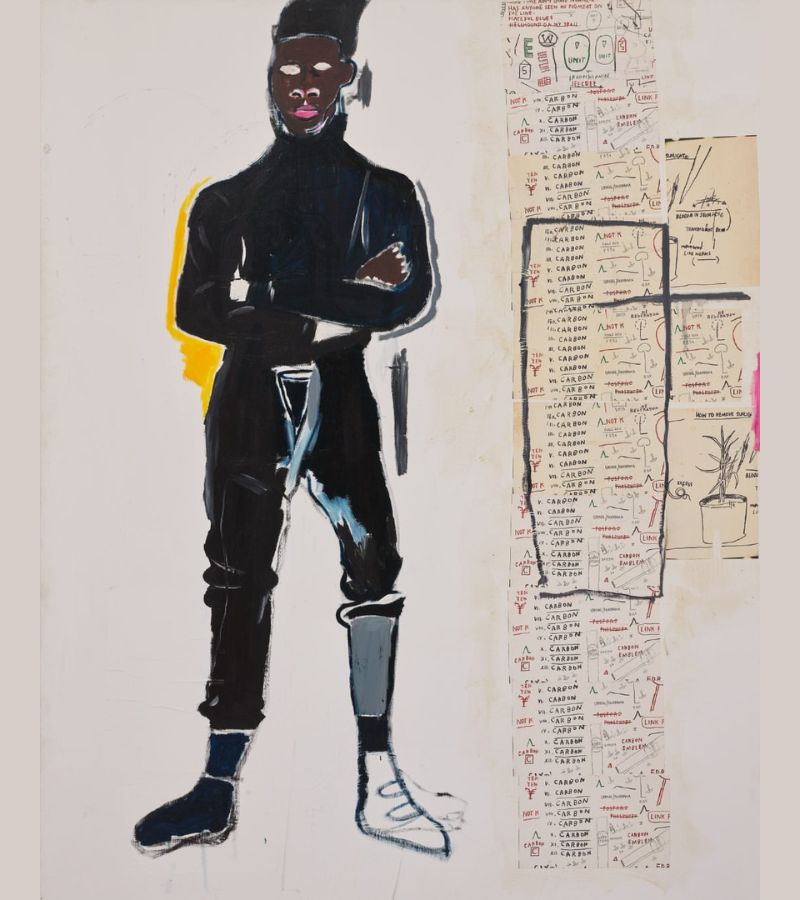
Jean-Michel Basquiat. Photo: @phillipsauction

Why Does the Basquiat Myth Still Command the Market?

Basquiat’s ascent from the graffiti-lined walls of Manhattan’s Lower East Side to the sanctums of modern art museums remains one of the most powerful rags-to-reverence stories ever told. Under the tag SAMO, his partnership with Al Diaz in the late 1970s gave birth to cryptic aphorisms that would later morph into the textual layers of his canvases.


By his early twenties, Basquiat had already become the youngest participant in Documenta 7 (1982) and a Whitney Biennial exhibitor. His signature vocabulary—skulls, crowns, anatomical sketches, fragmented words—made his canvases both mirrors and manifestos. They addressed power, race, and class with a furious poetry that collectors have since learned to price.


When he died at just 27, his legend solidified. The result? A closed supply and a myth-infused demand curve. The market today doesn’t simply buy Basquiat’s art—it invests in the permanence of his rebellion.

Basquiat market
Jean-Michel Basquiat’s 'MP'. Photo: @phillipsauction
Basquiat
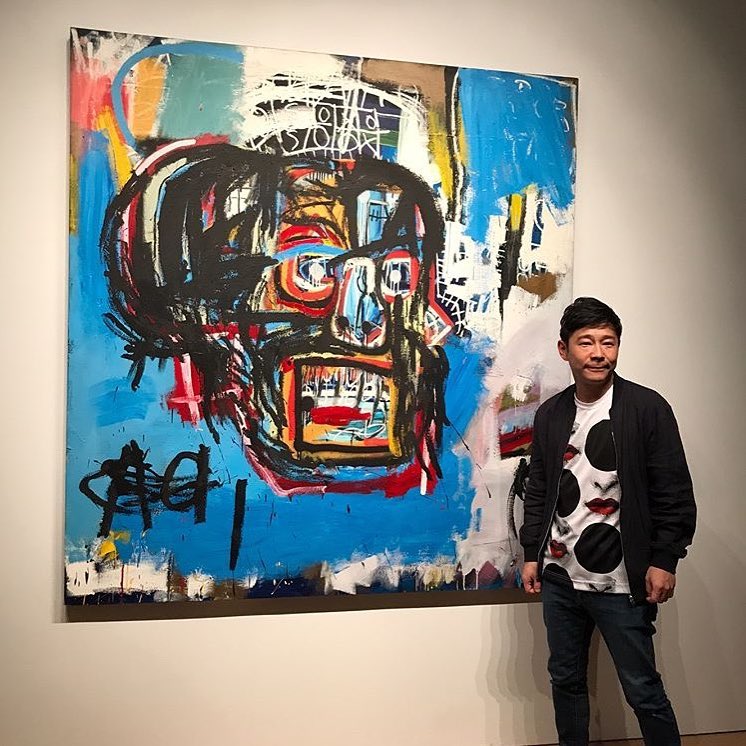
Jean-Michel Basquiat’s ‘Untitled’ masterpiece just sold for $110.5m. Photo: The Estate of Jean-Michel Basquiat

How Does Frieze Week Amplify the Basquiat Market?

Every October, Frieze London and Frieze Masters turn Regent’s Park into the pulsating core of the global art economy. Auction houses align their flagship sales to coincide with this cultural crescendo, and Phillips is no exception.


In 2025, Phillips positioned Basquiat’s works as the cornerstones of its Modern & Contemporary Evening Sale, capitalizing on collector convergence and international press. Recent results back the strategy: Untitled (Pestus), a 1982 piece with a high estimate of $4 million, headlined the Frieze Week sale, confirming Basquiat’s draw as a market magnet.


For Phillips, this is more than timing—it’s leverage. Anchoring an auction with Basquiat means guaranteeing attention, liquidity, and psychological confidence in a market still cautious after soft results across May and June. London, vying to reclaim its dominance from New York and Hong Kong, leans on Basquiat as a symbol of relevance and resilience.

What Keeps Basquiat’s Value Soaring Despite Authenticity Scandals?

The irony of the Basquiat market is that the same scarcity that fuels his value also breeds forgery. In 2022, the Orlando Museum of Art (OMA) became the epicenter of a forgery scandal when the FBI seized 25 alleged Basquiat works from the exhibition Heroes & Monsters. Investigations revealed FedEx-branded cardboard unavailable during Basquiat’s lifetime—proof that myth can attract both worship and deceit.


Compounding the problem, the Basquiat Authentication Committee disbanded in 2012, leaving no central authority to validate new works. The result: a market where provenance is gold. A piece with a clean ownership chain, especially one sold through a top-tier house like Phillips, commands a steep premium.


Phillips exploits this dynamic with surgical precision. Through guaranteed lots—such as Untitled (ELMAR), sold for $46.4 million in 2025—the house not only mitigates risk but also projects confidence to its clientele. In a sense, authenticity has become a new form of currency, and Phillips is the mint.

Basquiat
Jean-Michel Basquiat’s 'Untitled,' 1984. Photo: @phillipsauction

Jean-Michel Basquiat remains the art world’s paradox—simultaneously a symbol of anti-establishment rebellion and a pillar of the establishment’s economy. His crown gleams brightest not in the studio but under the auction spotlight, where Phillips deftly balances art, capital, and cultural mythology.


The Basquiat market endures because it satisfies two primal urges: the desire to possess history, and the illusion that one can own meaning. In 2025, his legacy doesn’t merely decorate walls—it defines value itself.

FAQ — The Crown, the Crisis, and the Calculus

Receive the latest news

Subscribe To Our Magazine

Luster Magazine

Digital Magazine

Ingresa los siguientes datos y comienza a disfrutar de nuestra revista digital.