Active

5 Things You Must Know About the GP Singapore This Weekend

This weekend, Formula 1 fans are in for a thrilling spectacle as the GP Singapore takes place on Sunday, October 5th, starting at 8:00 PM local time.
Por: Alejandro Carrillo
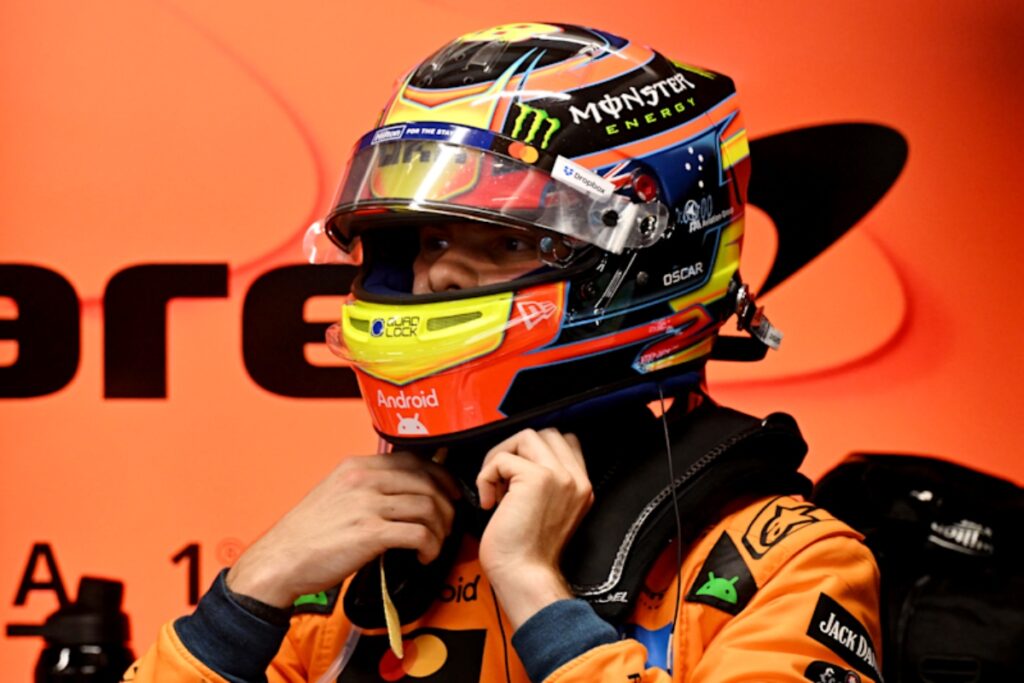
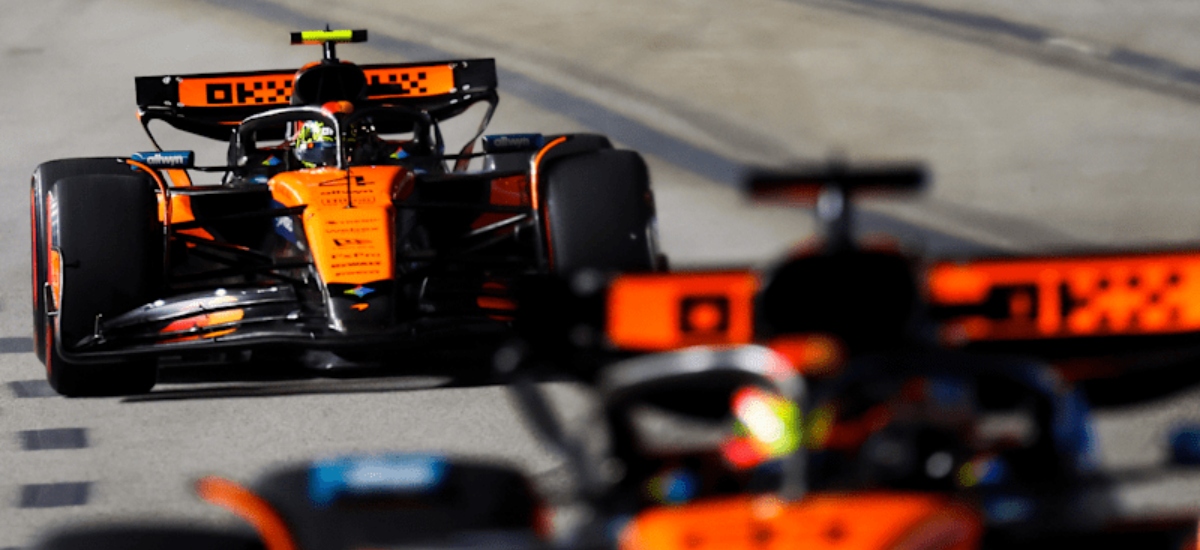
The GP Singapore is often called the most demanding Grand Prix for drivers—and for good reason. / Photo via F1

The night race at the iconic Marina Bay Street Circuit is renowned not only for its stunning city lights and festive atmosphere but also for being one of the most physically demanding races in the Formula 1 calendar. 

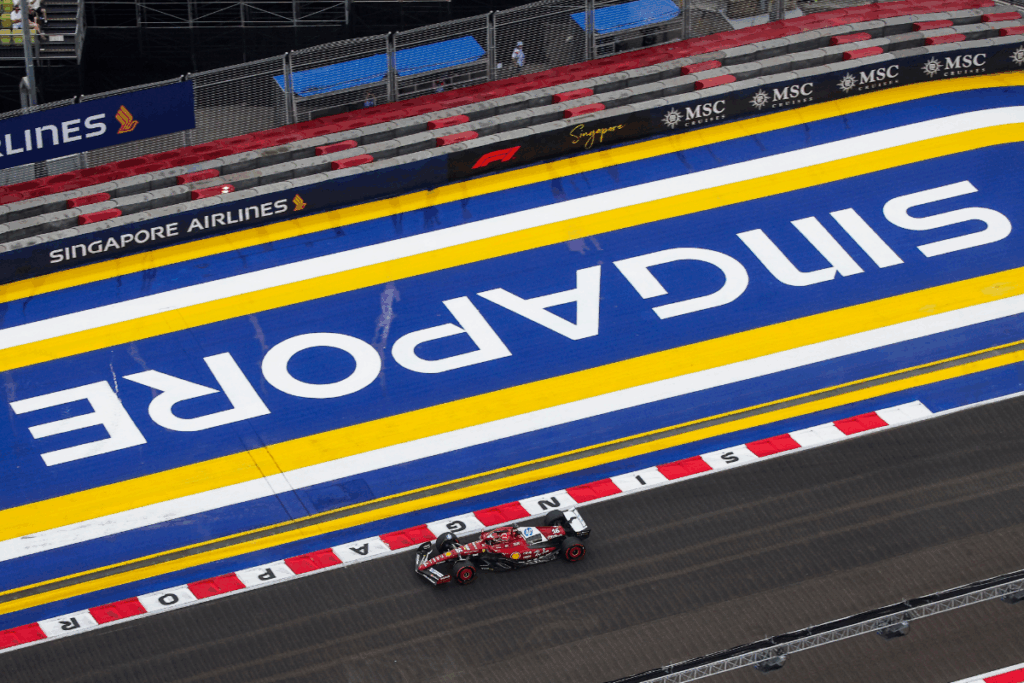
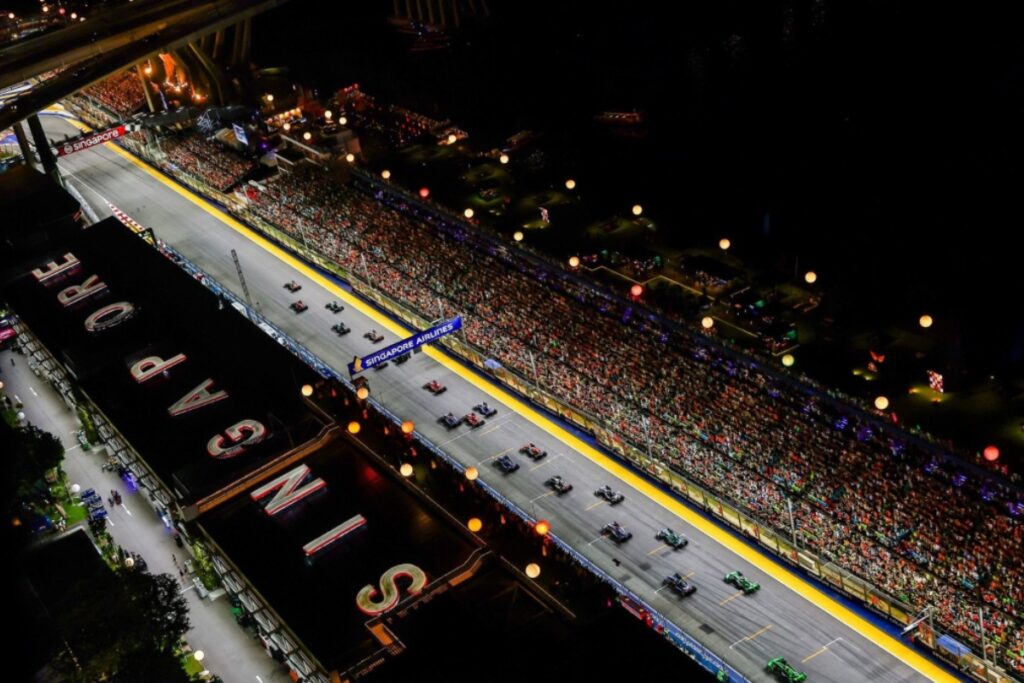
The race typically covers around 305 km over 62 laps on the Marina Bay Street Circuit. / Photo via F1

Drivers face extreme heat, high humidity, and a challenging street circuit that tests skill, endurance, and strategy to the limit. Here’s what you need to know before the checkered flag drops.

1. The Toughest Race on the Calendar

The GP Singapore is often called the most demanding Grand Prix for drivers—and for good reason. The combination of intense heat, high humidity, and the night-time schedule leaves even the fittest racers feeling the strain.


Drivers have lost up to 4 kg of body weight from sweat alone in previous races. The cockpit temperature can climb toward 50 °C, and the high humidity means the body struggles to cool itself.

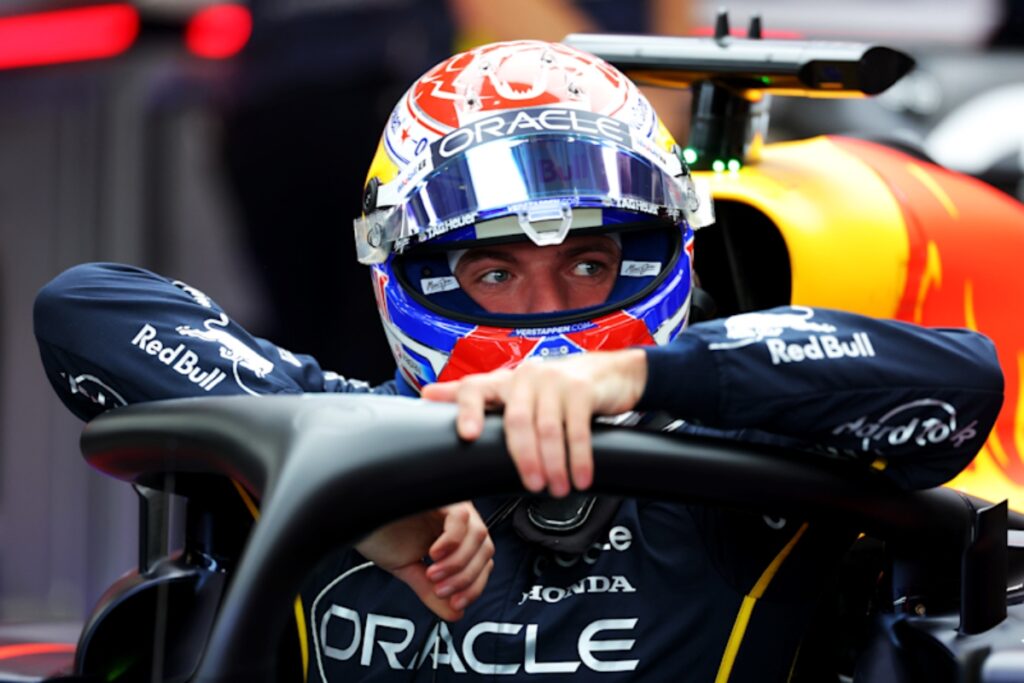
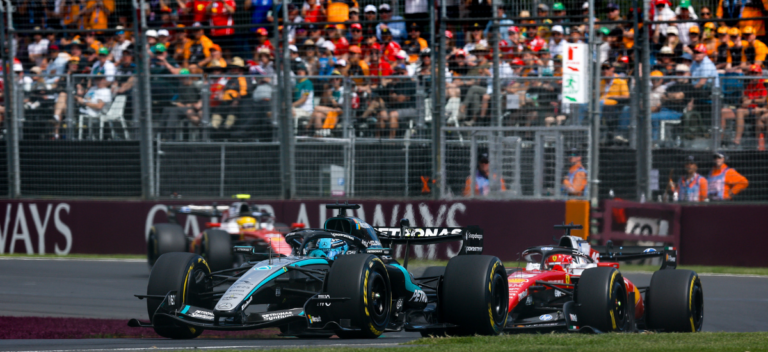
Max Verstappen is considered one of the likely winners due to Red Bull Racing’s current dominant form in the Formula 1 season. / Photo via F1

This extreme environment affects not only the body but mental focus and reaction times. Fatigue builds steadily under the glare of floodlights, making mistakes more likely.

2. Who Has the Most Wins and Likely Contender

When it comes to victories in Singapore, Sebastian Vettel holds the record with five wins (2011, ’12, ’13, ’15, ’19). Close behind is Lewis Hamilton with four wins at this circuit.

Looking ahead to this year’s race, Max Verstappen is considered one of the likely winners due to Red Bull Racing’s current dominant form in the Formula 1 season. His speed, experience, and the team’s strategy advantage make him a strong contender at Marina Bay, though street circuits always leave room for surprises.

3. Circuit & Race Specs: Distance, Laps & Layout

The GP takes place on the Marina Bay Street Circuit, a riverside layout with complex corners, walls close to the track, and little margin for error.


  • Lap length: approximately 4.927km per lap.
  • Total race distance: about 305.337km over 62 laps.

These stats make for long stints under pressure, especially on a street circuit with many direction changes and braking zones.

The race typically covers around 305 km over 62 laps on the Marina Bay Street Circuit./ Photo via F1

4. Physical Toll: Weight Loss & Sweat

As mentioned, drivers may lose 3 to 4kg of fluids during a Singapore GP race, depending on height, weight, and conditions. That’s about 3–5% of body weight in a typical two-hour event.


This dehydration can push heart rates higher, reduce cognitive function, and amplify physical fatigue. The body’s electrolyte balance also becomes more fragile, affecting muscle control and endurance.

5. Strategy & Tire Management in Extreme Conditions

Given the heat and humidity, tire management becomes crucial. The track surface heats up, grip can fluctuate, and surface abrasion tends to increase. Teams need to balance aggressive lap times with conservation of tires.


Pit strategy also becomes more delicate: timing a pit stop poorly might expose a driver to the worst track conditions in mid-race. Safety cars, cool-down laps, and traffic all complicate the choices.

Given the heat and humidity, tire management becomes crucial / Photo Ferrari

Given these factors, drivers and teams who excel here often combine physical conditioning, precise racecraft, and adaptability under duress.

Key Information

RELATED POSTS

Receive the latest news

Subscribe To Our Magazine

Luster Magazine

Digital Magazine

Ingresa los siguientes datos y comienza a disfrutar de nuestra revista digital.