Art

Van Gogh and the Roulin Family: A Historic Reunion

Discover the Roulin Family portraits by Van Gogh reunited for the first time in Boston and Amsterdam, revealing the artist’s search for belonging.

Por: Angela Leon Cervera
Van Gogh and the Roulin Family
Van Gogh and the Roulin Family. Courtesy of Van Gogh Museum

The exhibition Van Gogh and the Roulin Family. Together Again at Last marks one of the most ambitious curatorial feats of our time. For the first time in history, a significant number of Vincent van Gogh’s portraits of the Roulin family—the Arlésienne postman Joseph, his wife Augustine, and their children—are gathered under one roof.


Premiering at the Museum of Fine Arts, Boston (March 30 – September 7, 2025) before traveling to the Van Gogh Museum, Amsterdam (October 3, 2025 – January 11, 2026), this exhibition brings together between 15 and 23 masterpieces. The result is more than an art show: it is an emotional homecoming that redefines Van Gogh’s portraiture and the human bonds at its core.
Van Gogh and the Roulin Family
Van Gogh and the Roulin Family. Courtesy of Van Gogh Museum

Who Were the Roulins to Van Gogh?

When Van Gogh arrived in Arles in 1888, he struggled to find willing models. Locals were hesitant, whether for financial or social reasons. The Roulin family, however, opened their doors and hearts. Joseph Roulin, the town’s postman and a devoted republican, became both a confidant and a surrogate older brother to Van Gogh.


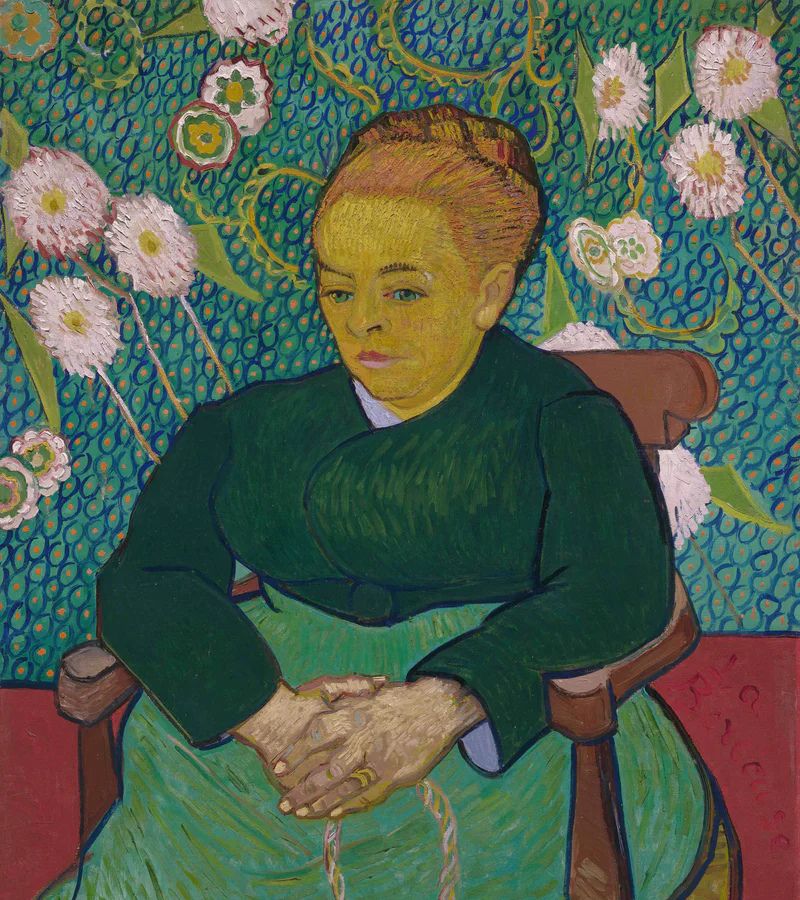
The portraits—20 to 26 in total—span from 1888 to 1889 and embody Van Gogh’s vision of a “modern portrait”: one that emphasized truth, character, and emotional depth. Augustine, painted five times in the series known as La Berceuse, embodies maternal strength and comfort. Their children—Armand, Camille, and baby Marcelle—appear across multiple canvases, giving Van Gogh the rare opportunity to explore different stages of life through paint.


By portraying the Roulins, Van Gogh was not simply painting sitters; he was painting his “chosen family,” the closest thing he ever had to the domestic stability he longed for.

Van Gogh and the Roulin Family
Van Gogh and the Roulin Family. Courtesy of Van Gogh Museum
Van Gogh and the Roulin Family
Van Gogh and the Roulin Family. Courtesy of Van Gogh Museum

What Makes the Roulin Portraits Technically Revolutionary?

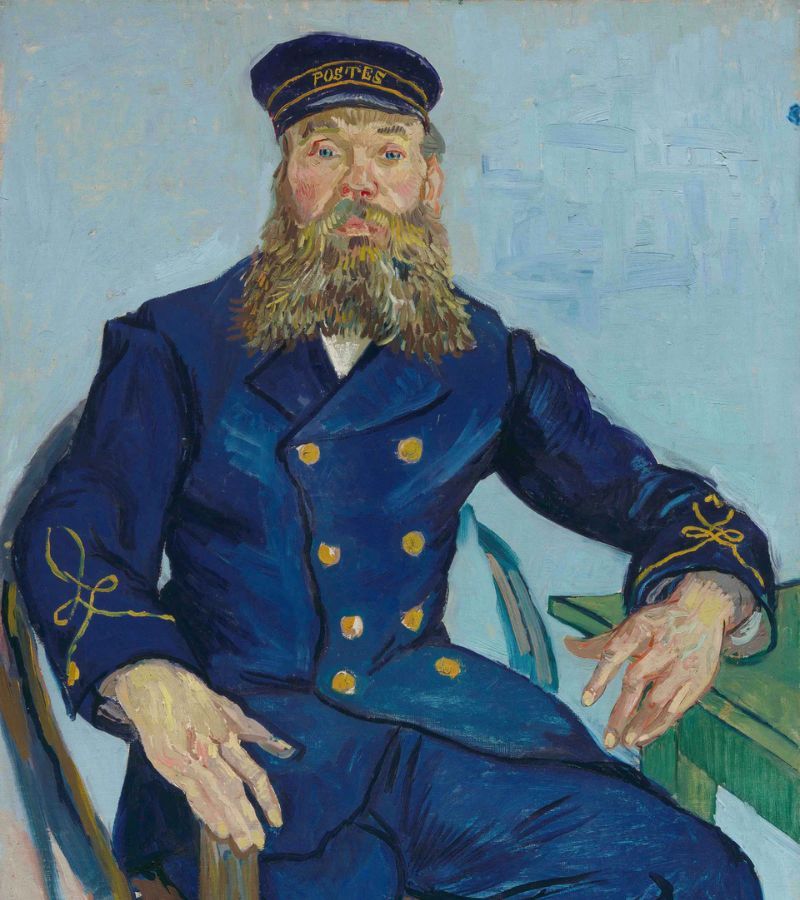
The series also reveals Van Gogh’s technical daring. In Joseph Roulin’s six portraits, the artist pushed the limits of complementary contrasts. The blue postal uniform against gold trim, set beside Roulin’s flushed red cheeks, creates an electric balance of warmth and coolness.


Each version shifts in mood: from the delicate drawing in the J. Paul Getty Museum, to the floral background of the Kröller-Müller Museum, to the monumental MFA Boston canvas with its awkward, human pose. This multiplicity underscores Van Gogh’s restless search for emotional truth through color and brushwork.


Meanwhile, La Berceuse transforms Augustine into an icon of maternal consolation, envisioned as the centerpiece of a modern triptych flanked by sunflowers. The palette itself, Van Gogh declared, was meant to act as a “lullaby in colors.”

Why Is This Reunion So Important Today?

The logistical triumph of reuniting these scattered works—now housed in collections ranging from MoMA to the Metropolitan Museum of Art—cannot be overstated. But the deeper triumph lies in interpretation. Rather than portraying Van Gogh solely as the archetypal tortured genius, the exhibition re-centers him as a man seeking connection, dignity, and affection.


Through immersive reconstructions of Arles and new community-driven curatorial approaches, visitors are invited to step into the Yellow House, feel the embrace of chosen family, and confront the reality that these portraits are not only art, but testimony. They tell the story of a man who painted to belong.

Van Gogh and the Roulin Family
Van Gogh and the Roulin Family. Courtesy of Van Gogh Museum

Van Gogh and the Roulin Family. Together Again at Last is more than a blockbuster exhibition—it is a reckoning with intimacy, loyalty, and the eternal human search for home. For Van Gogh, the Roulin portraits were not just images; they were lifelines.


By painting Joseph, Augustine, Armand, Camille, and Marcelle, he preserved the warmth of a family he could never form, yet always yearned for. In 2025 and 2026, visitors in Boston and Amsterdam will not only see these portraits reunited; they will feel the pulse of Van Gogh’s most personal ambition: to create a portrait of humanity itself.

FAQ: The Roulin Family and Van Gogh’s Intimate Masterpieces

Receive the latest news

Subscribe To Our Magazine

Luster Magazine

Digital Magazine

Ingresa los siguientes datos y comienza a disfrutar de nuestra revista digital.