Culture

The Microtonal Cosmos: Haas’s 11,000 Strings at the Armory

Discover Georg Friedrich Haas’s 11,000 Strings, a monumental work for 50 microtonal pianos at Park Avenue Armory, redefining immersive sound and the sublime.

Por: Angela Leon Cervera
11,000 Strings
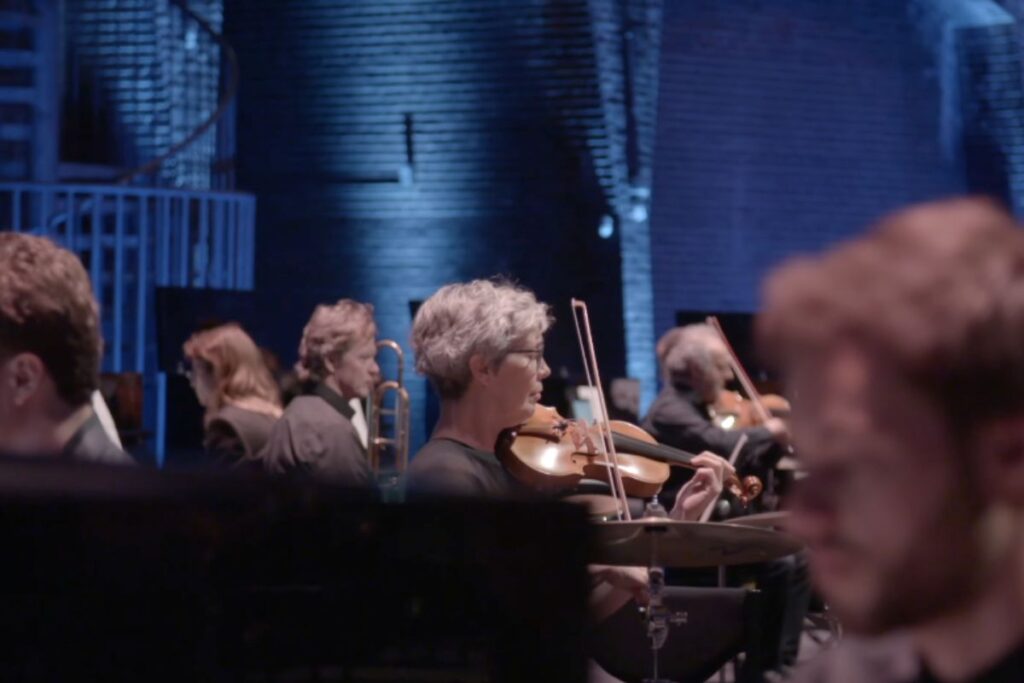
Georg Friedrich Haas’s 11,000 Strings. Photo: @parkavearmory

New York’s Park Avenue Armory has long been the city’s laboratory for the impossible. Its Wade Thompson Drill Hall—a cavernous 55,000-square-foot chamber—has hosted opera productions where audiences wandered through the score, and even an Ai Weiwei–Herzog & de Meuron meditation on surveillance. It is a venue designed to challenge the limits of perception.


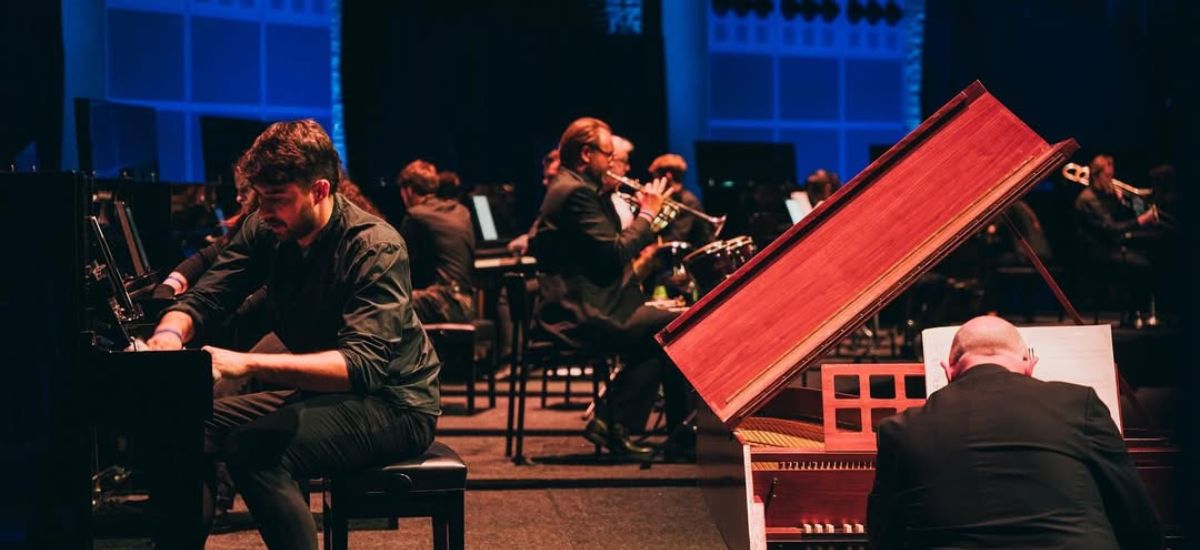
Into this space descends Georg Friedrich Haas’s 11,000 Strings, presented in its North American premiere from September 30 to October 7, 2025. With 50 upright pianos, meticulously microtuned, and the celebrated ensemble Klangforum Wien, Haas transforms the hall into a cathedral of sound, an “installation concert” where listeners sit inside a storm of resonance and friction.


11,000 Strings
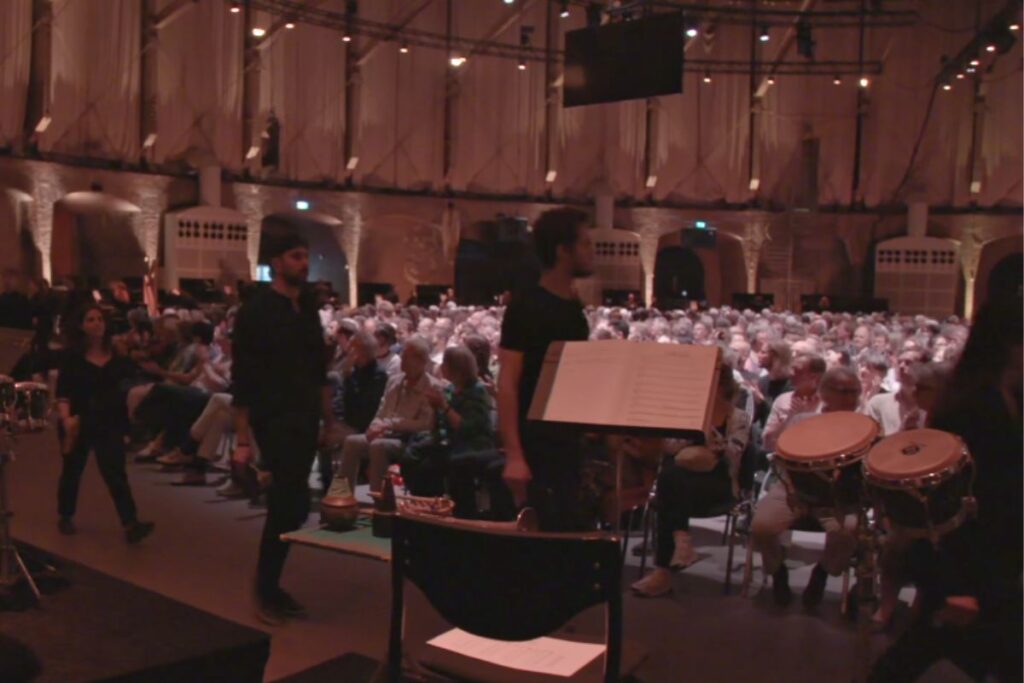
Georg Friedrich Haas’s 11,000 Strings. Photo: @parkavearmory

Who Is Georg Friedrich Haas, and Why Does the Sublime Matter?

Haas, often dubbed a “romantic esoteric” by critic Alex Ross, belongs to the spectralist lineage yet insists on the human dimension of his experimentations. His soundscapes swell on Wagnerian scales, veering between tenderness and terror. Works like in vain (2000), which plunges audiences into complete darkness, or In iij. Noct. (2001), performed entirely without light, show his fixation with stripping away sight to intensify hearing.


With 11,000 Strings, Haas shifts strategy. Instead of subtracting, he overwhelms. By surrounding the listener with 50 pianos tuned two cents apart, he trades the void of darkness for a deluge of microtonal density. The result is what he calls a “new mode of listening,” an aesthetic of the sublime where awe borders on fear.

11,000 Strings
Georg Friedrich Haas’s 11,000 Strings. Photo: @parkavearmory
11,000 Strings
Georg Friedrich Haas’s 11,000 Strings. Photo: @parkavearmory

How Do 50 Pianos Become a Single Cosmic Instrument?

The project originated with Klangforum Wien’s Peter Paul Kainrath, who once witnessed 100 factory pianos played simultaneously by machines. He immediately thought of Haas, who accepted because the concept was “so crazy” it demanded realization.


The mechanics are staggering:


  • Instrument fleet: 50 identical upright pianos provided by Hailun, ensuring tuning consistency.

  • Microtonal tuning: Each piano tuned two cents apart, cumulatively spanning just under a semitone.

  • Acoustic effect: A shimmering cloud of harmonics where pitches rub, collide, and release.

  • Texture focus: Melodic or rhythmic narrative is abandoned; harmony and mass are the core.

This tuning system makes audible the beating frequencies usually hidden in tempered tuning. Instead of linear melody, the listener perceives shifting constellations of resonance—like starlight refracted into sound.

What Happens When Sound Surrounds the Listener?

The staging inside the Drill Hall is as radical as the tuning. The audience sits in the center, encircled by the 50 pianos acting as fixed sonic coordinates. Pianists face outward, removing the visual focus of performance. Meanwhile, the 25 musicians of Klangforum Wien move fluidly among them, generating new acoustic constellations.


The effect is immersion at its purest: sound “circling, cutting across, and surging above” the audience, creating disorientation and surrender. Critics described it as standing “in the eye of a storm.” Haas’s aim is not just music but ritualized experience, where the act of listening becomes physical, overwhelming, and unavoidable.

11,000 Strings
Georg Friedrich Haas’s 11,000 Strings. Photo: @parkavearmory

With 11,000 Strings, Georg Friedrich Haas expands the vocabulary of immersive music to seismic scale. The work liberates the piano from equal temperament, reimagines spatial concert form, and asserts sound itself as architecture.


While some critics argue its emotional core is eclipsed by sheer spectacle, Haas remains steadfast: music should overwhelm, disarm, and place us “at the mercy of sound.” At the Armory, he achieved just that. 11,000 Strings is less a concert than a force of nature—one that redefines how we experience the sublime in sound.

FAQ: Unraveling the Mysteries of 11,000 Strings

Receive the latest news

Subscribe To Our Magazine

Luster Magazine

Digital Magazine

Ingresa los siguientes datos y comienza a disfrutar de nuestra revista digital.