Art

Van Gogh’s Romans Parisiens: A $40M Literary Manifesto

Vincent van Gogh’s Romans Parisiens returns to auction at Sotheby’s Paris in 2025 with a $40M estimate, revealing the artist’s literary obsessions and Parisian transformation.

Por: Angela Leon Cervera
Romans Parisiens
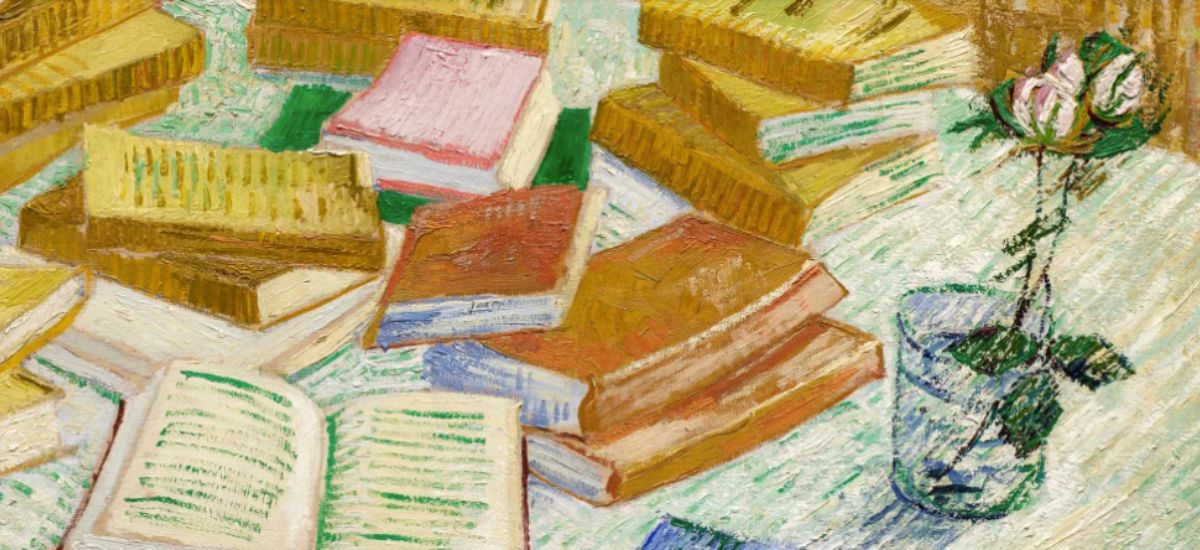
Vincent van Gogh’s Romans Parisiens (Piles of French Novels). Courtesy of Sotheby's

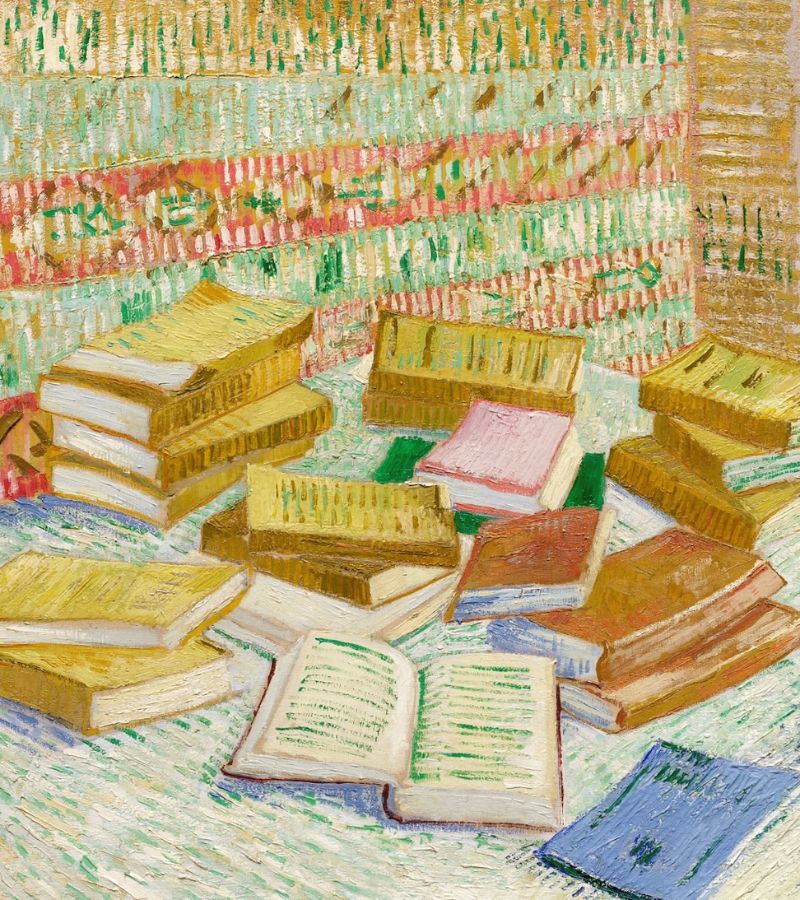
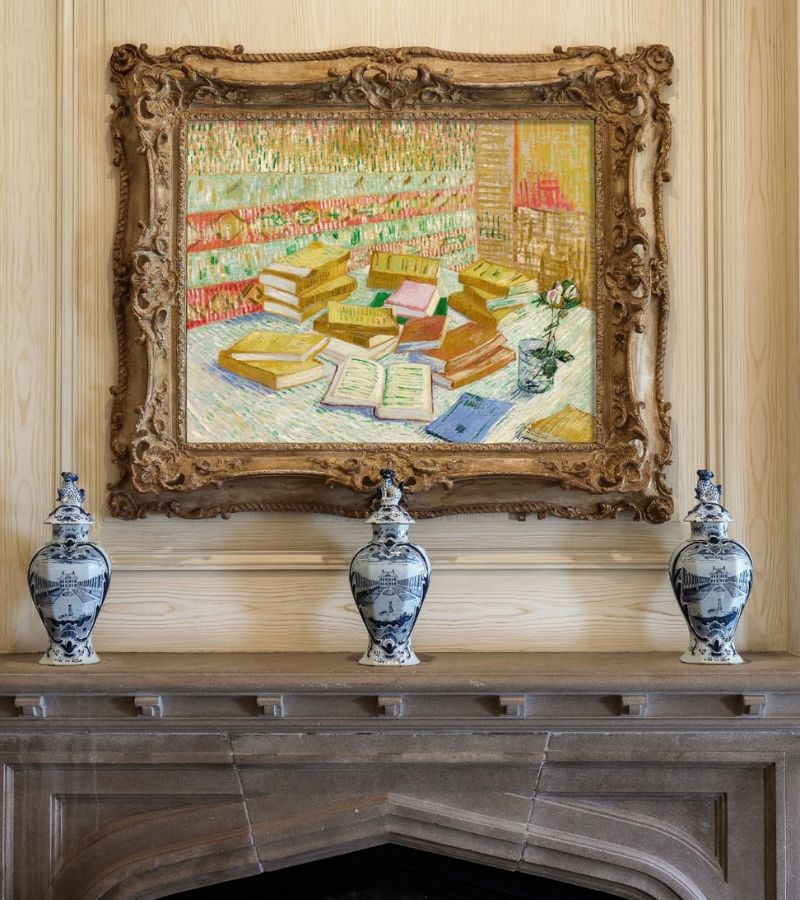
Vincent van Gogh’s Romans Parisiens (Piles of French Novels), painted in Paris between October and November 1887, is reemerging as a centerpiece of the global art market. Measuring 54.4 × 73.6 cm, this still life transcends its modest subject: it is both an ode to modern French literature and a manifesto of intellectual engagement.


On October 24, 2025, Sotheby’s Paris will present the painting in its Modernités sale, with an estimate set at $40 million. Hidden in private collections for over three decades—most notably in the Cindy and Jay Pritzker Collection—the canvas now returns to the public eye as a symbol of scarcity, prestige, and the cultural breadth of Van Gogh’s genius.
Romans Parisiens
Vincent van Gogh’s Romans Parisiens (Piles of French Novels). Courtesy of Sotheby's

Why Does Romans Parisiens Matter Beyond Its Estimate?

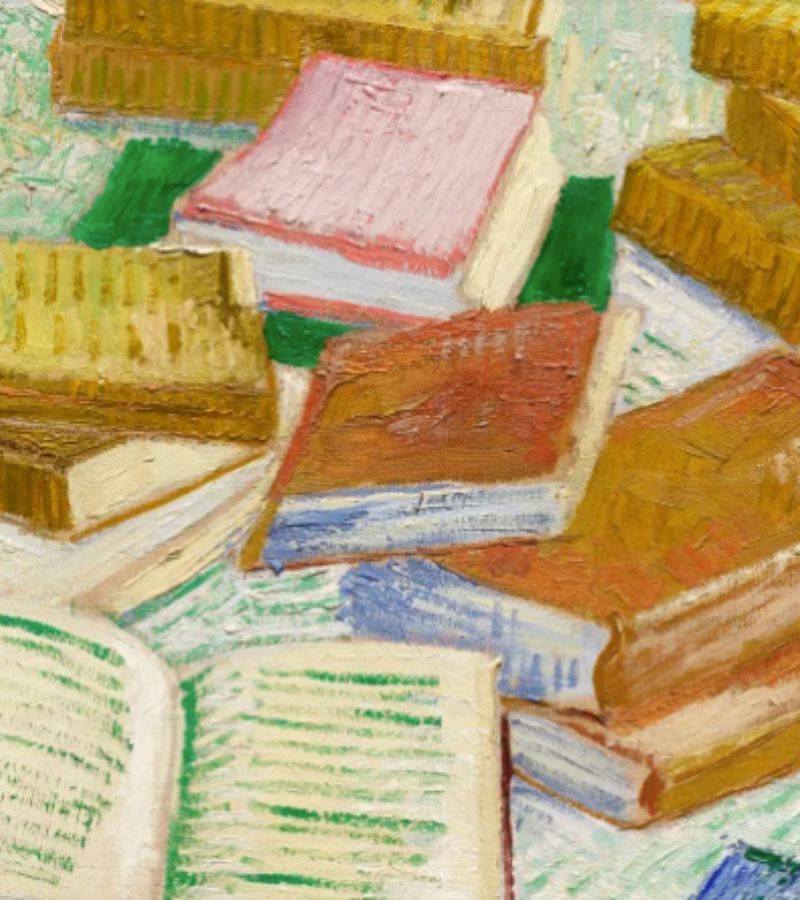
Unlike floral still lifes, Romans Parisiens centers on stacked books—bright yellow covers that immediately signify the livres jaunes of Paris. These inexpensive paperbacks democratized access to modern French literature, with authors such as Émile Zola and the Goncourt brothers shaping Naturalism as a cultural force.


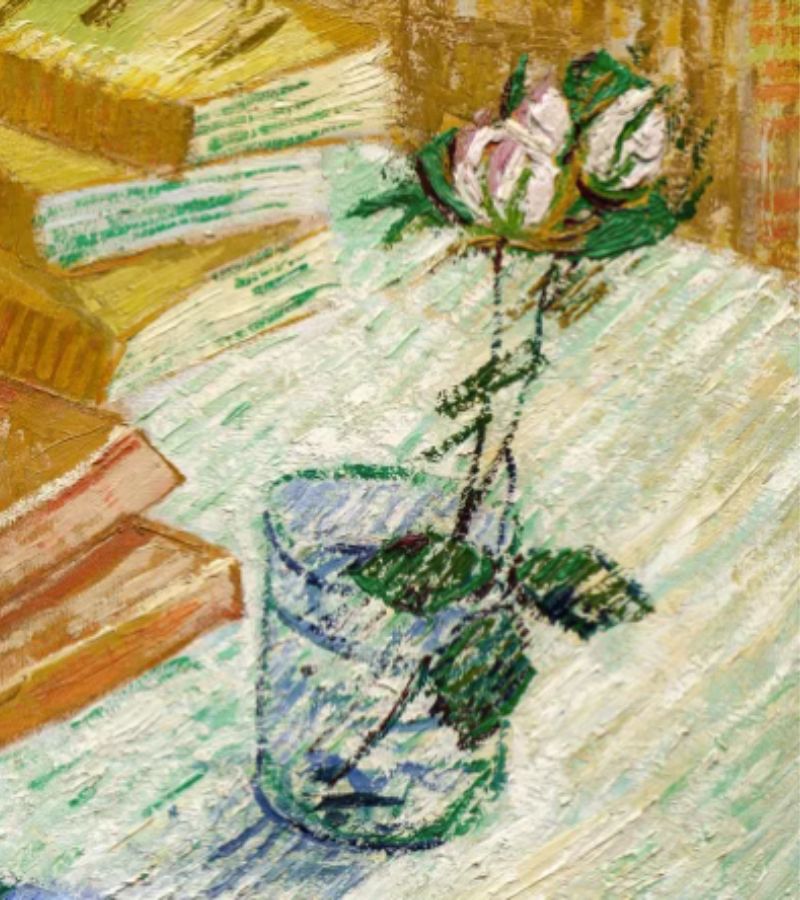
The painting’s open book in the foreground invites the viewer into dialogue. It is less about static arrangement and more about intellectual immersion. By elevating everyday novels to the subject of high art, Van Gogh transforms the genre of still life into a socio-literary statement.


Sotheby’s deliberately highlights this “literary Van Gogh” narrative. By framing the canvas as both aesthetic innovation and intellectual document, the house appeals to collectors seeking depth, biography, and rarity in equal measure.

Romans Parisiens
Vincent van Gogh’s Romans Parisiens (Piles of French Novels). Courtesy of Sotheby's
Romans Parisiens
Vincent van Gogh’s Romans Parisiens (Piles of French Novels). Courtesy of Sotheby's

How Did Paris Shape Van Gogh’s Literary and Artistic Vision?

Van Gogh arrived in Paris in 1886, joining his brother Theo. Immersed in Impressionism, Divisionism, and avant-garde circles, he adopted a luminous palette that marked a radical shift from his earlier Dutch works. Yet literature remained a constant anchor.


Letters to Theo show his sustained dialogue with Balzac, Dickens, Eliot, Zola, and Daudet. In Paris, Van Gogh’s intellectual affinities converged with his chromatic experimentation. Naturalism provided him with narrative frameworks for truth-telling, while his new palette offered the visual vocabulary to illuminate those ideas.


Romans Parisiens, painted at the height of this transformation, fuses both threads. It closes Van Gogh’s socially engaged phase before he moved south to Arles, where landscapes and personal introspection would dominate.

Why Does the Market Value Romans Parisiens at $40 Million?

The $40 million estimate is grounded in rarity, provenance, and intellectual weight. Few Paris-period works of this caliber remain outside institutions. Its last public appearance dates back over thirty years, intensifying demand among elite buyers.


Comparable benchmarks reinforce the figure. Van Gogh’s Les canots amarrés sold for $32.2 million in Hong Kong. With its direct ties to literature and cultural history, Romans Parisiens is positioned to surpass that record.


Sotheby’s decision to stage the sale in Paris adds symbolic power. By offering the canvas in the capital of Naturalism and publishing, the auction underscores the painting’s dialogue with the literary avant-garde. It is both market strategy and cultural theater.

Romans Parisiens
Vincent van Gogh’s Romans Parisiens (Piles of French Novels). Courtesy of Sotheby's

Romans Parisiens is not merely a still life—it is Van Gogh’s intellectual self-portrait. By immortalizing the livres jaunes of Zola and the Goncourt brothers, he painted his own manifesto: art as literature, literature as life.


The October 2025 Sotheby’s sale reframes Van Gogh as not only a painter of color and emotion but also a thinker, a reader, and a critic of modern life. The $40 million estimate confirms what the canvas already declares: that Van Gogh’s vision was as deeply literary as it was painterly, a dual legacy now returning to the spotlight.

FAQ: Collectors’ Questions About Romans Parisiens

Receive the latest news

Subscribe To Our Magazine

Luster Magazine

Digital Magazine

Ingresa los siguientes datos y comienza a disfrutar de nuestra revista digital.