Art

Christie’s Ukiyo-e Market Analysis: Icons, Rarity, and Value

Explore Christie’s Arts of Asia Online auction and discover how Hokusai, Utamaro, Hiroshige, and Toyokuni define today’s Ukiyo-e market dynamics.

Por: Angela Leon Cervera
Ukiyo-e
Utagawa Sadhide. Asahina shima asobi (Asahina's island escapades). Photo: Courtesy of Christie's

The world of Ukiyo-e—Japanese woodblock prints from the Edo period—remains one of the most dynamic segments of the art market today. Christie’s Arts of Asia Online auction has become a critical barometer for measuring demand, offering masterpieces by giants such as Katsushika Hokusai, Kitagawa Utamaro, Utagawa Hiroshige, and Utagawa Toyokuni.


Far from being a niche interest, Ukiyo-e now commands global attention, drawing competitive bidding from Asia, Europe, and the Americas. But behind the allure lies complexity: unlike unique paintings, woodblock prints were produced in multiples, making quality, color, condition, and provenance decisive factors in determining value.
Ukiyo-e
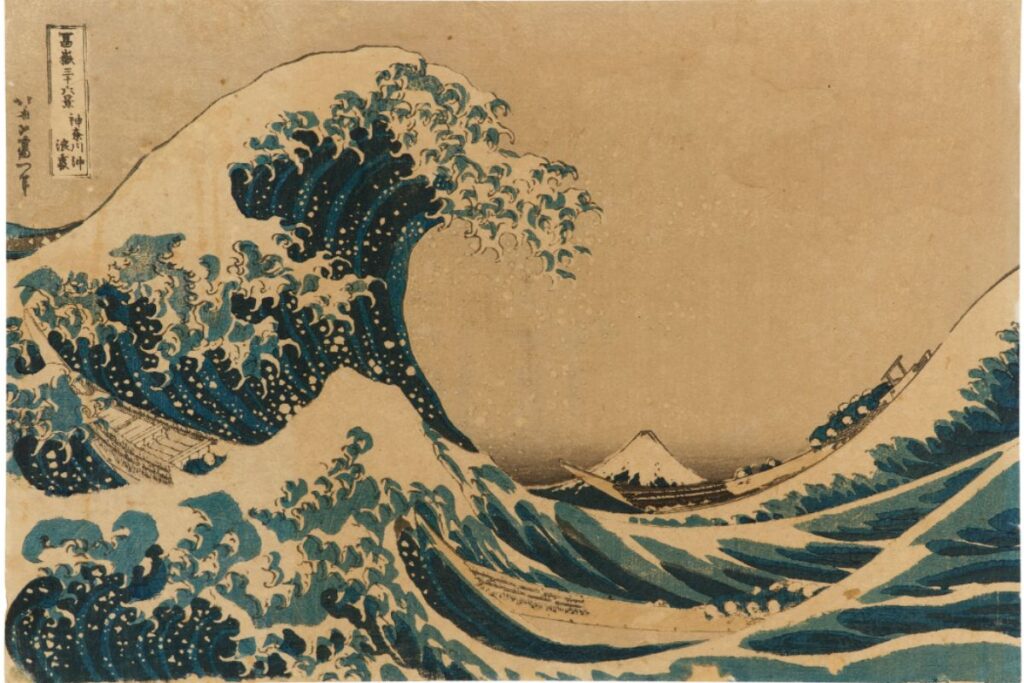
Katsushika Hokusai. Kanagawa oki nami ura (Under the well of the Great Wave off Kanagawa) [“Great Wave”]. Courtesy of Christie's

How Does Hokusai’s Great Wave Shape the Market?

Few images in world art are as instantly recognizable as Hokusai’s Kanagawa oki nami ura (The Great Wave off Kanagawa). Yet its market tells a story far richer than the icon itself. While some assume a print might trade at $75,000, Christie’s results dismantle this misconception.


  • In March 2023, a pristine impression of The Great Wave shattered expectations, selling for $2.76 million against a $500,000–700,000 estimate.

  • Other sales at Christie’s ranged from $277,200 to over $1.59 million, proving how condition, vibrancy, and print state dramatically shift value.

  • Complete sets of Thirty-Six Views of Mount Fuji have reached $3.56 million, highlighting the premium placed on integrity.

The lesson? Not all Waves are equal. Early impressions with sharp lines and subtle pink hues in the sky soar, while later, faded editions decline steeply in value.

Ukiyo-e
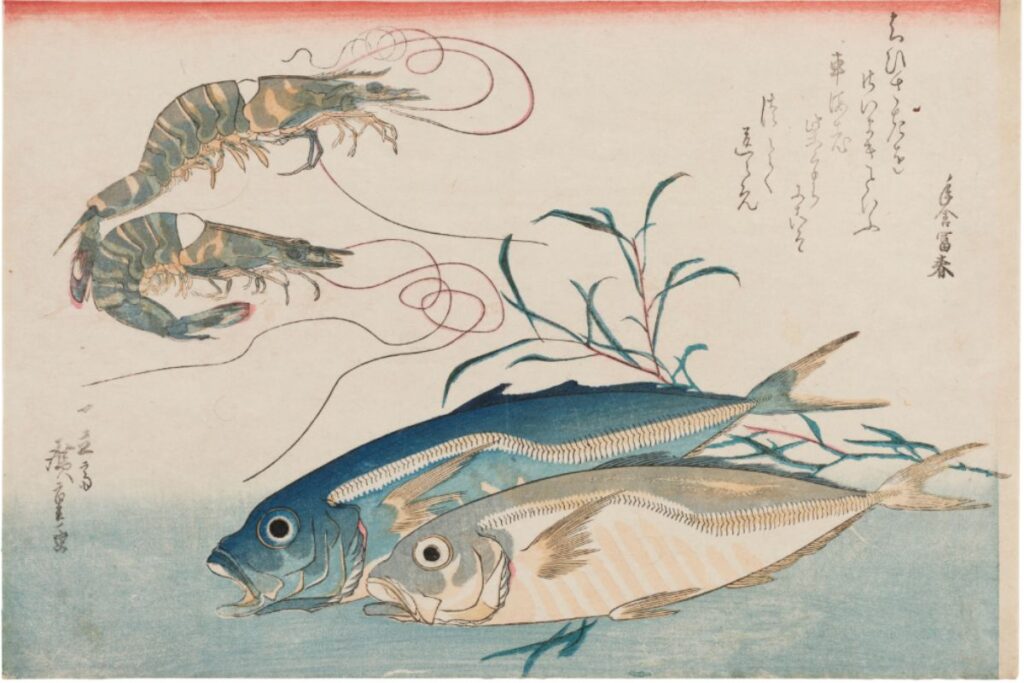
Utagawa Hiroshige. Horse mackerel, freshwater prawns, and seaweed. Courtesy of Christie's
Ukiyo-e
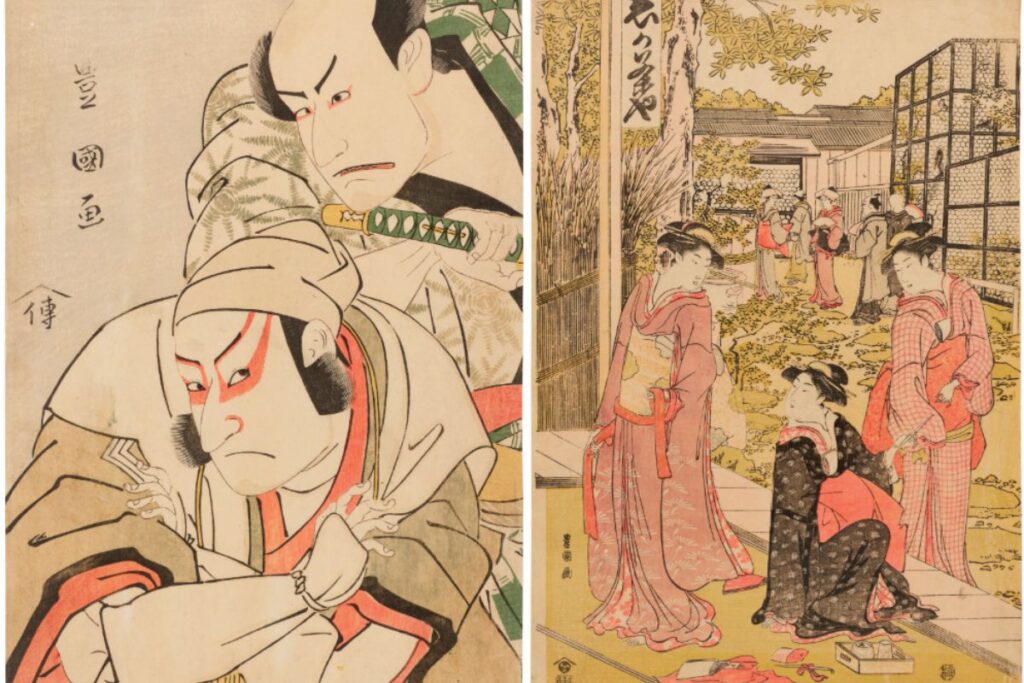
Utagawa Toyokuni. A group of two prints. Courtesy of Christie's

What Elevates Utamaro’s Elegance Beyond Individual Prints?

If Hokusai rules through spectacle, Utamaro captivates through intimacy. His bijin-ga (portraits of beautiful women) are masterpieces of line and elegance, celebrated not just individually but as complete narrative series.


  • A full set of Utamaro’s Twelve Hours of the Pleasure Quarter achieved $226,800 at Christie’s in March 2023, five times above its low estimate.

  • The rarity of intact Edo-period series, preserved across centuries, commands intense competition.

  • Collectors recognize that thematic coherence and survival of full cycles elevate value far beyond individual sheets.

In Utamaro’s case, the collection becomes the masterpiece, a testament to the enduring allure of Yoshiwara’s poetic world.

How Does Provenance Transform Hiroshige’s Market?

While Hiroshige’s landscapes are consistently admired for their lyrical views of Edo and its journeys, provenance can turn steady demand into skyrocketing results.


  • Christie’s recorded $118,440 for Sudden Shower over Shin-Ōhashi Bridge and Atake, a celebrated plate from One Hundred Famous Views of Edo.

  • Yet another impression of the same design, once owned by Freddie Mercury, soared to nearly $390,000 at auction.

This dramatic difference underscores a truth: provenance is narrative currency. A print becomes not only a Hiroshige but also a piece of pop cultural legacy, creating new layers of desirability for elite collectors.

Ukiyo-e
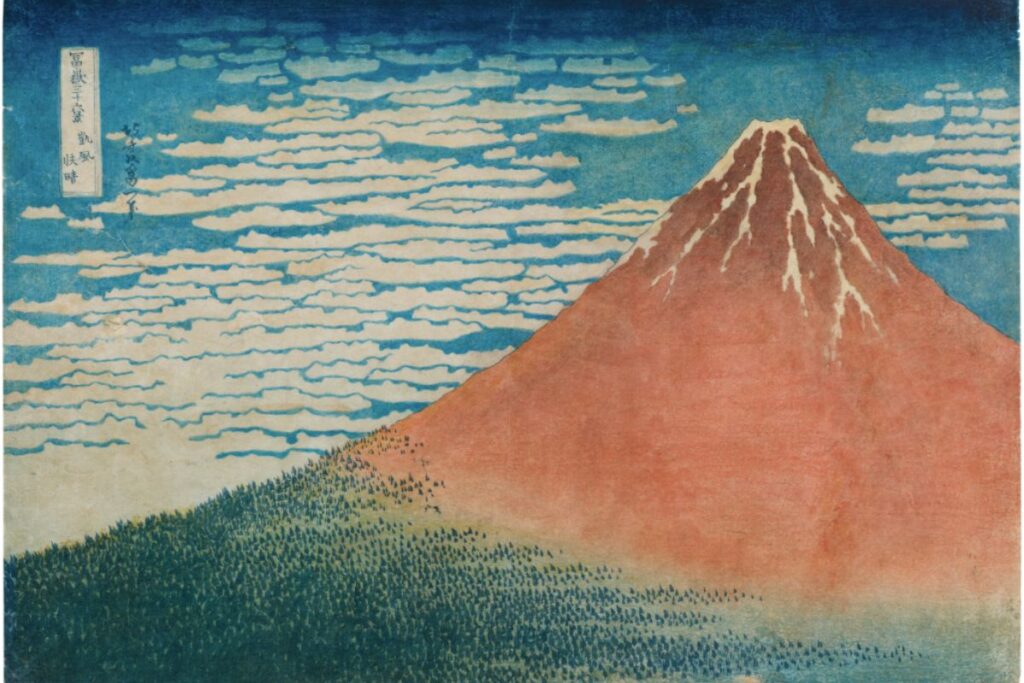
Katsushika Hokusai. Gaifu kaisei (Fine wind, clear weather) [“Red Fuji”]. Courtesy of Christie's

Christie’s Arts of Asia Online auction confirms what seasoned collectors already know: the Ukiyo-e market is thriving yet deeply nuanced. Hokusai’s Great Wave proves that condition dictates millions. Utamaro shows the premium of narrative completeness. Hiroshige demonstrates the power of provenance. And Toyokuni, while accessible at lower price points, keeps the entry doors open for new enthusiasts.


As pristine examples grow scarcer and global appetite widens, collectors must embrace expertise, discernment, and patience. In Ukiyo-e, value is never just about the image—it’s about the story the print carries across centuries.

FAQ

Receive the latest news

Subscribe To Our Magazine

Luster Magazine

Digital Magazine

Ingresa los siguientes datos y comienza a disfrutar de nuestra revista digital.