Art

Calder Gardens: Where Art, Architecture, and Nature Converge

Explore Calder Gardens in Philadelphia—a visionary fusion of Alexander Calder’s legacy, Herzog & de Meuron’s subtle architecture, and Piet Oudolf’s living landscape.

Por: Angela Leon Cervera
Calder Gardens
Calder Gardens by Herzog & de Meuron. Photo: Iwan Baan

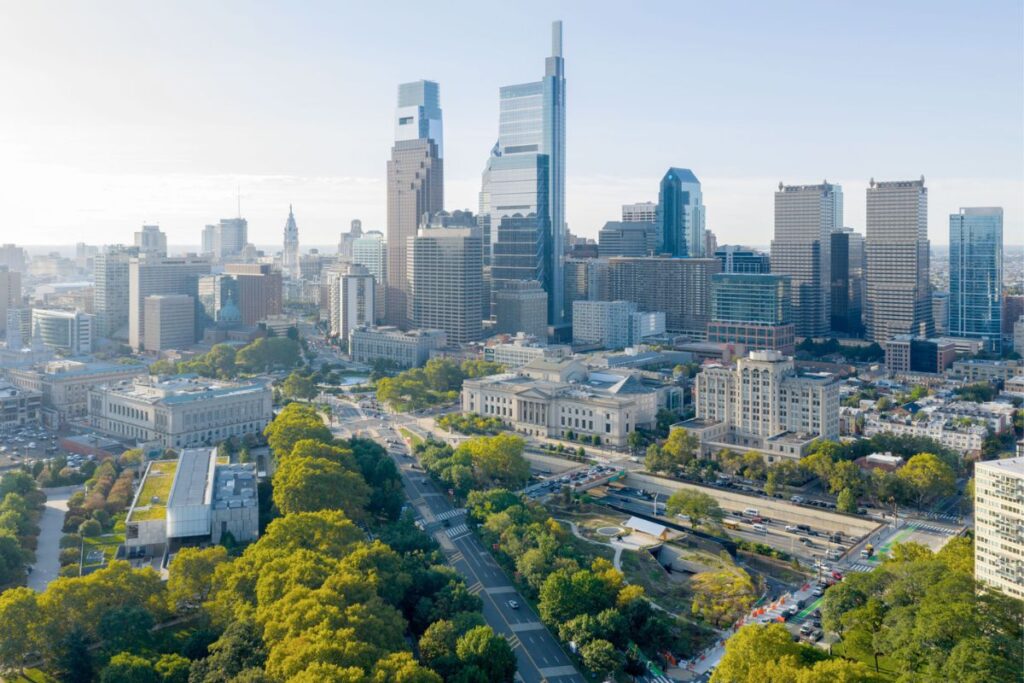
On September 21, 2025, Philadelphia unveiled Calder Gardens, a landmark project dedicated to the work of Alexander Calder. Situated at the intersection of Vine Street and Benjamin Franklin Parkway, this space emerges not as a conventional museum but as a bold rethinking of what an art institution can be.


Designed by Herzog & de Meuron with landscape architecture by Piet Oudolf, the gardens offer an immersive dialogue between sculpture, architecture, and living nature. More than a site of display, Calder Gardens positions itself as an “anti-museum”—a place where art unfolds in rhythm with seasons, silence, and space.
Calder Gardens
Calder Gardens by Herzog & de Meuron. Photo: Iwan Baan

How Does Calder Gardens Redefine the Museum Experience?

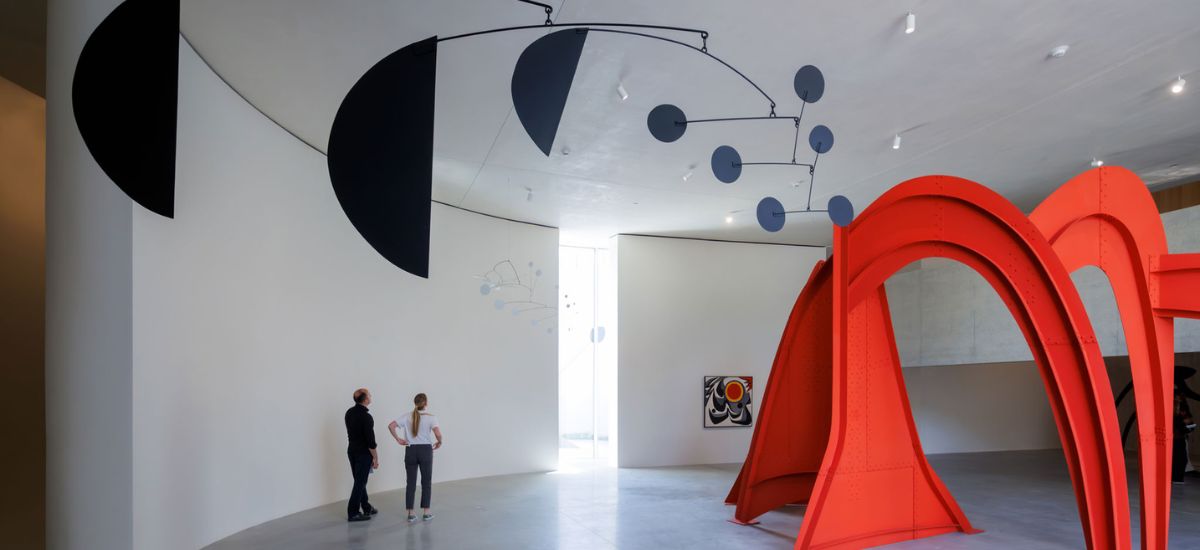
At its heart, Calder Gardens rejects the white cube model. Instead, visitors encounter art as part of a fluid journey through carefully orchestrated spaces. Architect Jacques Herzog described the project not as a museum but as “a garden with a building inside.”


Key elements shape this unique experience:


  • The Wall: A curved metal barrier facing the Parkway doubles as an acoustic shield and memory of Calder’s home in Connecticut.

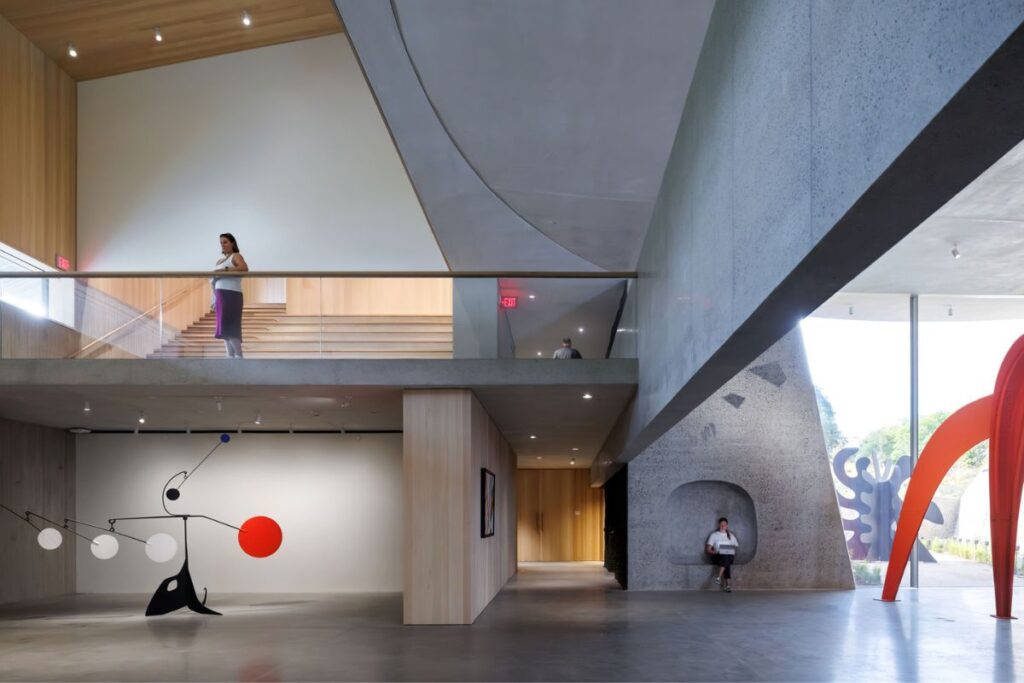
  • The Disc: A vast circular canopy shelters subterranean galleries while framing open-air gardens.

  • The Descent: Visitors move downward, leaving the city’s noise for a contemplative world of light, shadow, and sculpture.

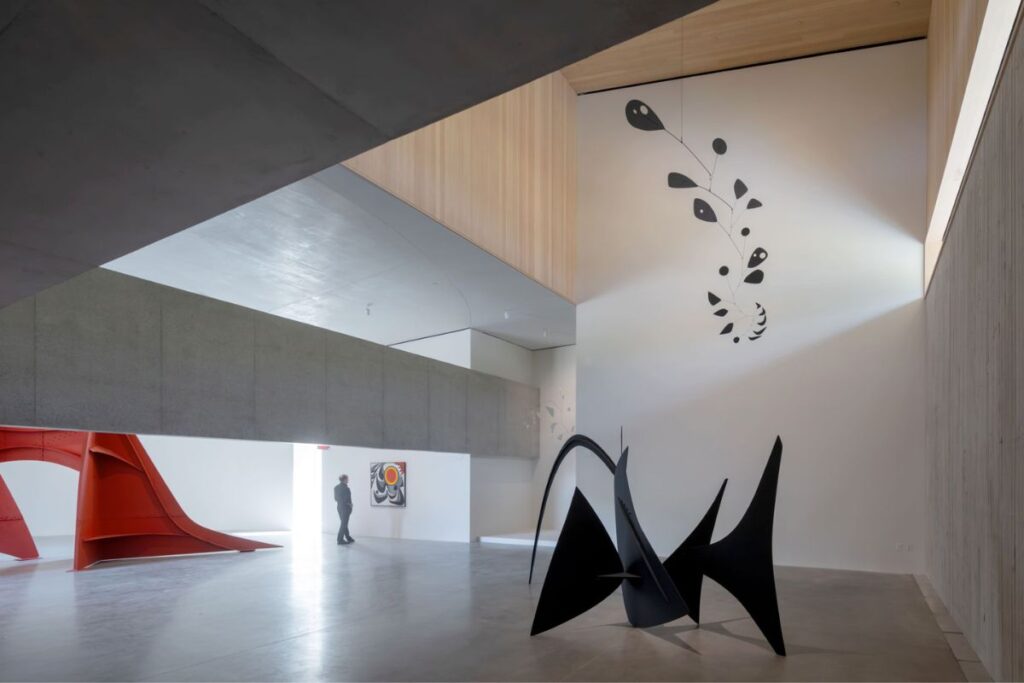
Each gallery—whether double-height for monumental stabiles, or fully enclosed for light-sensitive works—creates a new way to see Calder’s art. The absence of wall labels deepens this intimacy, encouraging direct, personal engagement.

Calder Gardens
Calder Gardens by Herzog & de Meuron. Photo: Iwan Baan
Calder Gardens
Calder Gardens by Herzog & de Meuron. Photo: Iwan Baan

What Role Does Nature Play in Calder Gardens?

The project would be incomplete without Piet Oudolf’s perennial gardens, which surround and intertwine with the architecture. Known for his “New Perennial” movement, Oudolf uses over 250 plant species to create a landscape in constant transformation.


Unlike static landscaping, this design embraces cycles of growth and decay. Flowers bloom, stems bend in the rain, and seed heads remain sculptural through winter. These living rhythms echo Calder’s mobiles, where movement and change are integral.


The result is a dialogue between flora and sculpture:


  • Plants in flux complement the fluidity of Calder’s mobiles.

  • The solidity of stabiles contrasts with the seasonal shifts of the meadow.

  • Architecture, with its reflective surfaces, blurs into both nature and art.

Together, these layers form not a backdrop but a co-creative ecosystem, dissolving boundaries between the natural and the man-made.

Why Does Calder Gardens Matter for the Future of Culture?

Calder Gardens is more than a tribute; it is a model for cultural institutions of the future. By privileging experience over didacticism, it responds to an era saturated with information and overstimulation.


Instead of a linear art-historical narrative, visitors enter a living dialogue: Calder’s works converse with Herzog & de Meuron’s architecture and Oudolf’s evolving gardens. This triad offers:


  • A space of reflection rather than spectacle.

  • An invitation to return, since rotating exhibitions and seasonal changes ensure constant renewal.

  • A reminder that art can be encountered as part of daily life, not as a distant monument.

For Philadelphia, Calder Gardens anchors the cultural corridor of the Parkway while honoring its native son. For the world, it signals a shift: museums may no longer need to dominate skylines, but instead create intimate sanctuaries for contemplation.

Calder Gardens
Calder Gardens by Herzog & de Meuron. Photo: Iwan Baan

Calder Gardens is not just another addition to Philadelphia’s cultural landscape—it is a statement. By merging Calder’s kinetic genius, Herzog & de Meuron’s understated architecture, and Piet Oudolf’s living artistry, it creates a sanctuary where art is not merely seen, but felt.


In a world driven by speed and spectacle, Calder Gardens offers something radical: slowness, intimacy, and renewal. It stands as both a tribute to Calder and a blueprint for future institutions—spaces that heal, inspire, and invite us into deeper conversation with art and nature.

FAQ

Receive the latest news

Subscribe To Our Magazine

Luster Magazine

Digital Magazine

Ingresa los siguientes datos y comienza a disfrutar de nuestra revista digital.