Art

Jackson Pollock’s Blue Mystery: Art Meets Science

A molecular breakthrough reveals Jackson Pollock’s use of manganese blue in Number 1A, 1948, reshaping art history, conservation, and the dialogue between science and creativity.

Por: Angela Leon Cervera
Jackson Pollock
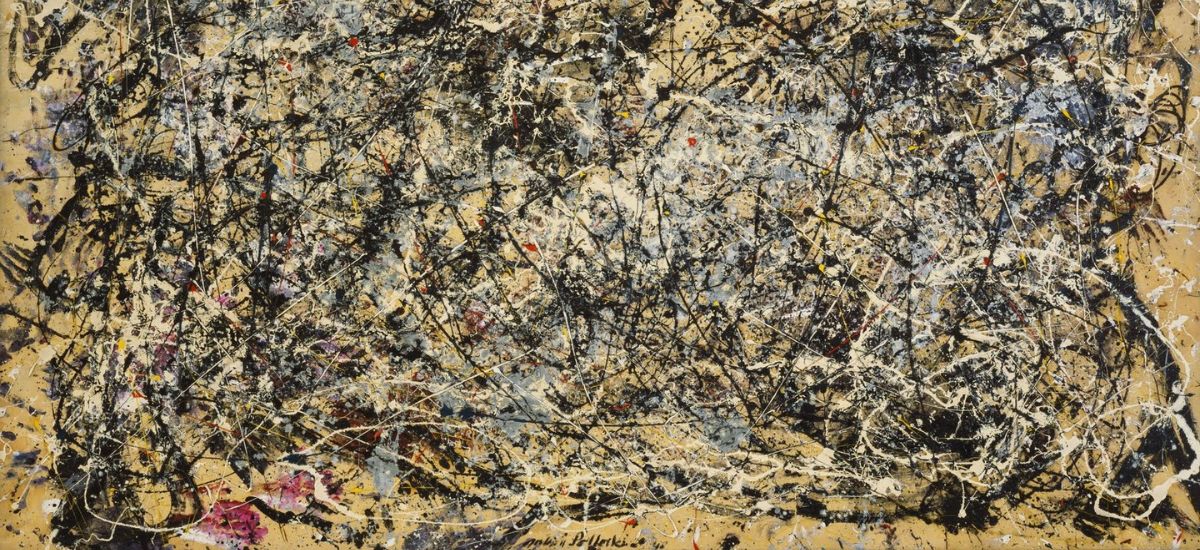
Jackson Pollock. Number 1A, 1948. Photo: Pieliny

Few artists embody the mythos of postwar painting like Jackson Pollock. His dripped canvases, at once explosive and precise, rewrote the grammar of modern art. Yet, buried within the swirls and splatters of Number 1A, 1948 lay a question that haunted art historians for decades: What was the origin of that striking, electric blue?


The answer has finally arrived—not from a critic’s pen but from a scientist’s laser. Researchers from Stanford and the Museum of Modern Art (MoMA) have confirmed the pigment as manganese blue, a synthetic compound better known for coloring swimming pool cement. Far from a trivial detail, this revelation reframes Pollock as not merely a conduit of chaos, but as a master of modern materials, a painter with one hand in the studio and the other in the industrial age.
Jackson Pollock
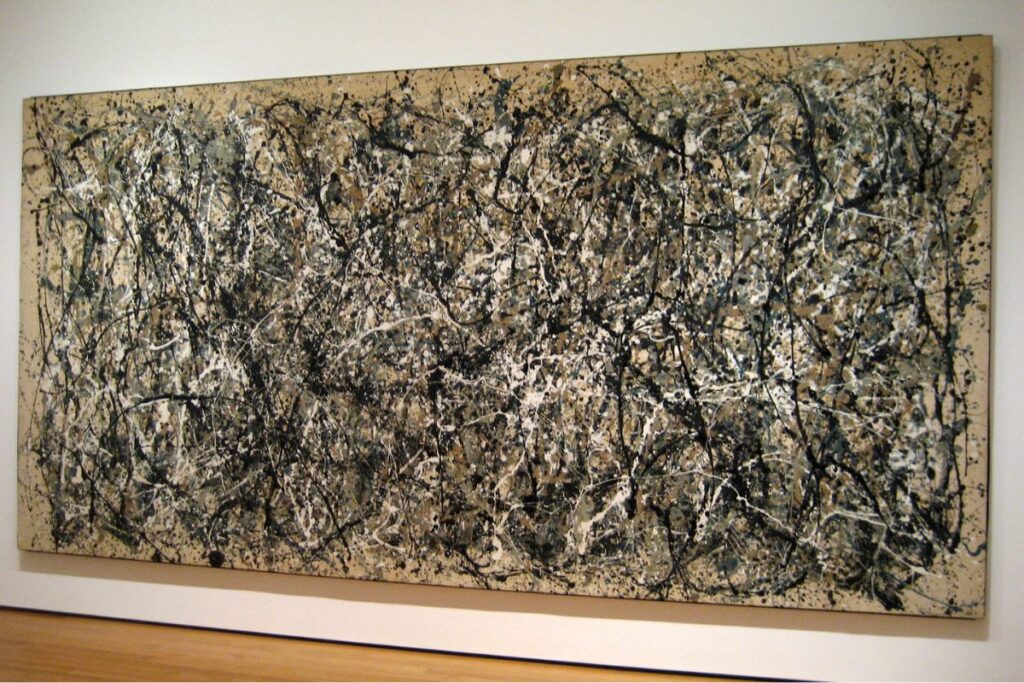
Jackson Pollock. Number 31, 1950. Photo: Wally Gobetz

What Did Scientists Discover About Pollock’s Number 1A, 1948?

  • The Canvas: Monumental in scale (2.7 meters wide), Number 1A, 1948 is layered with handprints, splatters, and motion—Pollock’s dance transcribed into pigment.

  • The Question: Reds and yellows had long been catalogued. The vivid turquoise-blue resisted classification.

  • The Breakthrough: Using Raman spectroscopy, scientists read the molecular “fingerprint” of the pigment. The verdict was clear: manganese blue (BaMnO₄·BaSO₄).

This pigment was rare, industrial, and decidedly nontraditional. Its presence confirms Pollock’s radical embrace of materials far outside the art store, an act that wove industry into his visual vocabulary.

Jackson Pollock
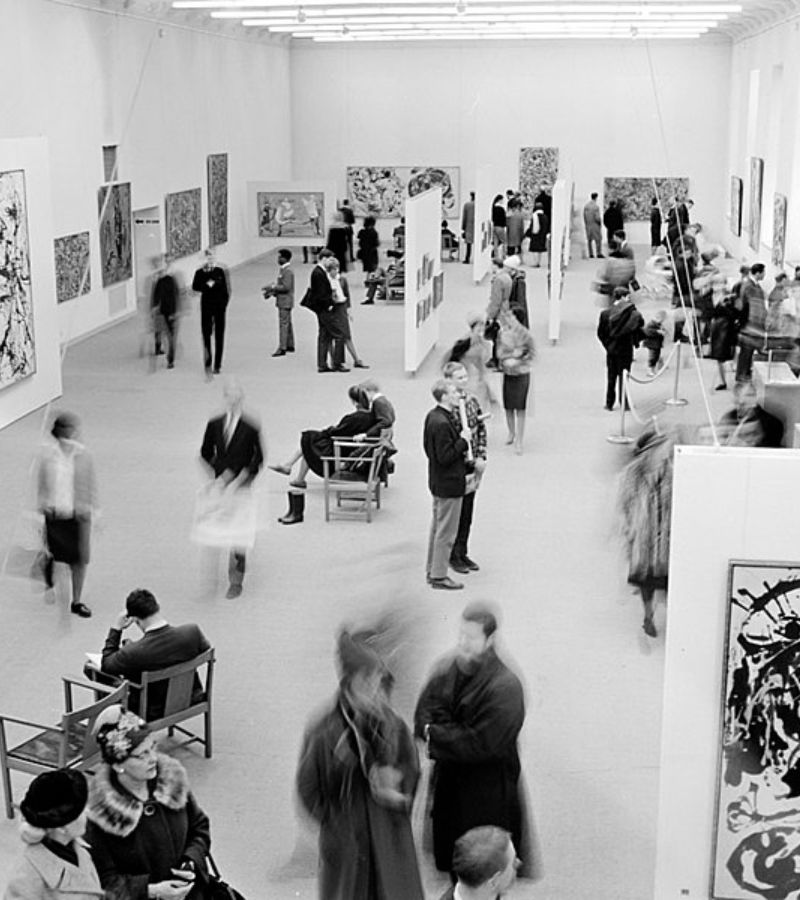
Jackson Pollocks Moderna Museet. Photo: Lindgren, Herbert (1919–1987), Stockholms stadsmuseum
Jackson Pollock
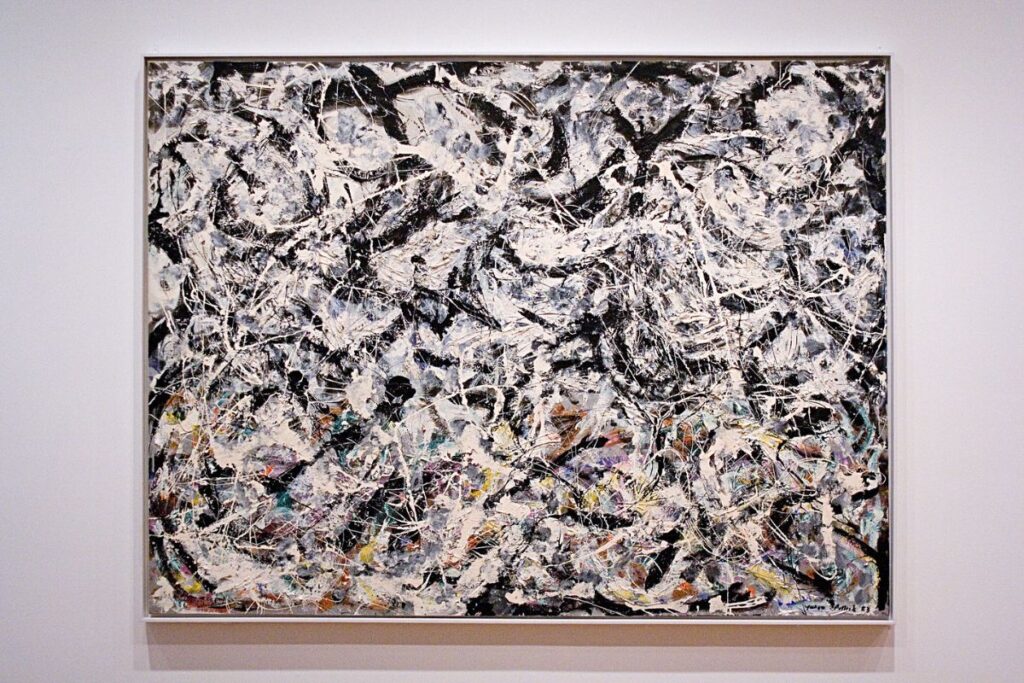
Jackson Pollock. Art Institute of Chicago.

Why Does Manganese Blue Matter for Art and Science?

  1. Material Innovation

    • Unlike cobalt or ultramarine, manganese blue had a short commercial life (1930s–1990s). Its purity, stability, and pleochroism made it luminous but dangerous—its toxicity hastened its demise.

  2. Authentication Power

    • The pigment’s narrow historical window provides a molecular timestamp. A fake Pollock painted with modern YInMn Blue would be immediately exposed.

  3. Conservation Insight

    • Knowing the chemistry helps conservators predict how Pollock’s industrial paints will age. His studio choices—half intuitive, half alchemical—now demand equally inventive preservation strategies.

In essence, manganese blue transforms from mere pigment into a forensic tool, binding Pollock’s work to its time, place, and material truth.

Was Pollock Truly a Chaotic Genius, or a Methodical Master?

Pollock’s dripping has often been romanticized as raw instinct, yet science paints a more nuanced portrait:


  • Industrial Alchemy: He deliberately sought industrial paints for their flow, gloss, and resistance—qualities standard oils lacked.

  • Physics at Play: His paintings show fractal geometry, echoing coastlines, clouds, and trees. Physicists argue Pollock intuited fluid dynamics long before equations confirmed them.

  • Artist’s Own Words: “The painting has a life of its own,” Pollock insisted. Chaos was never the point. Intuitive mastery was.

The manganese blue revelation bolsters this view. Pollock wasn’t splashing blindly—he was engineering a dialogue between matter and motion, between the chemistry of modern life and the timeless pursuit of art.

Jackson Pollock
Hans Namuth, Jackson Pollock, 1950. © Hans Namuth Estate

What Does This Mean for Pollock’s Legacy and the Art Market?

  • For the Market: With Pollock’s works commanding tens of millions, molecular authentication is now a safeguard of value. A pigment can confirm provenance with more authority than any signature.

  • For Conservation: Understanding how synthetic and traditional pigments coexist on Pollock’s canvases allows museums to preserve their vibrancy for centuries.

  • For Cultural History: The discovery reminds us that Pollock’s art was not only a Cold War icon—championed by critics like Clement Greenberg and used in CIA cultural diplomacy—but also a record of material modernity.

Jackson Pollock
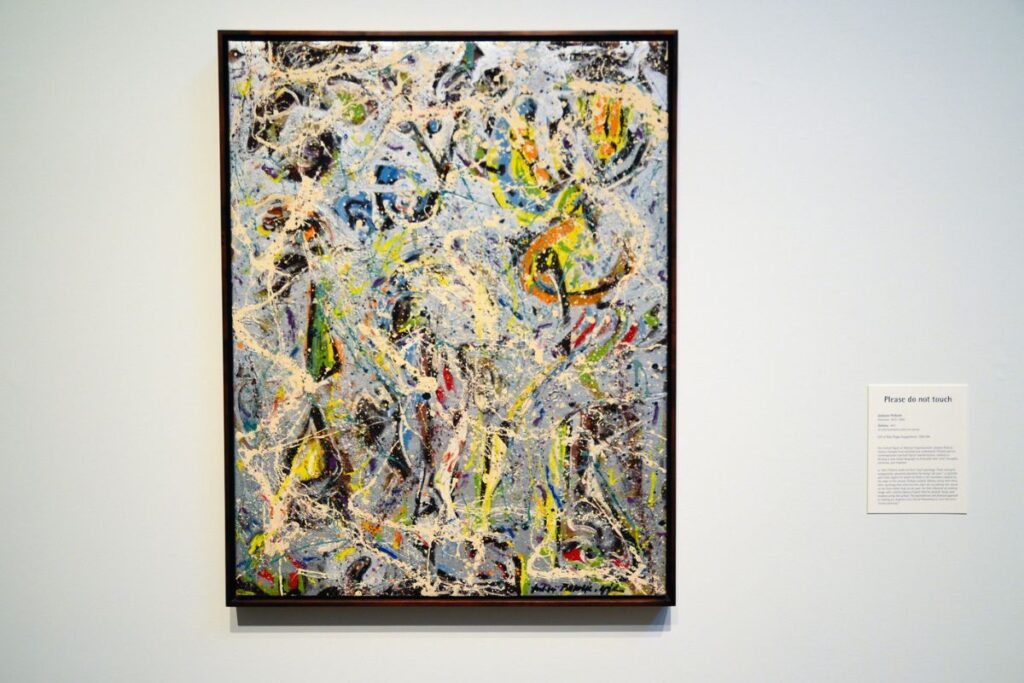
Jackson Pollock. Galaxy (1947). Photo: @jpellgen

The unmasking of manganese blue in Pollock’s Number 1A, 1948 is more than a pigment story. It is a bridge—between art and science, myth and method, chaos and calculation. The laser beam that revealed the pigment did not strip the work of its mystery; it deepened it.


Pollock’s intuitive choreography of paint and physics now finds its molecular echo. Conservationists gain tools, collectors gain certainty, and the public gains a new way to marvel. In Pollock’s universe, even a single shade of blue is a revolution.

FAQ

Receive the latest news

Subscribe To Our Magazine

Luster Magazine

Digital Magazine

Ingresa los siguientes datos y comienza a disfrutar de nuestra revista digital.