Architecture

Maison Hermès Tokyo: Modern Craftsmanship in the Ginza District

In 1998, Hermès entrusted Renzo Piano Building Workshop (RPBW) with an ambitious project: to design its Japanese headquarters in Tokyo’s Ginza.

Por: Rubén Carrillo
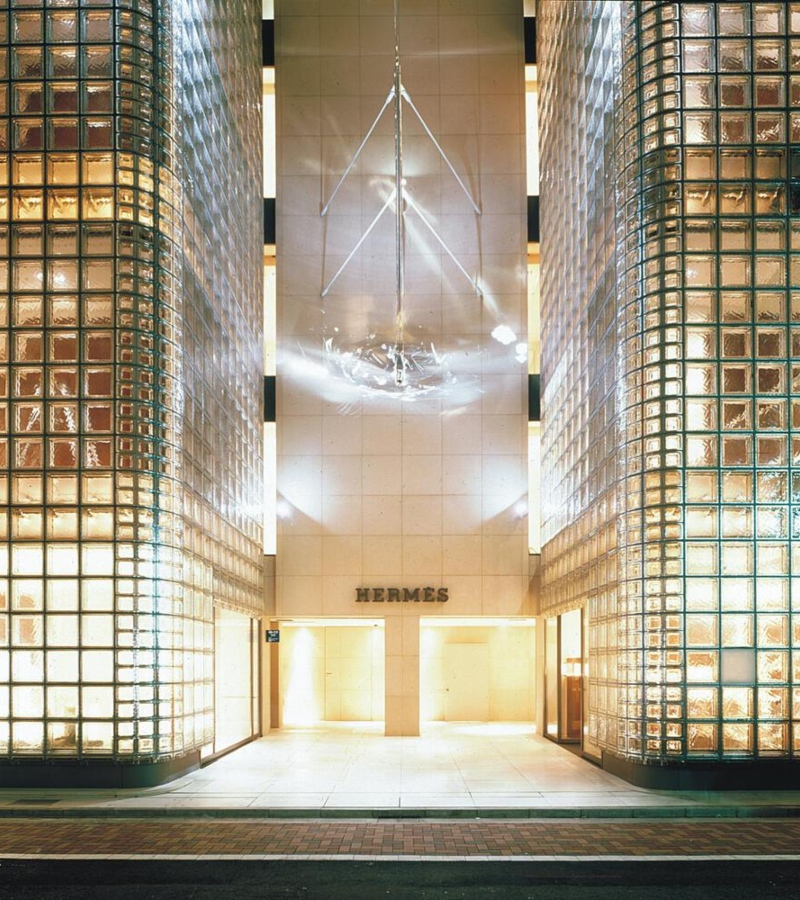
With a luminous façade and ingenious spatial planning, Maison Hermès Tokyo is a 15-story tower that redefined urban architecture / Photo Hermes Tokyo

With a luminous façade and ingenious spatial planning, Maison Hermès Tokyo is a 15-story tower that redefined urban architecture.


Rising 56 meters on a slender plot, the structure embodies the brand’s philosophy of blending heritage with innovation while navigating the challenges of dense metropolitan regulations.


A Radiant Façade of Glass and Light

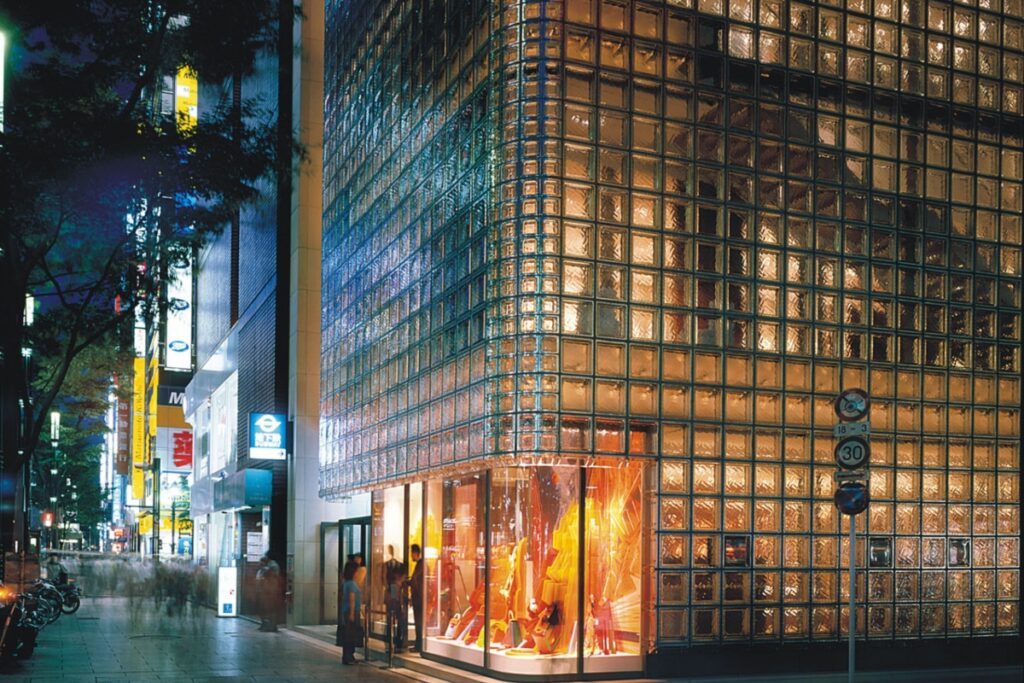
Maison Hermès Tokyo is instantly recognizable for its striking glass façade. Composed of 13,000 custom glass blocks, each meticulously produced in Florence by Vetroarredo, the surface glows by day and shimmers by night. 


The façade is translucent rather than transparent, echoing the poetic essence of Japanese shoji screens. 


During daylight, the structure appears silver-toned and reflective; once darkness falls, it transforms into a glowing lantern, anchoring Ginza’s neon-lit streetscape with elegance and restraint.


The design offers more than aesthetics. Each block, measuring 45 centimeters, is engineered to absorb seismic forces, reflecting Tokyo’s ever-present earthquake risks.


Flexible seals allow up to four millimeters of movement, ensuring the building sways rather than resists, a subtle nod to resilience hidden within artistry.
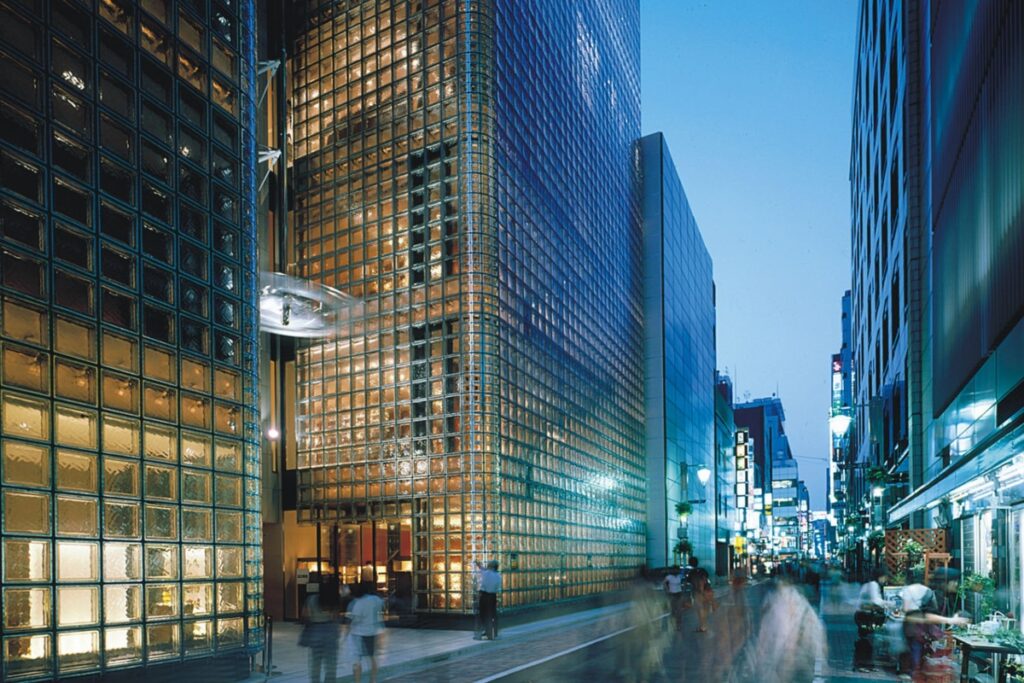
Maison Hermès Tokyo is instantly recognizable for its striking glass façade / Photo Hermes Tokyo

Innovation Anchored in Tradition

The brilliance of the design lies in its fusion of technical ingenuity with cultural sensitivity. 


The façade may appear monolithic, but the ground floor contrasts with clarity, revealing transparent glass bricks that invite passersby to glimpse Hermès creations. Traditional shop windows line Harumi Avenue, ensuring retail visibility while maintaining architectural harmony. 


This balance between concealment and revelation mirrors the brand’s identity: exclusivity intertwined with accessibility.


Maison Hermès Tokyo is not merely a corporate headquarters but a living cultural hub. Its design draws from modern engineering while retaining echoes of Japanese aesthetics. 


The glass blocks ripple like molten droplets, a reminder that art and technology, when intertwined, can yield timeless architecture.

The façade may appear monolithic, but the ground floor contrasts with clarity, revealing transparent glass bricks that invite passersby to glimpse Hermès creations. / Photo Hermes Tokyo

A Vertical Journey of Retail, Art, and Work

Inside, the building’s verticality unfolds into distinct zones. The first four floors host Hermès retail spaces, curated with precision to echo Parisian refinement while catering to Tokyo’s discerning clientele. 


Above, ateliers and offices span several levels, embodying the quiet efficiency required for luxury operations.


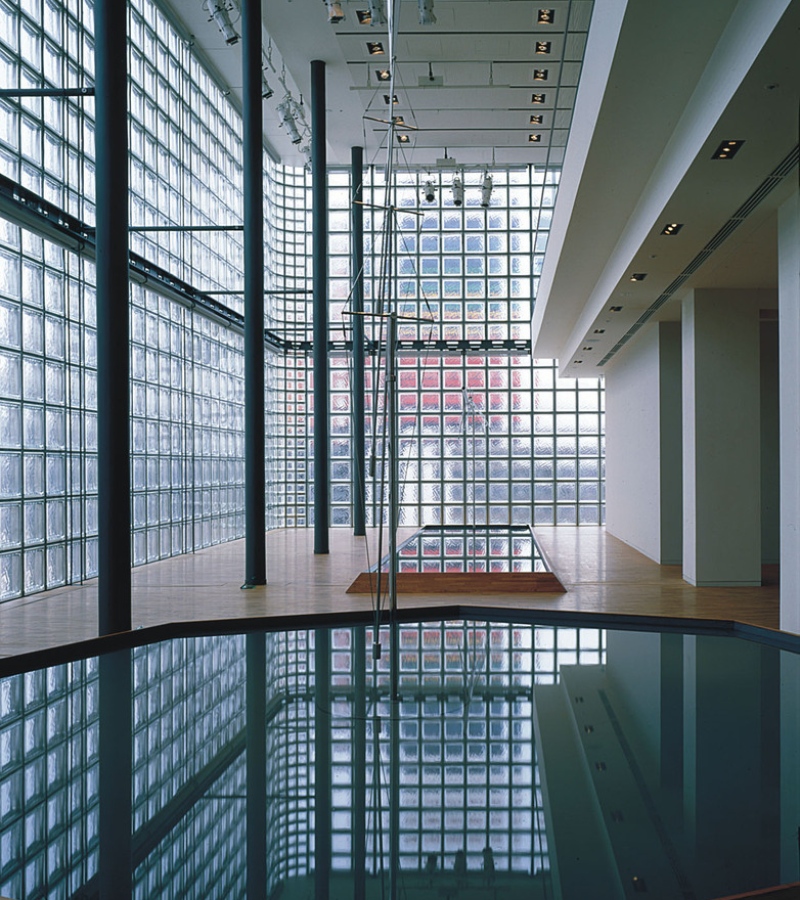
The seventh floor opens into a double-height gallery dedicated to exhibitions, a place where craftsmanship and art converge. 


It is here that Hermès bridges fashion and culture, offering a platform for dialogue that transcends commerce. At the building’s peak, a serene courtyard garden lies hidden, shielded from the city by the glowing façade. 


This oasis provides a rare retreat, a subtle luxury in a city where space is the ultimate commodity.

The seventh floor opens into a double-height gallery dedicated to exhibitions, a place where craftsmanship and art converge. / Photo Maison Hermes

Expansion Without Compromise

In 2002, Hermès sought to expand its Tokyo flagship, requesting new spaces that would blend seamlessly with the original design.


The challenge was formidable: enlarging entryways, dressing rooms, and the “Le Studio” cinema on the tenth floor, all while preserving the building’s integrity. 


Completed in 2006, the expansion achieved harmony without disrupting continuity, demonstrating the same precision Hermès applies to its creations.that architecture can embody the values of a brand while serving the city around it.

The challenge was formidable: enlarging entryways, dressing rooms, and the “Le Studio” cinema on the tenth floor, all while preserving the building’s integrity. / Photo Hermes Tokyo

Quick Questions

Receive the latest news

Subscribe To Our Magazine

Luster Magazine

Digital Magazine

Ingresa los siguientes datos y comienza a disfrutar de nuestra revista digital.