Architecture

Beijing City Library: Snøhetta’s Human-Centered Future

How the Beijing City Library merges nature, tech, and community: Snøhetta’s landmark delivers the world’s largest climatized reading space and award-winning sustainability.

Por: Angela Leon Cervera
Beijing City Library
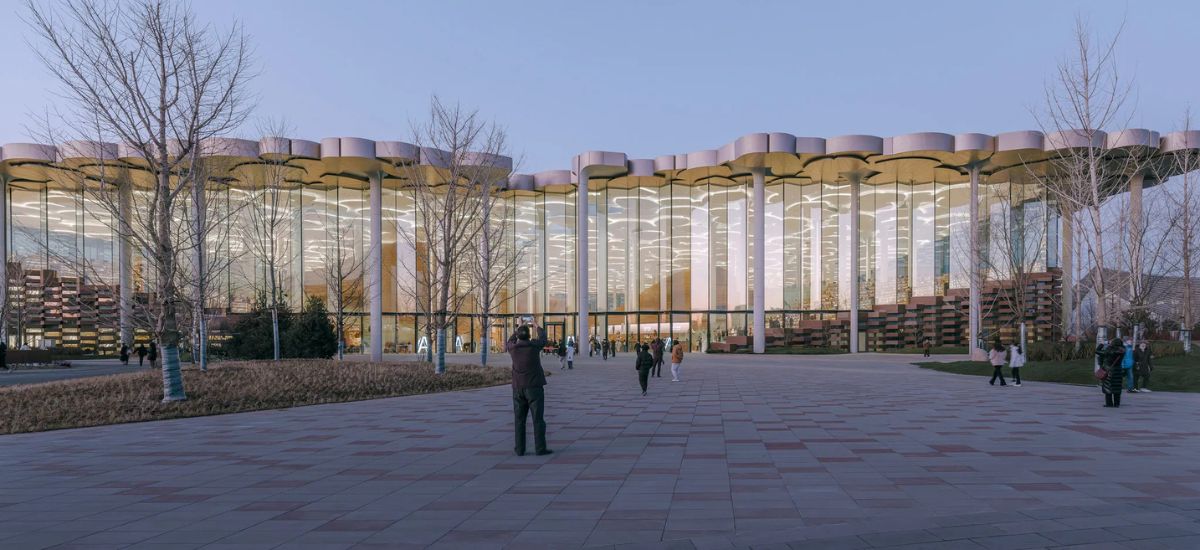
Beijing City Library. Snøhetta and ECADI. Photo: Yumeng Zhu

The Beijing City Library reimagines what a library can be. Set in Tongzhou, the capital’s sub-center, this project by Snøhetta and ECADI positions the Beijing City Library as a vibrant civic hub, not a silent vault for books.


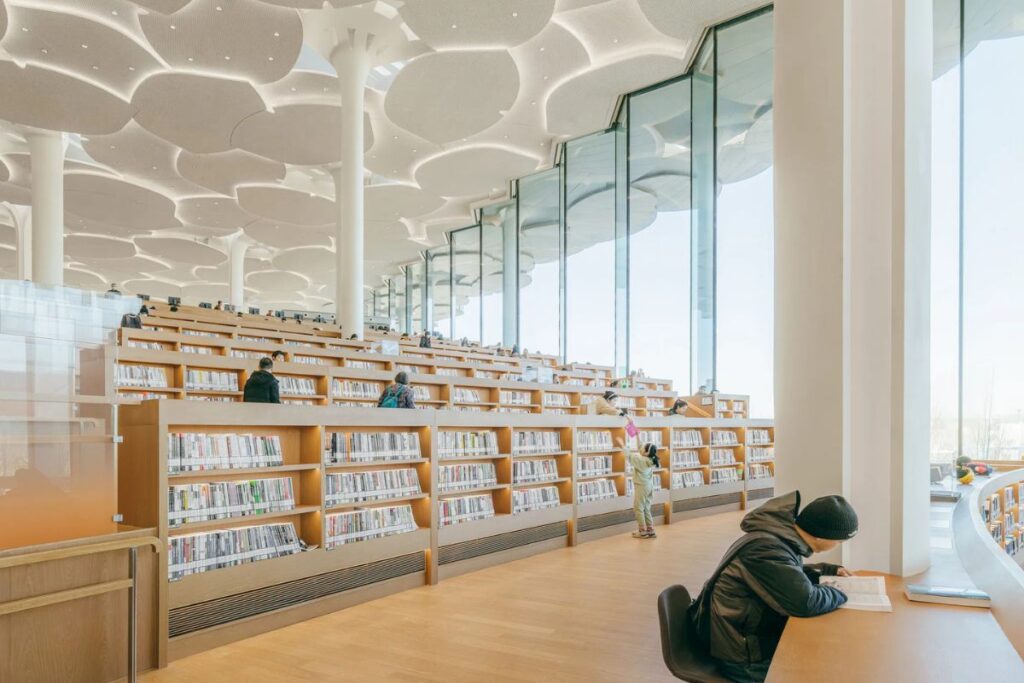
Inside, a meandering “valley,” terraced “hills,” and a luminous “forest” of ginkgo-like columns reshape reading into a communal, nature-infused ritual. The result: the world’s largest climatized reading space and China’s largest load-bearing glass system—architecture that turns transparency into public invitation.
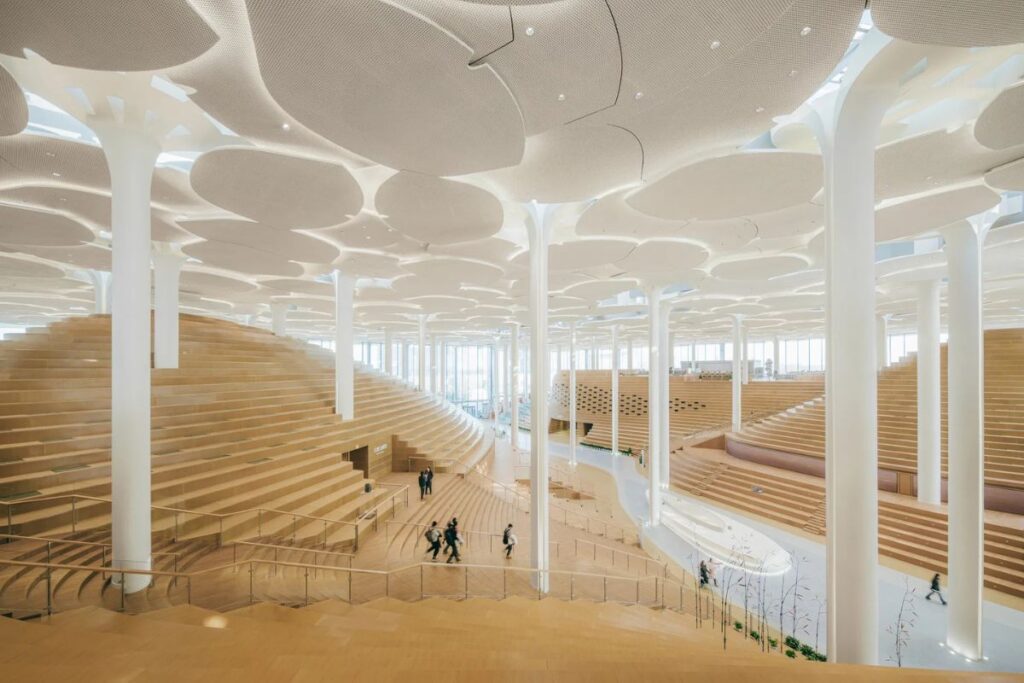
Beijing City Library
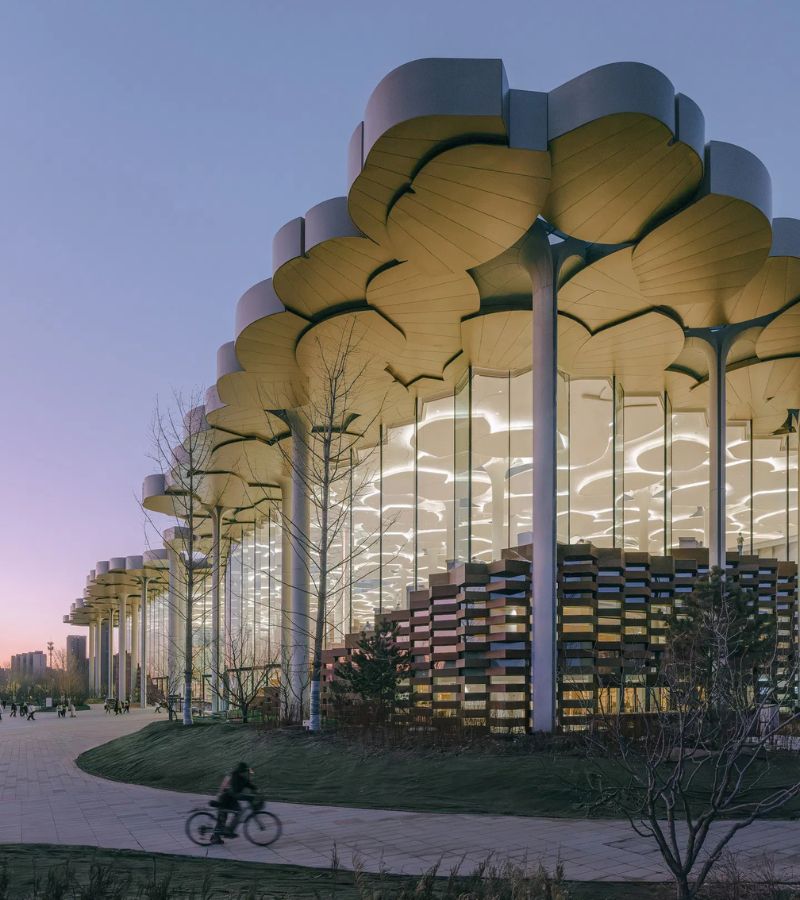
Beijing City Library. Snøhetta and ECADI. Photo: Yumeng Zhu

What makes the Beijing City Library a model for 21st-century public space?

  • Cultural anchor in Tongzhou: The library forms a trio with the Beijing Performing Arts Centre and the Grand Canal Museum, advancing a district-scale cultural strategy. Shared underground links and amenities reinforce the cluster’s seamless, energy-savvy planning.

  • Human-centered circulation: The central “valley” guides movement; stepped “hills” double as seating, shelves, and stages for informal learning. The ginkgo “forest” canopy filters light and frames views to real ginkgo plantings at the entries. 

  • Proof of impact: Recognized as IFLA/Baker & Taylor Public Library of the Year 2024 and later named among TIME’s World’s Greatest Places 2025.

Beijing City Library
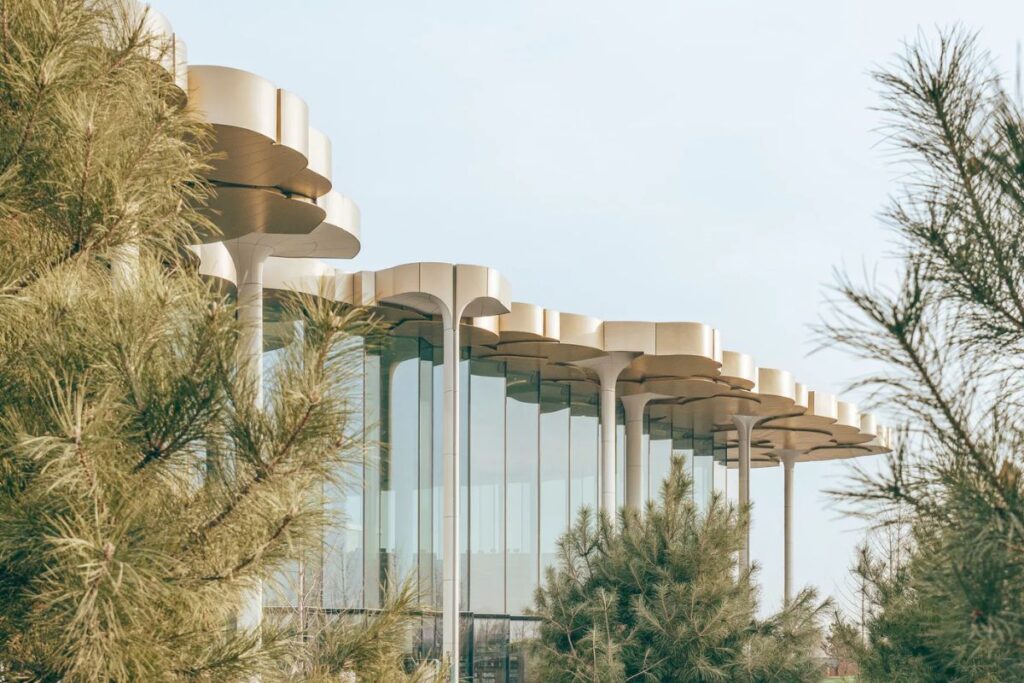
Beijing City Library. Snøhetta and ECADI. Photo: Yumeng Zhu
Beijing City Library
Beijing City Library. Snøhetta and ECADI. Photo: Yumeng Zhu

How does the engineering amplify the Beijing City Library experience?

  • A record-setting façade: A 16-meter-tall, pleated, self-supporting glass skin—engineered with finite-element analysis by Eckersley O’Callaghan—keeps views unobstructed and the interior on display. Figures published note 276 jumbo panes approaching 16 meters in height. 

  • A high-performance canopy: Slender “tree” columns integrate lighting, climate control, acoustics, and rainwater capture—cleaning the ceiling of ducts and fixtures so the space stays calm and legible. 

  • Smart storage, open floors: One of China’s largest book ASRS systems compresses back-of-house volume so people, not stacks, own the floor.

Why is sustainability central to the Beijing City Library’s identity?

  • Top-tier certification: The project earned China’s GBEL Three Star rating, the country’s highest sustainability standard. 

  • Passive + active tactics: Deep roof overhangs shade glass; high-performance low-E glazing controls heat gain; locally sourced materials cut embodied carbon. Photovoltaics on the roof supply clean power; district geothermal heat-pump systems handle major heating and cooling loads. 

  • Measured outcomes and recognition: Beyond engineering, the building’s public value is clear: millions of visits in year one and a steady stream of programming—evidence that green design and community use can reinforce each other.

Beijing City Library
Beijing City Library. Snøhetta and ECADI. Photo: Yumeng Zhu

Snøhetta’s Beijing City Library is more than a photogenic atrium. It is a civic prototype where architecture, technology, and ecology converge to make public knowledge feel alive. The building’s awards and metrics validate its ambition—but its real triumph is how it invites everyone, from toddlers to scholars, to learn together under a canopy of light.

FAQ

Receive the latest news

Subscribe To Our Magazine

Luster Magazine

Digital Magazine

Ingresa los siguientes datos y comienza a disfrutar de nuestra revista digital.