Architecture

Sotheby’s Reinvents the Breuer Building: Brutalism Reborn

Sotheby’s transforms Marcel Breuer’s Madison Avenue icon into its new headquarters, redefining brutalism as cultural heritage and market power.

Por: Angela Leon Cervera
Breuer Building
648 Sotheby’s Madison Ave. Courtesy of Herzog de Meuron

The Breuer Building, long a stark silhouette on Madison Avenue, is about to enter its boldest chapter yet. Sotheby’s acquisition of the Breuer Building marks not just a change of address but a cultural statement: brutalism, once maligned as cold and austere, is now embraced as a vessel for the future of the art market. Opening November 8, 2025, the new Sotheby’s headquarters will debut with a major exhibition of modern and contemporary art, reaffirming New York’s role as the global stage where architecture, history, and commerce converge.


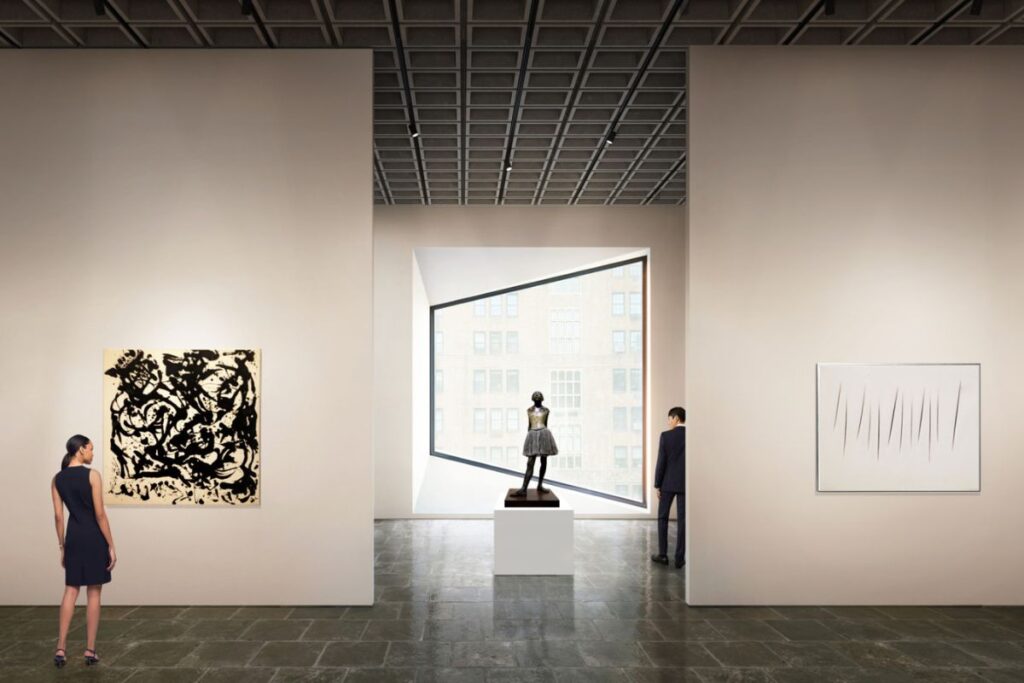
This $100 million purchase, reimagined by the visionary architects Herzog & de Meuron with PBDW, carefully preserves Marcel Breuer’s concrete gravitas while injecting new life into its granite ziggurat form. The result is a space that is at once museum, marketplace, and manifesto—proof that architecture can serve commerce without sacrificing cultural integrity.
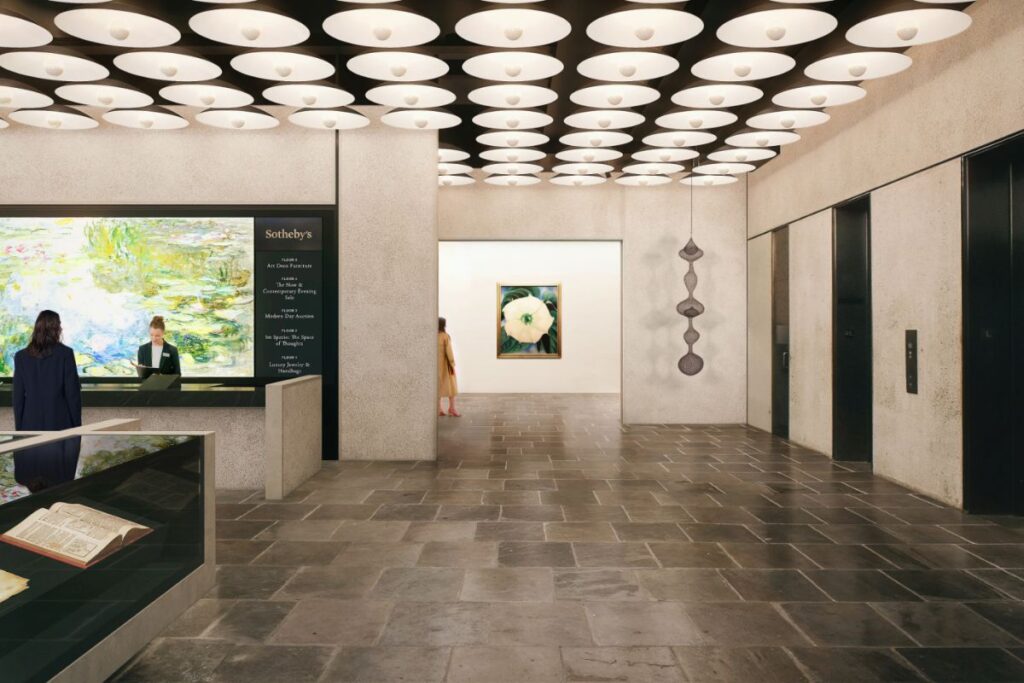
Breuer Building
648 Sotheby’s Madison Ave. Courtesy of Herzog de Meuron

What Makes the Breuer Building a Brutalist Landmark?

Marcel Breuer’s building, completed in 1966, embodies the spirit of brutalism: unapologetic concrete, inverted massing, and windows like sculpted eyelids peering over Madison Avenue. Born from Breuer’s Bauhaus roots but radically departing from modernist lightness, the design insists on presence, permanence, and provocation.


  • Originally home to the Whitney Museum of American Art until 2014.

  • Later housed the Met Breuer and The Frick Collection during renovations.

  • Designated a New York landmark in 1981 (exterior) and 2021 (significant interiors).

What makes the Breuer unique is its adaptability. From Whitney to Frick, it has held diverse collections without losing its identity. Sotheby’s now inherits not just a building but a history of reinvention—proof that brutalism is not rigid, but resilient.

Breuer Building
648 Sotheby’s Madison Ave. Courtesy of Herzog de Meuron
Breuer Building
648 Sotheby’s Madison Ave. Courtesy of Herzog de Meuron

Why Does Sotheby’s Move Here Matter?

For Sotheby’s, relocating from its industrial York Avenue base to Breuer’s granite masterpiece is more than real estate—it’s branding through architecture. CEO Charles Stewart called it a “once-in-a-lifetime opportunity,” and rightly so. By anchoring its identity in a protected architectural landmark, Sotheby’s transforms itself from mere market player into cultural custodian.


Key points of the move:


  • Public Access: Exhibitions remain free, blurring lines between private auction house and public cultural space.

  • Architectural Prestige: Aligns the Sotheby’s brand with Breuer’s enduring legacy.

  • Market Strategy: Positions Sotheby’s not just as seller of art, but as steward of history.

It’s a symbolic leap: from warehouse roots to architectural icon, Sotheby’s is rebranding as curator of culture.

How Did Herzog & de Meuron Transform the Space?

The renovation avoids the trap of erasure. Instead, it’s an exercise in sensitive adaptation:


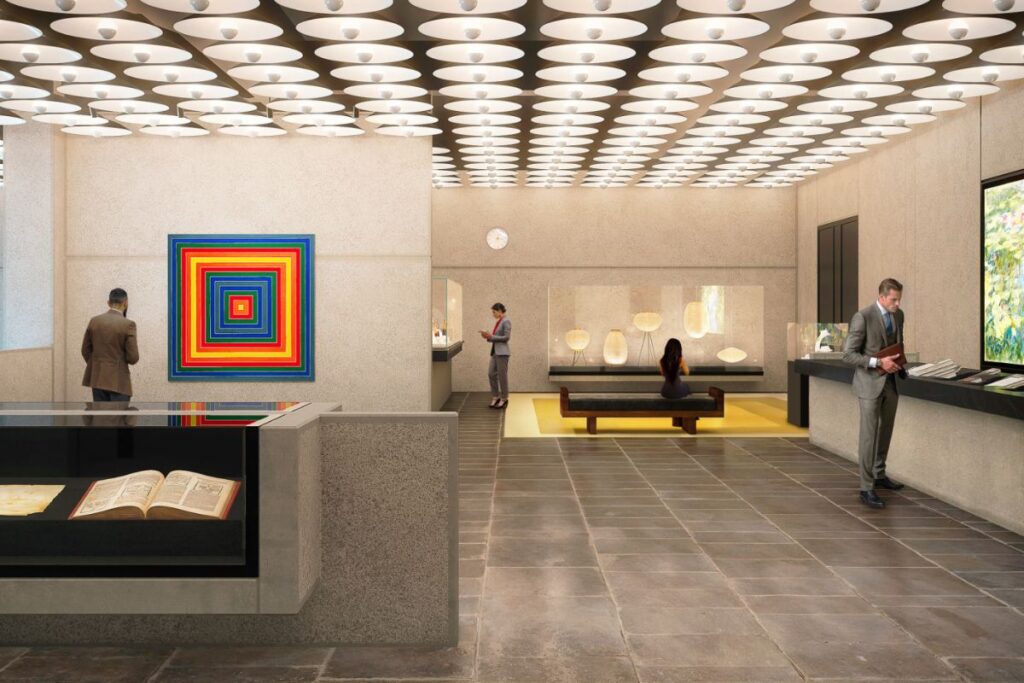
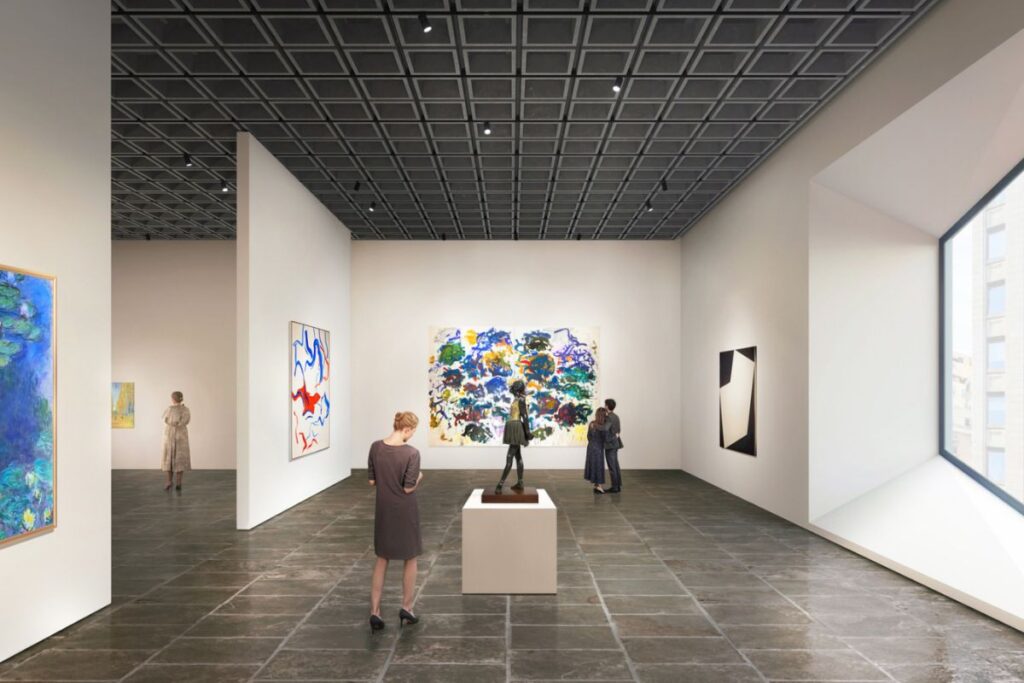
  • Preserved: Concrete walls, trapezoidal windows, blue stone floors.

  • Reinterpreted: Lobby furniture transformed into display cases.

  • Enhanced: Cutting-edge galleries, auction rooms, lighting systems.

  • Expanded: A new restaurant by the La Mercerie team, turning Sotheby’s into a cultural destination.

This is preservation with purpose: Breuer’s raw strength remains intact, but softened with light, hospitality, and accessibility. Brutalism, once accused of being alienating, is reimagined as welcoming without losing its monumental power.

Breuer Building
648 Sotheby’s Madison Ave. Courtesy of Herzog de Meuron

The Breuer Building’s rebirth as Sotheby’s new home is more than a relocation—it is a case study in how architecture and commerce can harmonize. In celebrating brutalism’s permanence while adapting it for the twenty-first century, the project proves that concrete can be both cultural heritage and commercial capital.


As the November 2025 opening approaches, Sotheby’s is not simply unveiling a new headquarters. It is inviting the public to see brutalism not as relic, but as living architecture—an enduring partner in the ever-evolving story of art.

FAQ

Receive the latest news

Subscribe To Our Magazine

Luster Magazine

Digital Magazine

Ingresa los siguientes datos y comienza a disfrutar de nuestra revista digital.