Art

The Ten Unmissable Masterpieces of Florence

Discover Florence’s ten unmissable masterpieces—from Michelangelo’s David to Botticelli’s Venus—in this expertly curated guide for the discerning traveler.

Por: Angela Leon Cervera
Florence masterpieces
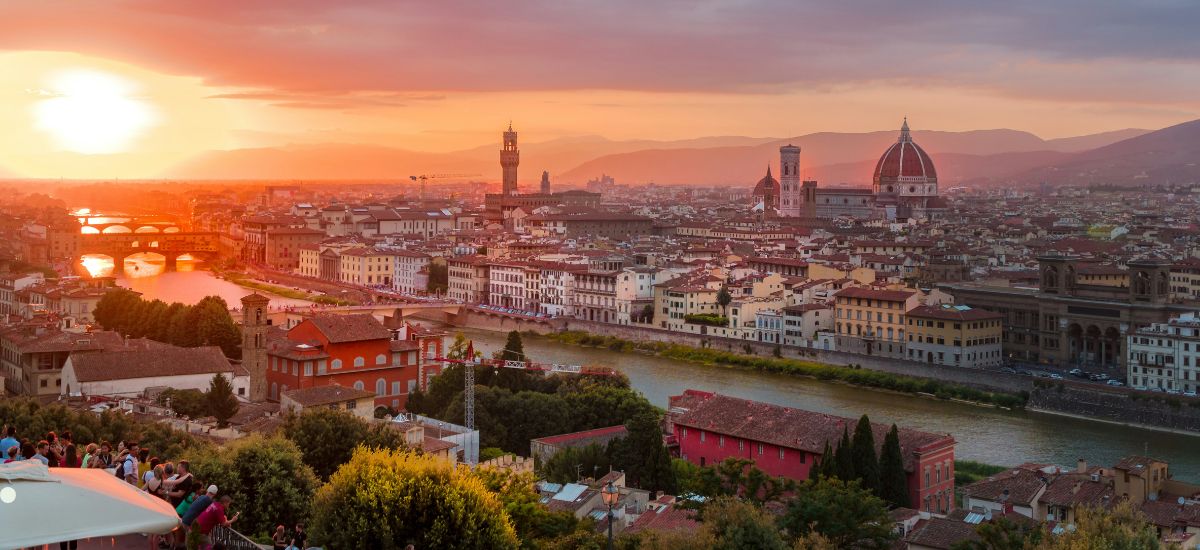
Florence. Photo: Heidi Kaden

Florence is not just a city—it’s a living museum and the beating heart of one of the most transformative periods in human history: the Renaissance. Here, classical ideals were revived, humanism flourished, and art and science intertwined to create a cultural revolution that shaped modern thought.


Much of this was possible thanks to the powerful Medici family, whose strategic patronage nurtured genius after genius—Brunelleschi, Botticelli, Leonardo da Vinci, Michelangelo—turning Florence into the epicenter of creativity. For the traveler with limited time, this guide distills the city’s splendor into ten essential masterpieces, each offering an unfiltered glimpse into the genius and daring spirit of the Renaissance.
Florence masterpieces
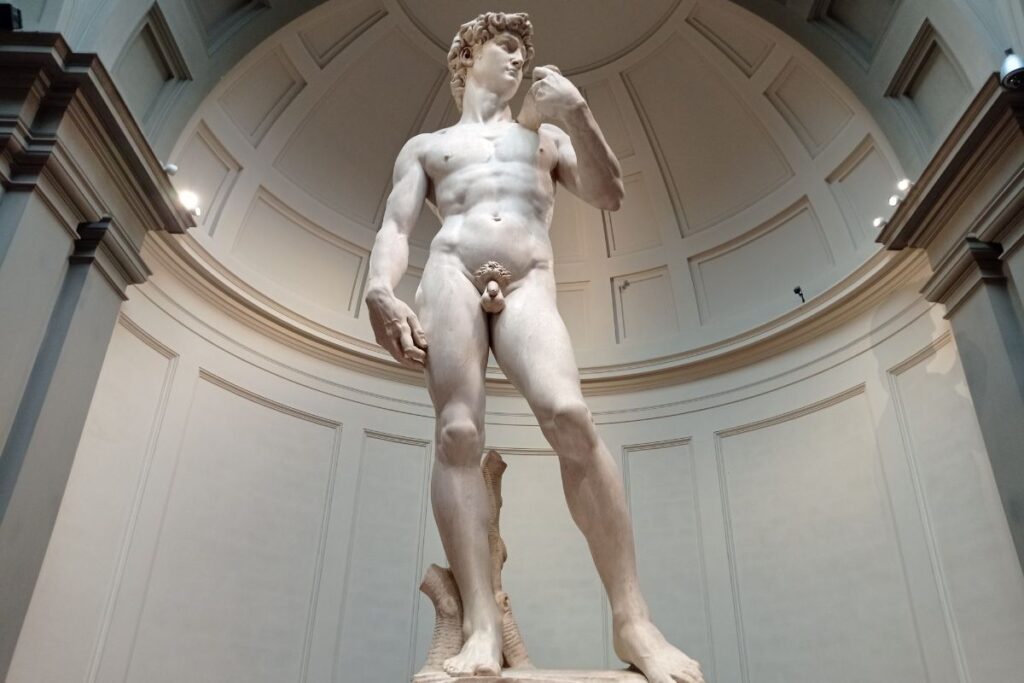
Michelangelo’s David

1. Michelangelo’s David – The Republic’s Defiant Hero

Housed in the Galleria dell’Accademia, Michelangelo’s David is more than a marble statue—it’s a political manifesto carved in stone. Created between 1501 and 1504 from a flawed block abandoned by other sculptors, this five-meter masterpiece captures David poised before battle, veins taut, gaze focused. For the Florentine Republic, it embodied courage and independence against overwhelming odds. While replicas stand in Piazza della Signoria and Piazzale Michelangelo, nothing compares to the awe of meeting the original in person.

Florence masterpieces
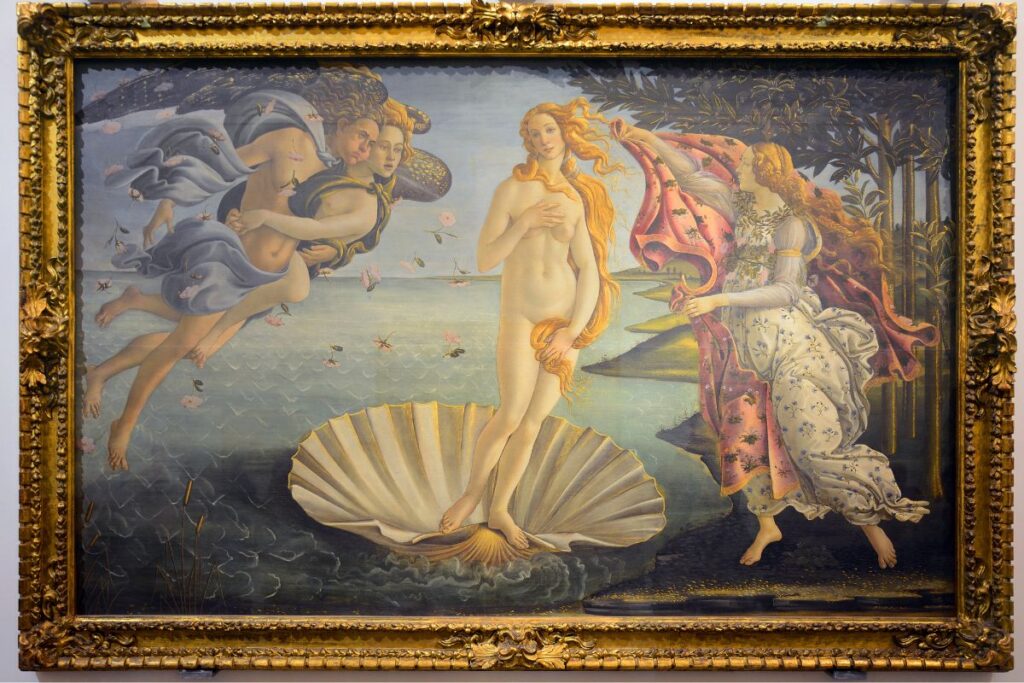
Botticelli’s The Birth of Venus

2. Botticelli’s The Birth of Venus – Beauty on a Seashell

At the Uffizi Gallery, Botticelli’s The Birth of Venus (c. 1482–1485) is a vision of divine beauty and intellectual ambition. Commissioned by the Medici, Venus arrives on a seashell, propelled by the Zephyrs—a bold, large-scale nude inspired by classical mythology, imbued with Neoplatonic ideals. Thought to be modeled on the famed Simonetta Vespucci, she embodies pure love in its untouched form. Botticelli’s refined contours and flowing drapery turn myth into a poetic allegory for the human soul’s ascent.

Florence masterpieces
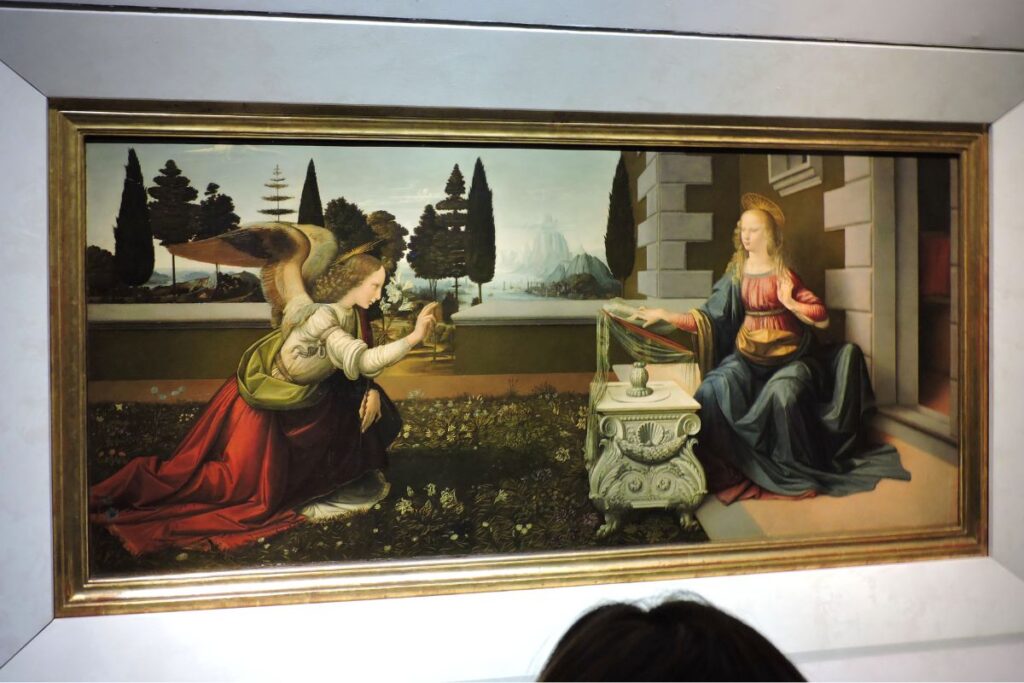
Leonardo da Vinci’s Annunciation

3. Leonardo da Vinci’s Annunciation – A Young Master’s Whisper

Painted when Leonardo was still under Verrocchio’s wing (c. 1472–1475), The Annunciation reveals the seeds of his genius. Displayed at the Uffizi, this biblical encounter unfolds in a luminous outdoor setting—a daring break from tradition—where botanical details bloom with scientific precision. The angel Gabriel’s face, serene and subtly human, foreshadows Leonardo’s later portraits. Even its debated “perspective errors” speak to a restless mind testing the boundaries of visual storytelling.

Florence masterpieces
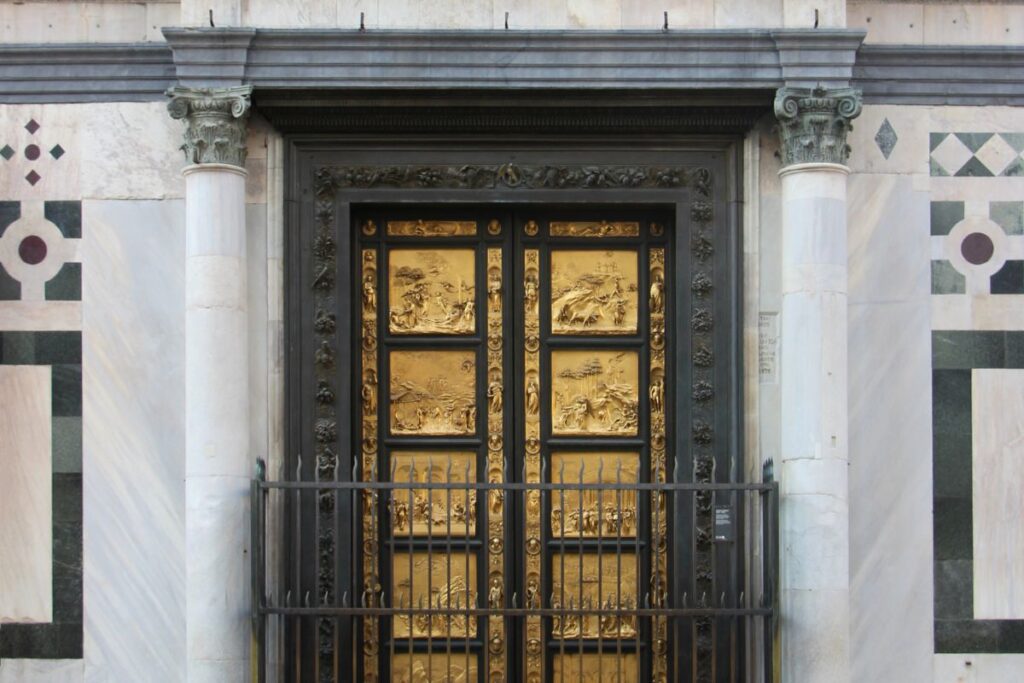
Ghiberti’s Gates of Paradise

4. Ghiberti’s Gates of Paradise – Bronze Stories in Light

Dubbed the “Gates of Paradise” by Michelangelo himself, Lorenzo Ghiberti’s gilded bronze doors (1425–1452) are a triumph of narrative relief. Now preserved in the Museo dell’Opera del Duomo, their ten panels compress Old Testament stories into shimmering, illusionistic depth using the schiacciato technique. Originally adorning the Baptistery of San Giovanni, they represent both an artistic and civic treasure—proof that sacred stories could be told with Renaissance innovation and splendor.

Florence masterpieces
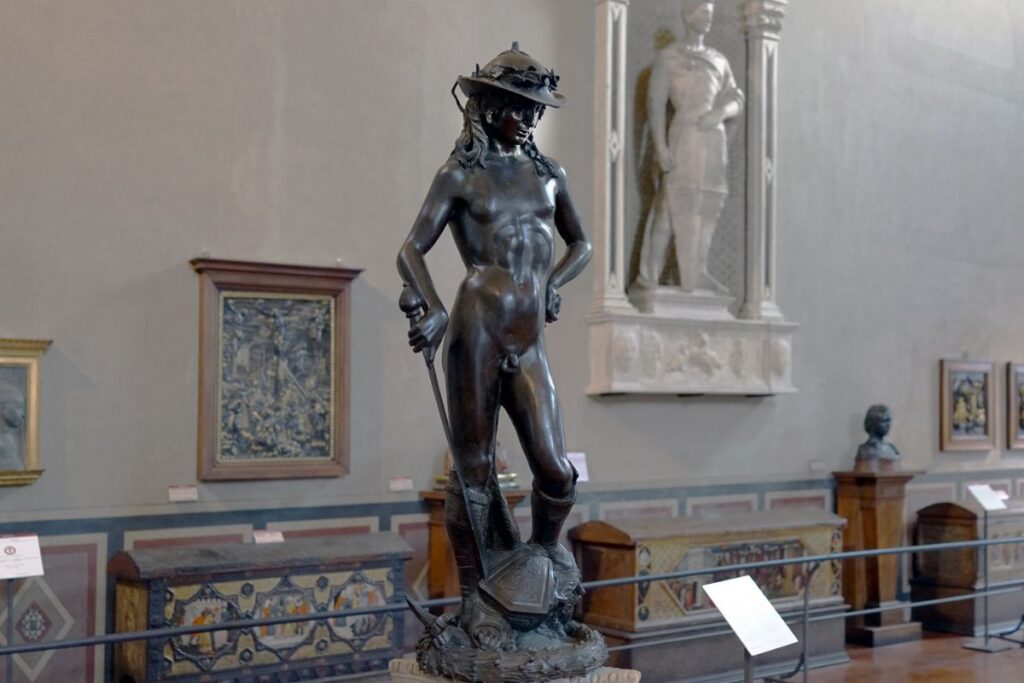
Donatello’s David Photo: Steven Zucker

5. Donatello’s David – Youthful Grace in Bronze

In the Museo Nazionale del Bargello stands Donatello’s David (1430–1440), the first free-standing nude bronze since antiquity. Commissioned by Cosimo de’ Medici, this youthful shepherd, victorious yet contemplative, departs from the muscular heroism of later versions. His relaxed contrapposto and delicate beauty embody humanist ideals, while details like Goliath’s ornate helmet—its wing brushing David’s leg—show Donatello’s playful genius. It’s a study in elegance, vulnerability, and the quiet confidence of intellect over brute force.

Florence masterpieces
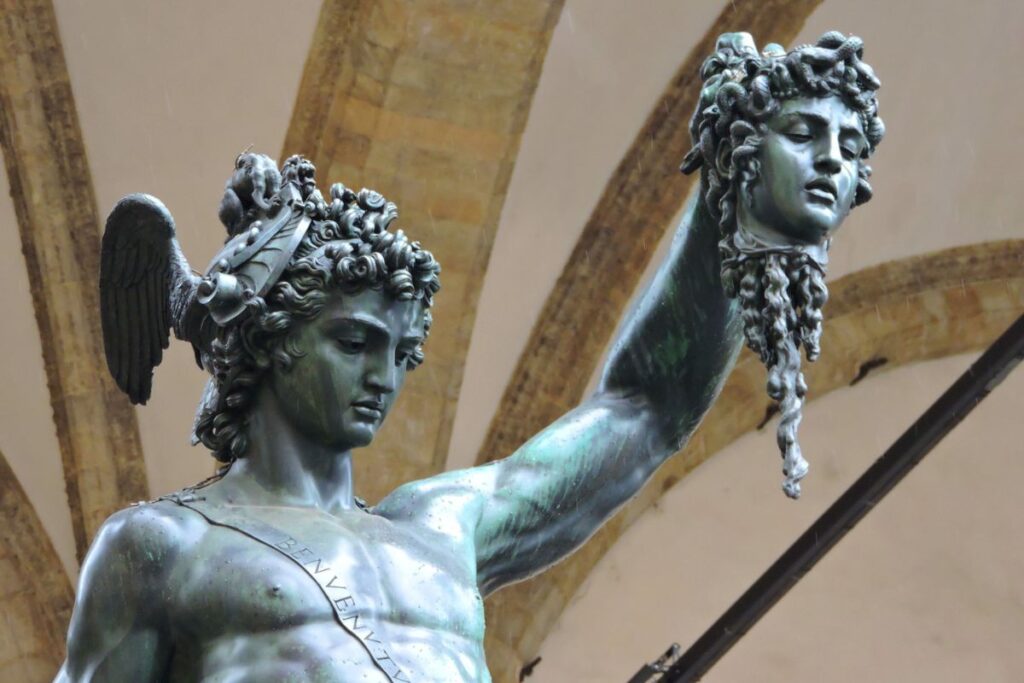
Cellini’s Perseus with the Head of Medusa

6. Cellini’s Perseus with the Head of Medusa – Bronze and Bravado

In Piazza della Signoria’s Loggia dei Lanzi, Benvenuto Cellini’s Perseus (1545–1554) freezes the instant after Medusa’s decapitation. The technical feat of casting this intricate bronze in one pour was matched only by Cellini’s flair for drama—muscles tense, blood dripping from the severed head. For the Medici, Perseus symbolized wisdom and decisive action, a political allegory for their rule. The original pedestal reliefs, now in the Bargello, add narrative depth to this tour de force.

Florence masterpieces
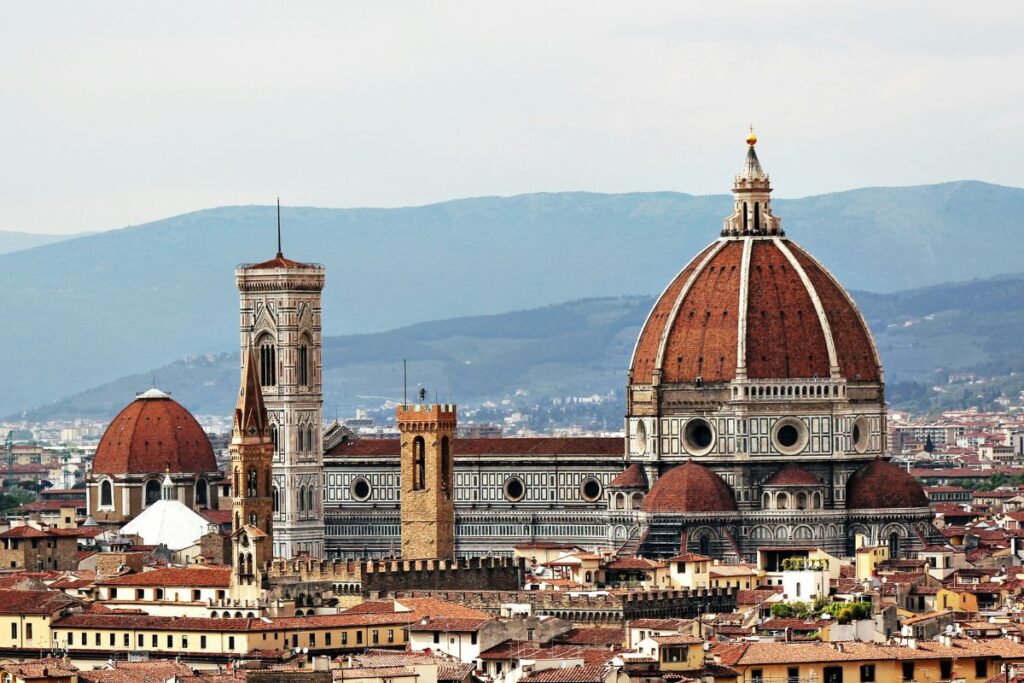
Brunelleschi’s Dome

7. Brunelleschi’s Dome – The Crown of Florence

Dominating the skyline, Brunelleschi’s dome (1436) atop Santa Maria del Fiore is an engineering marvel still unmatched. Constructed without traditional scaffolding, it used an ingenious herringbone brick pattern to support its vast weight. With over four million bricks and a double-shell structure, it remains the largest masonry dome in the world. Climbing it offers sweeping views of Florence—an ascent into the mind of the man who redefined architecture’s possibilities.

Florence masterpieces
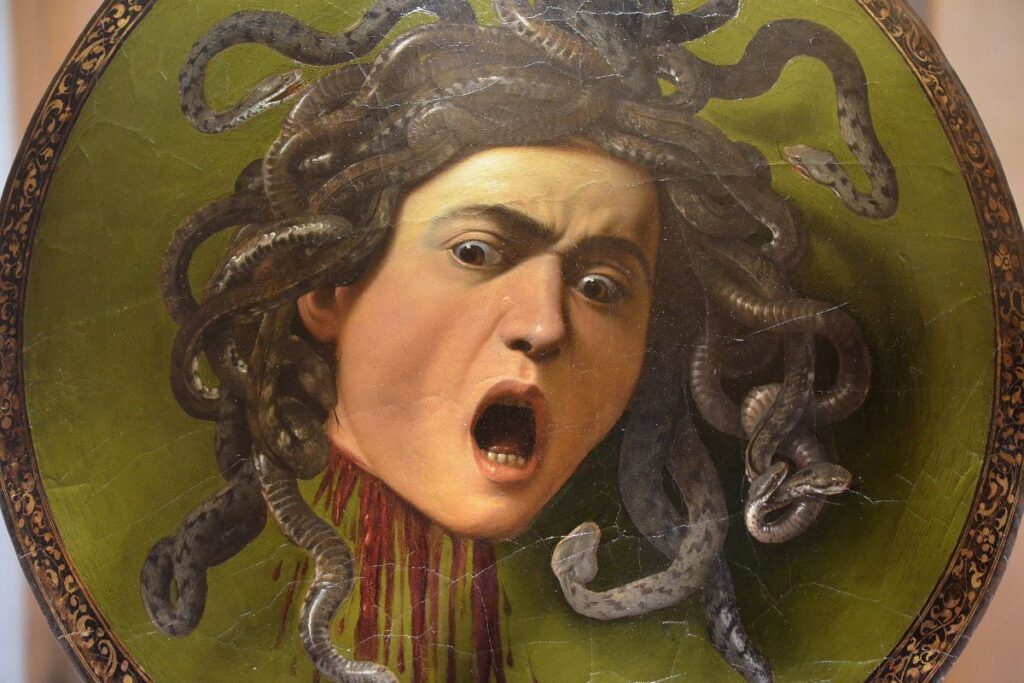
Caravaggio’s Medusa

8. Caravaggio’s Medusa – Terror on a Shield

Caravaggio’s Medusa (1597), housed in the Uffizi, is both a chilling myth and a psychological portrait—quite literally, as the gorgon’s face is the artist’s own. Commissioned as a ceremonial gift for the Medici, its frozen scream and lifelike gore showcase Caravaggio’s mastery of chiaroscuro. More than a tale of heroism, it’s a meditation on fear and mortality, reflecting the Baroque fascination with intense realism and emotional immediacy.

Florence masterpieces
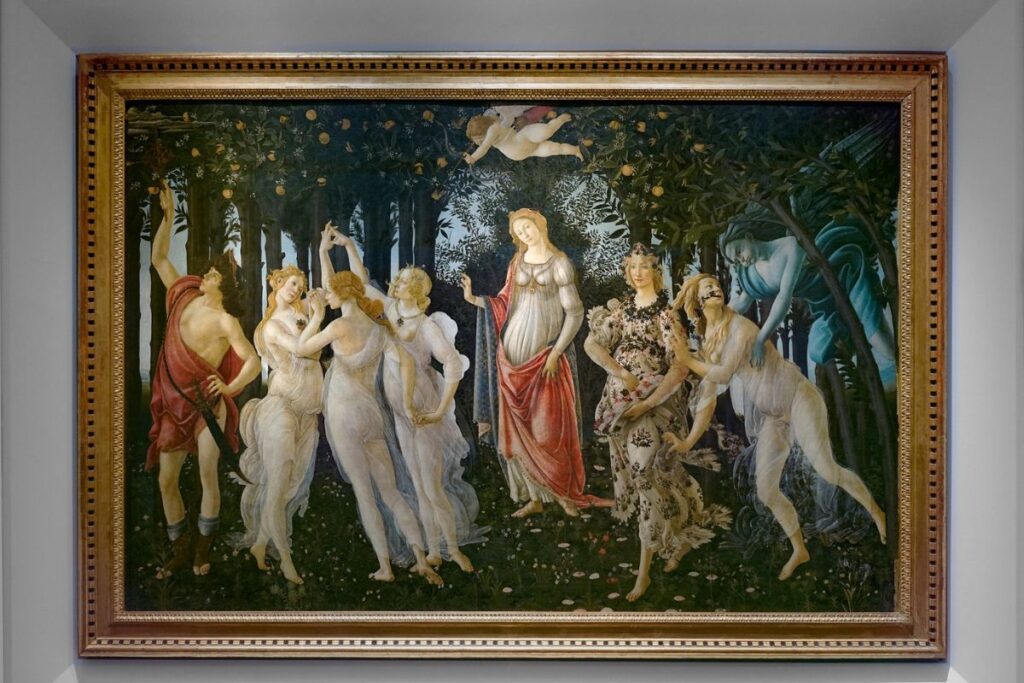
Botticelli’s Primavera. Photo: Steven Zucker

9. Botticelli’s Primavera – An Enigma in Bloom

Also at the Uffizi, Botticelli’s Primavera (c. 1482) is a lush garden of allegory and mystery. Venus presides over a gathering of mythological figures—Mercury, the Three Graces, Zephyrus, and Flora—amid more than 500 identifiable plant species. Scholars debate its precise meaning, but its Neoplatonic overtones suggest an intellectual puzzle meant to delight Medici circles. It’s a vision where nature’s beauty and classical philosophy intertwine in eternal springtime.

Florence masterpieces
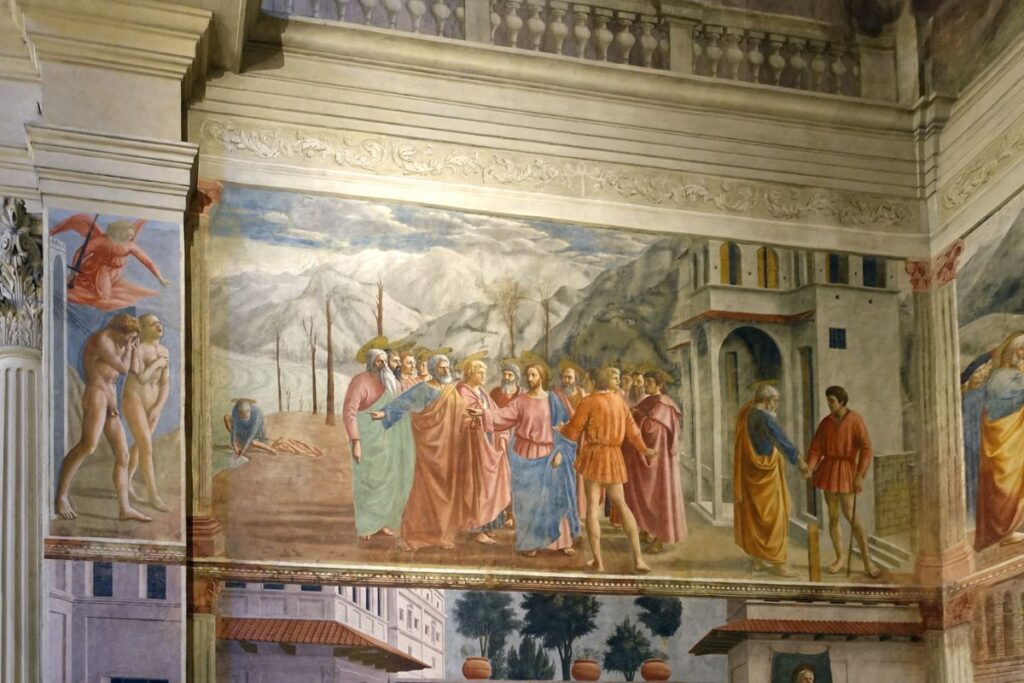
Masaccio’s Brancacci Chapel Frescoes. Photo: Steven Zucker

10. Masaccio’s Brancacci Chapel Frescoes – The School of the World

In Santa Maria del Carmine, Masaccio’s frescoes (1420s) in the Brancacci Chapel are a cornerstone of Renaissance painting. Works like The Tribute Money and The Expulsion from the Garden of Eden revolutionized art with perspective, chiaroscuro, and human emotion. Completed later by Filippino Lippi, the cycle became a pilgrimage site for artists from Michelangelo to Raphael. Standing here is like stepping into the classroom where modern painting was born.

To walk through Florence is to navigate a syllabus of beauty, politics, and human ambition. These ten masterpieces are not mere relics; they are living dialogues between past and present, challenging us to see with Renaissance eyes. Whether you have a weekend or a lifetime, Florence will teach you that art is never just seen—it’s felt, questioned, and remembered.

FAQ

Receive the latest news

Subscribe To Our Magazine

Luster Magazine

Digital Magazine

Ingresa los siguientes datos y comienza a disfrutar de nuestra revista digital.