Art

Fernando de Szyszlo at 100: Andean Abstraction Reignited

Marking Fernando de Szyszlo’s centenary, Lima lights up with shows revealing how his Andean abstraction still shapes global debates on identity and modernism.

Por: Angela Leon Cervera
Fernando de Szyszlo
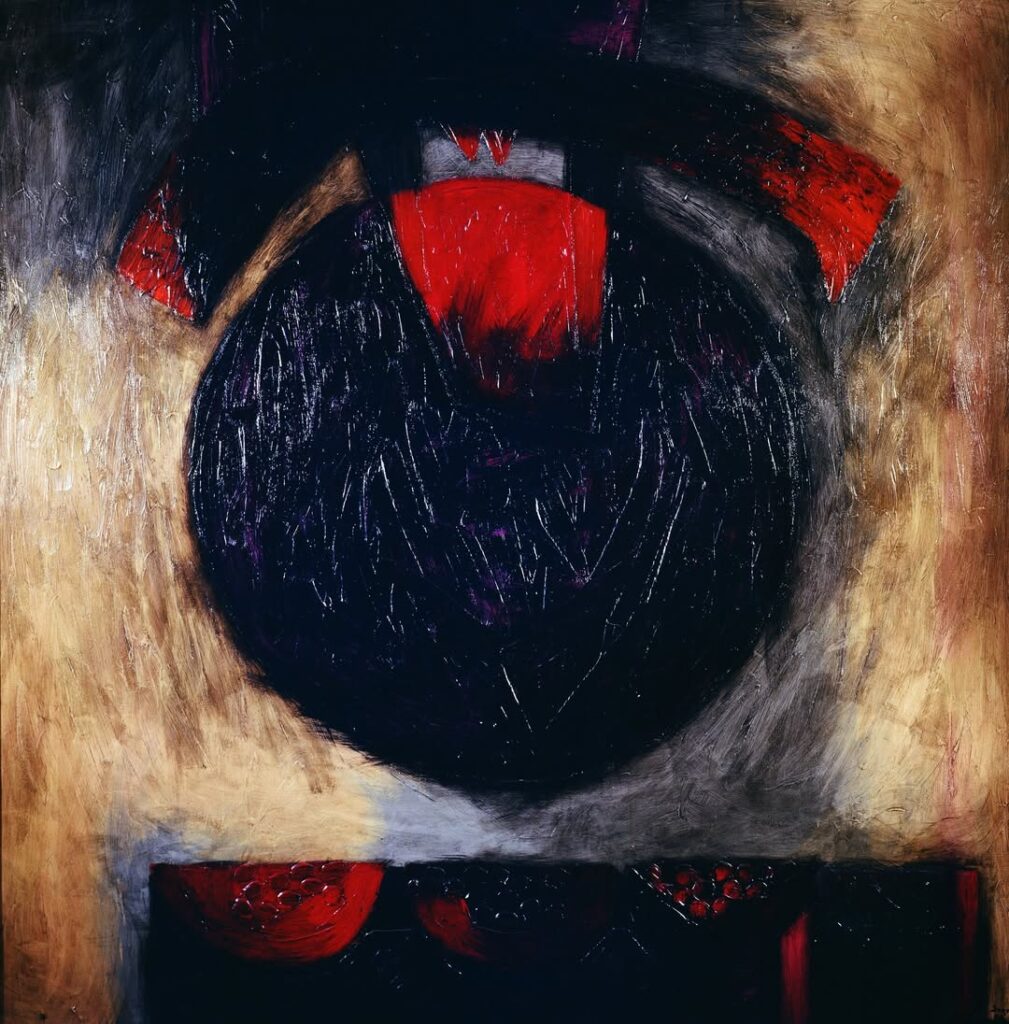
Fernando de Szyszlo. Intihuatana

Fernando de Szyszlo would have turned 100 this July. Yet nothing about his work feels archival. From MAC Lima’s reverent survey to a revived suite of Don Quixote etchings at Galería Pancho Fierro, Peru is celebrating a painter who fused myth, land and modernity into one luminous pulse.


These centenary events invite a second look—not at nostalgia, but at how Szyszlo’s “abstracción telúrica” still questions who owns history and how pigment can sing older truths inside a wired-in world.
Fernando de Szyszlo
Fernando de Szyszlo. Photo: @museodeartelima

How Did Fernando de Szyszlo Forge an Andean Modernism?

Szyszlo’s journey began with cubist whispers in Lima’s Catholic University studios. Restless, he swapped classrooms for cafés on Paris’s Left Bank, debating André Breton and Octavio Paz on how a Latin American could be modern without mimicry. He returned in 1949 wielding pure abstraction—but pulsing with pre-Columbian memory.


The result was a new visual grammar—earth-dark blacks, volcanic reds, ritual planes—that Marta Traba hailed as an “art of resistance.” It rejected both colonial pastiche and folkloric postcard. Instead, it let myth seep through color, texture and incandescent voids.


Today’s viewers still feel that tension. His canvases prove local identity can converse with global form without bowing to either. That lesson lands perfectly in 2025, when artists juggle algorithms, ancestry and the art-fair carousel.

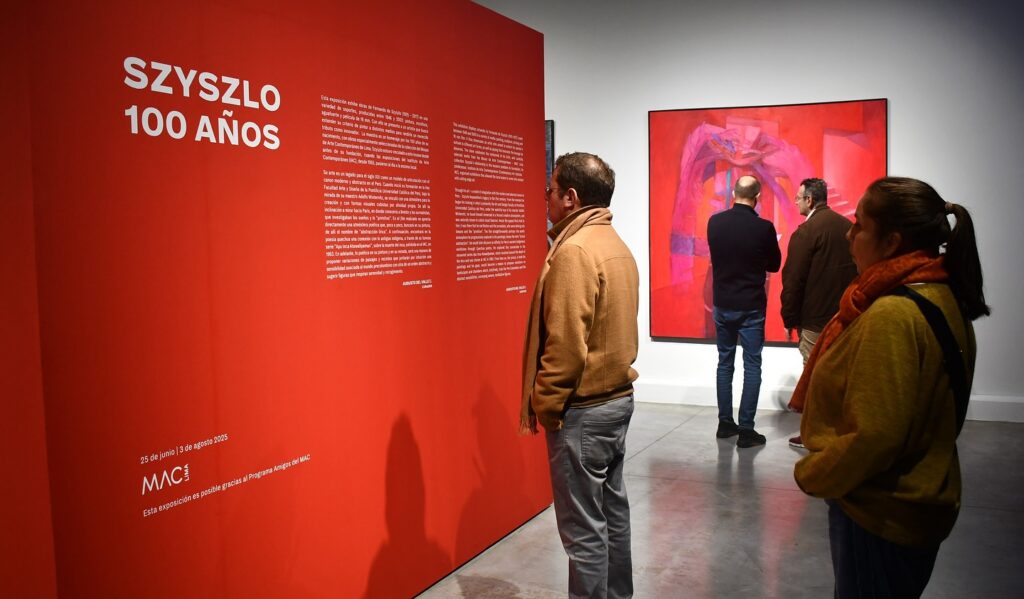
Szyszlo. 100 años. MAC Lima
Fernando de Szyszlo
Szyszlo. 100 años. MAC Lima

Why Does Szyszlo’s ‘Abstracción Telúrica’ Still Feel Urgent in 2025?

Because the works breathe. MAC Lima hangs ten pieces spanning 1946-2003—each one a pulsebeat of light, shadow and scarred surface.


  • “Niño robando frutas” (1948) – Early chiaroscuro where a syrupy black already drums its rhythm.

  • “La ejecución de Túpac Amaru X” (1966) – Violets and ember reds circle a night-black vortex, turning colonial trauma into chromatic storm.

  • “Inkarri” (1968 / 1992) – Floating shards conjure the Inca king’s prophesied return, refusing literal depiction yet thick with revolt.

  • “Mar de Lurín” (1990) – Charcoal swells, surfacing ancestral echoes beneath acrylic tides.

Notice the method: series, repetition, slight shifts. Szyszlo treated a canvas like a ritual site visited again and again until the ground spoke. That iterative patience counters today’s click-rate culture, reminding painters that depth takes seasons, not swipes.


His words echo through the galleries: “Painting must be an adventure.” He warned against quick sales and fading installations. In an art market driven by viral sheen, that credo lands like cold water—refreshing, bracing, necessary.

What Can Today’s Artists Learn from Szyszlo’s Centenary Exhibitions?

  • Anchor the global in local soil. Szyszlo showed that modernism expands, it doesn’t erase.

  • Embrace hard beauty. He called each canvas a “defeat”—the gap between dream and result. Accept the struggle; pigment remembers.

  • Read beyond paint. Szyszlo’s friendships with poets seeded entire series. Collaborate across disciplines; let literature, film or activism widen the studio door.

  • Build culture, not clout. The painter co-founded Lima’s Instituto de Arte Contemporáneo, proving legacy grows through institutions, not influencers.

This ethos echoes in this year’s tributes:


  • MAC Lima, “Szyszlo. 100 Años,” 25 June–3 August. Ten works, one 16 mm film, curated by Augusto Del Valle.

  • Centro Cultural Inca Garcilaso, biobibliographical show + round-table “100 Years of Szyszlo,” 18 June.

  • Galería Municipal Pancho Fierro, July–August. Forty restored Quixote engravings, unseen since 1949.

Together, they chart not a relic, but a living compass for artists grappling with heritage and hype.

Fernando de Szyszlo
Szyszlo. 100 años. MAC Lima

Fernando de Szyszlo painted deserts, suns and myths without painting a single cactus or warrior. He turned abstraction into ancestral drumbeat and left a blueprint for cultural hybridity that feels tailor-made for our tangled century. Step into Lima’s centenary circuit, and you’ll see it: canvases that smoulder like new magma, ready to rewrite tomorrow’s palette.

FAQ — “Szyszlo Decoded”

Receive the latest news

Subscribe To Our Magazine

Luster Magazine

Digital Magazine

Ingresa los siguientes datos y comienza a disfrutar de nuestra revista digital.