Art

Joel Shapiro Sculpture: Color, Motion & Consciousness

Discover Joel Shapiro Sculpture reborn in “Out of the Blue”—a vibrant finale where color, scale, and kinetic balance ignite a fearless dialogue with contemporary art history.

Por: Angela Leon Cervera
Joel Shapiro Sculpture
"Works From 1975-2024" Joel Shapiro. Photo: @pacegallery

Joel Shapiro Sculpture doesn’t merely occupy space—it pirouettes through it, teasing gravity and the viewer’s expectations at every turn. When the octogenarian master unveiled Out of the Blue at Pace Gallery in fall 2024, critics hailed the show as “radically joyful,” a carnival of color and motion proving creative stamina can outrun time.


Yet this was no sentimental curtain call. Instead, Shapiro delivered an exuberant manifesto, stacking precarious beams like jazz riffs and painting them in rapturous hues. The result? Work that feels forever on the verge of flight—right along with your pulse.
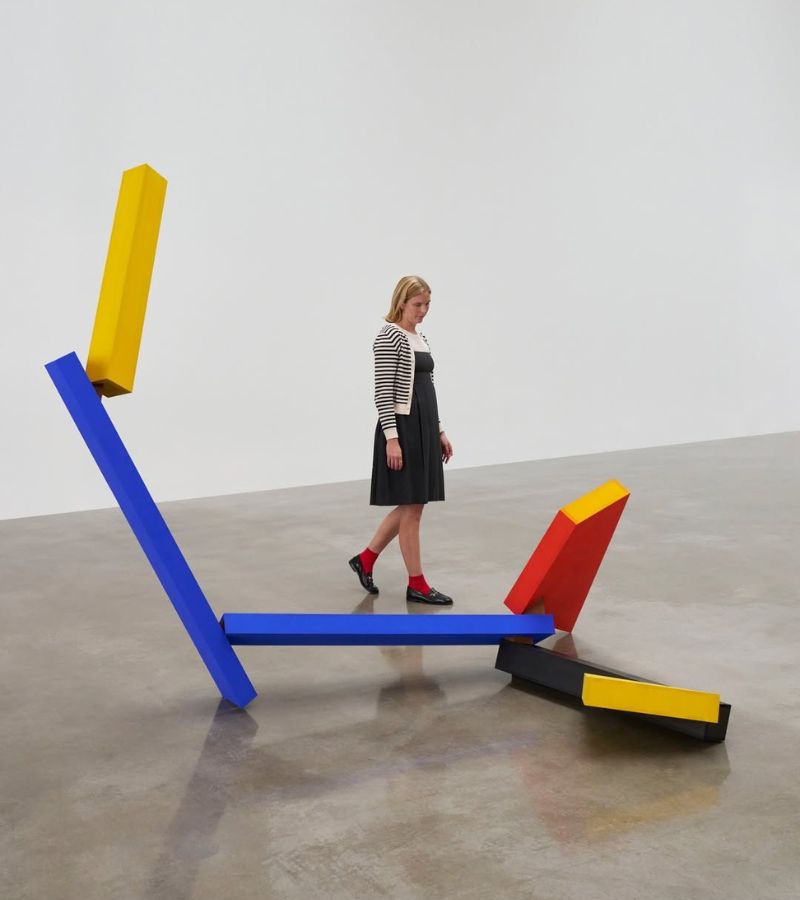
Joel Shapiro Sculpture
Splay. Joel Shapiro. Photo: @pacegallery

How Does Joel Shapiro Sculpture Turn Scale into Emotion?

  • Shapiro treats scale as experience, not measurement. A palm-sized house can feel monumental if it tugs the imagination wide.

  • By floating tiny structures in vast white rooms, he fills silence with memory: Who once sat in that chair?

  • Conversely, the colossal ARK (2020–24) vaults nearly four meters. As viewers circle, awe flips to intimacy, proving “big” and “close” are psychological, not physical.
Joel Shapiro Sculpture
"Works From 1975-2024" Joel Shapiro. Photo: @pacegallery
Joel Shapiro Sculpture
"Works From 1975-2024" Joel Shapiro. Photo: @pacegallery

Why Did “Out of the Blue” Redefine Joel Shapiro Sculpture?

  • Named at last: After decades of untitled works, Shapiro christened pieces—ARK, Wave, Splay—inviting shared myth over private musing.

  • Chromatic bravado: Electric blues and solar yellows mask raw timber, shifting material from nature to culture and condensing emotion.

  • Kinetic psychology: Each sculpture captures a split-second—falling, springing, bracing—so visitors feel motion in their own joints. MoMA agreed, acquiring ARK.

What Legacy Will Joel Shapiro Sculpture Leave in Public Spaces?

Shapiro’s influence stretches far beyond gallery walls, animating plazas from Washington, D.C., to Rotterdam. His monuments lean, tumble, dance—turning commemoration into lived sensation.


  1. Loss and Regeneration (1993) at the U.S. Holocaust Memorial Museum couples a falling figure with an inverted house, forcing visceral empathy.

  2. Over thirty public commissions challenge architecture rather than adorn it.

  3. By embracing instability, Shapiro transforms monuments from static symbols into emotional events you walk through.

From a temple-lit epiphany in India during his Peace Corps years to audacious riffs on Minimalism in 1970s New York, Shapiro has chased physical metaphors for inner weather. The late works crank the volume: timber sentences punctuated by neon clauses, all balanced on the razor’s edge of collapse.


Stand beneath Wave and you’ll swear the gallery tilts; crane up at Splay and the ceiling feels suddenly too low. Shapiro doesn’t offer inert objects—he lends us vertigo, wonder, and the permission to feel architecture breathe.

Joel Shapiro Sculpture
Splay. Joel Shapiro. Photo: @pacegallery

Shapiro once sought “a small moment of rapture.” With Out of the Blue, he delivered a symphony. By fusing post-minimal geometry, explosive color, and a dancer’s poise, Joel Shapiro Sculpture speaks to our bodies before our brains catch up, reminding us that art—and consciousness—is always in motion. One sky-blue beam can still make the heart somersault.

Curiosity Cabinet: Joel Shapiro FAQ

Receive the latest news

Subscribe To Our Magazine

Luster Magazine

Digital Magazine

Ingresa los siguientes datos y comienza a disfrutar de nuestra revista digital.