Architecture

Venetian Arsenal: Birthplace of Industry & Modern Revival

Discover how the Venetian Arsenal—the world’s first factory—forged an empire, hid secrets in stone, and now powers Venice’s cultural renaissance.

Por: Angela Leon Cervera
Venetian Arsenal
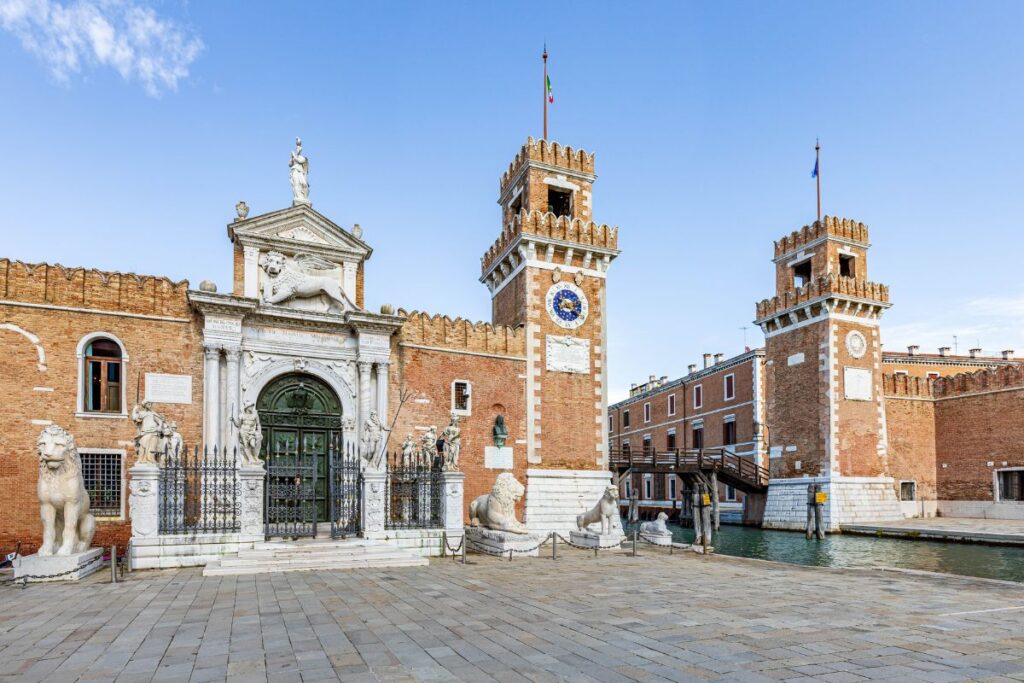
Venetian Arsenal. Photo: Joseph Costa

The Venetian Arsenal was more than a shipyard; it was the roaring engine that let a lagoon city call itself an empire. From the 12th century onward, its assembly-line docks could launch a war-galley in a single day—centuries before Ford dreamed of conveyor belts. 


Yet the Arsenal’s story is not frozen in time. Walk its ramparts today and you’ll find mariners, artists, and engineers sharing the same brick-and-timber cathedral. Iron, rope, and oak once flowed out as naval might; now ideas and exhibitions stream in, proving reinvention is Venice’s real super-power.
Venetian Arsenal
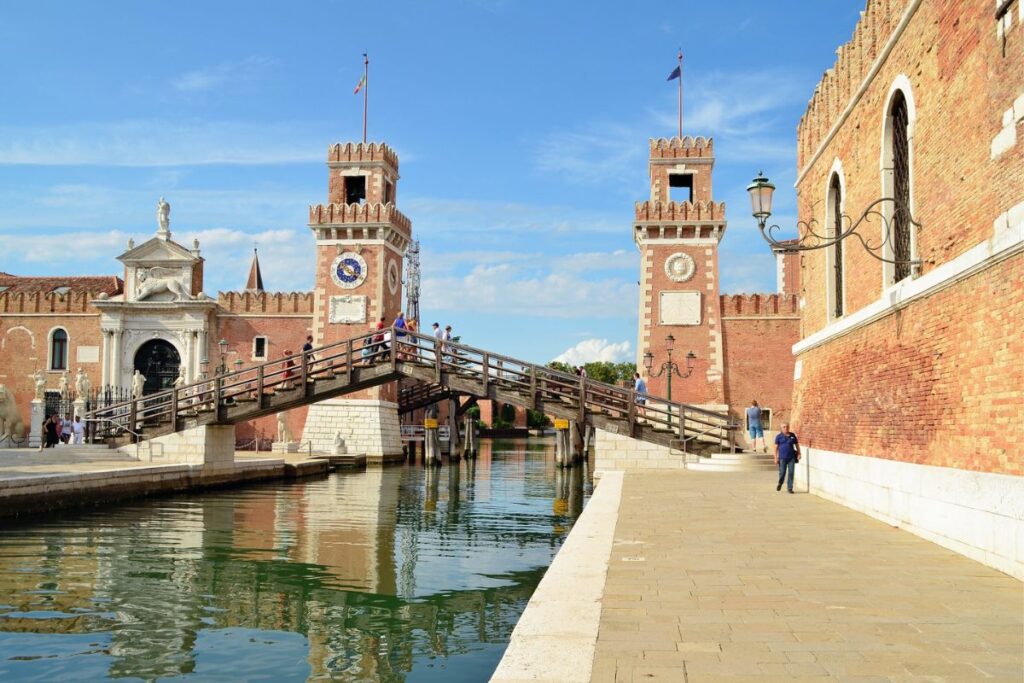
Venetian Arsenal. Photo: jpellgen

How Did the Venetian Arsenal Become the World’s First Factory?

  • Centralised muscle, global mindset. Founded circa 1104 to gather scattered squeri under one guarded roof, the complex soon sprawled over 45 hectares—15 % of Venice itself.

  • Medieval assembly line. Hulls drifted down an internal canal while expert arsenalotti fixed masts, rigging, and cannon in sequence—true mass production long before the Industrial Revolution.

  • Interchangeable parts. Standard-sized rudders, oars, and even bronze culverins sat in giant warehouses, ready for just-in-time delivery.

  • Speed as diplomacy. Ambassadors watched, wide-eyed, as a fully armed galley slid into the lagoon after breakfast. The message was clear: mess with Venice at your peril.

Venetian Arsenal
Venetian Arsenal. Photo: jpellgen
Venetian Arsenal
Venetian Arsenal. Photo: Matthias Süben

What Architectural Mysteries Hide Behind the Arsenal’s Walls?

  • Porta Magna—Renaissance flex. Antonio Gambello’s triumphal gate (1460) paired mythic gods with Venice’s winged lion. A 2024 restoration bankrolled by Dior returned the marble to its original shine. 

  • The Piraeus Lion & Viking graffiti. One of four marble sentinels bears 11th-century runes carved by Harald Hardrada’s Scandinavian guards—ancient “street art” celebrating a Byzantine victory. 

  • Corderie & Gaggiandre. A 317-metre ropewalk and twin vaulted boathouses designed by Jacopo Sansovino still dwarf visitors, their colonnades echoing with the slap of phantom oars.

  • Fortified layout. Towers, crenellated walls, and hidden docks turned the complex into a floating fortress—equal parts factory and castle.

Why Is the Venetian Arsenal Vital to 21st-Century Venice?

  1. A split personality that works. Roughly 41 % remains an active naval base and research hub—home to the Istituto di Studi Militari Marittimi and the MOSE flood-barrier command centre. 

  2. Global art powerhouse. The remaining 59 % hosts the Biennale di Venezia. During the 2025 Architecture edition (10 May–23 Nov), the Corderie, Artiglierie, and Gaggiandre pulse with national pavilions and avant-garde installations. 

  3. Living museum. The adjacent Naval History Museum and its Padiglione delle Navi preserve gondolas, galleys, and even a Cold-War submarine, ensuring the Arsenal’s past fuels future curiosity.

In short, the site has traded broadsides for brush-strokes, but it still manufactures soft power at an industrial scale.

Venetian Arsenal
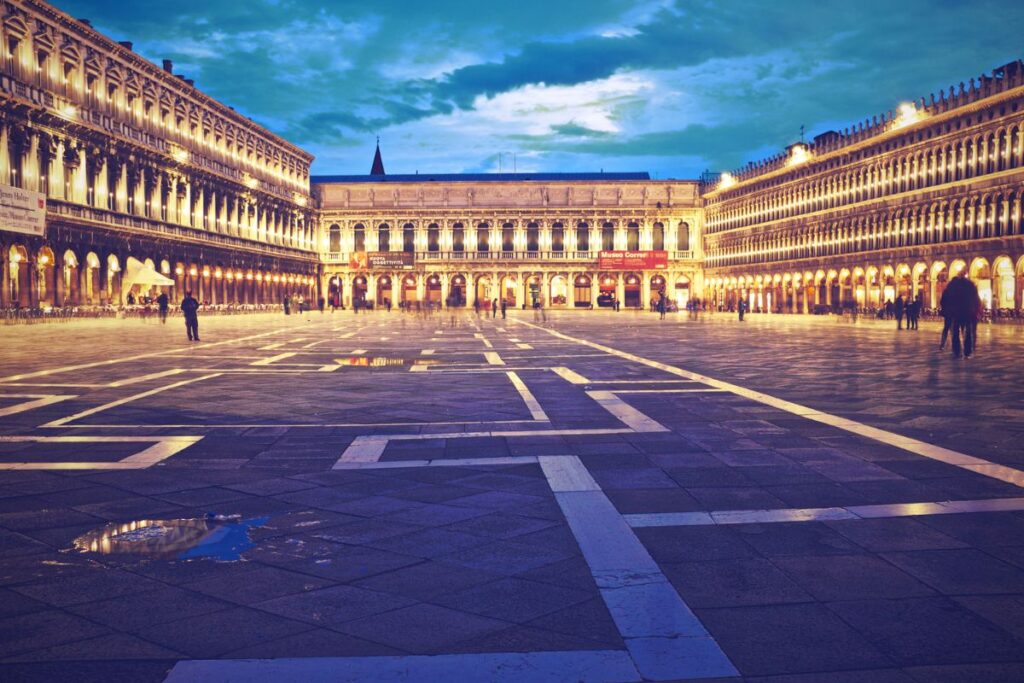
Piazza San Marco. Photo: Dave Meier

From medieval “just-in-time” shipbuilding to Dior-polished marble and Biennale spotlight, the Venetian Arsenal is proof that great architecture can outrun obsolescence.


It forged the fleets that stitched the Mediterranean together, and today it welds cultures, ideas, and disciplines in the same fiery spirit. Next time you ride the vaporetto past Castello, remember: those red-brick walls once rang with hammers—and now echo with applause.

FAQ

Receive the latest news

Subscribe To Our Magazine

Luster Magazine

Digital Magazine

Ingresa los siguientes datos y comienza a disfrutar de nuestra revista digital.